
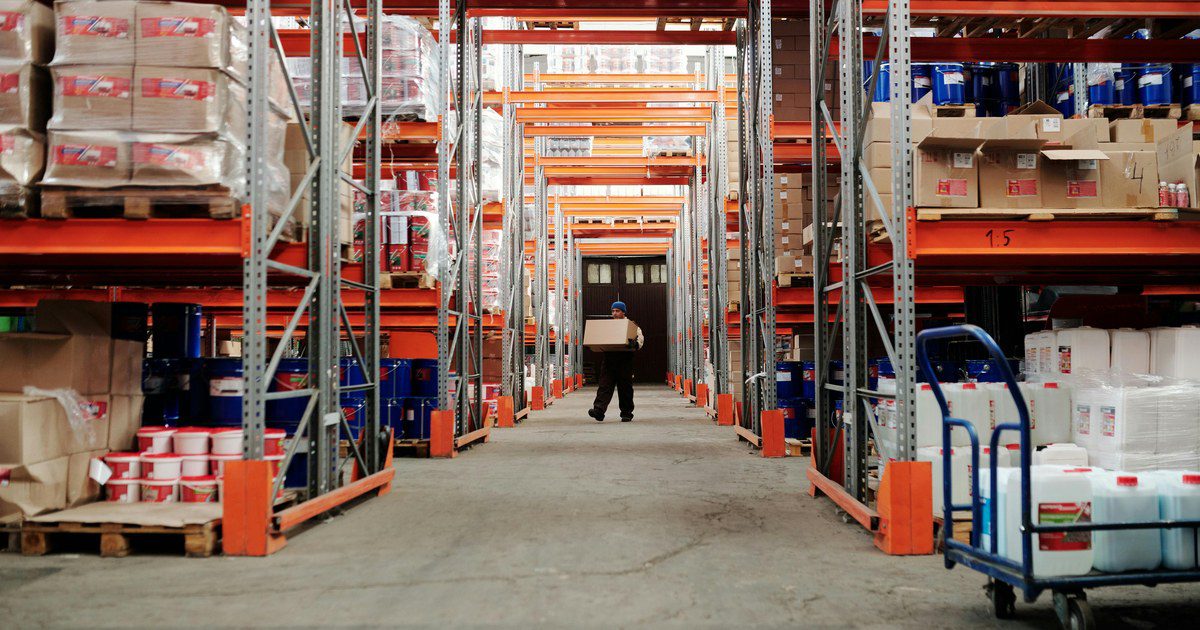
Coupang doesn’t outsource its logistics. It owns them. That single decision — made over a decade ago when the company was still burning through venture capital — is the reason 70% of South Korean citizens now live within ten minutes of a Coupang fulfilment centre. The company generated $34.5 billion in revenue in 2025, a 14% increase year-on-year (Coupang FY 2025 Results), and commands roughly 25% of South Korea’s e-commerce market by revenue and nearly 40% of online retail traffic (Morningstar, KED Global). Its Rocket Delivery service — same-day and dawn delivery across the country — isn’t a feature bolted onto a marketplace. It’s the entire business model.
Coupang’s market cap sits at $39.4 billion as of April 2026 (NYSE: CPNG), with 24.7 million active customers as of Q3 2025. The company turned its second consecutive annual profit in 2024 and continued that trajectory through 2025, finally proving that owning the full logistics stack in a single dense market can produce real margins.
How does Rocket Delivery actually work?
The mechanics are deceptively simple, but the infrastructure behind them is enormous. Coupang operates roughly 200 fulfilment centres and logistics hubs across South Korea, totalling over 20 million square feet of warehouse space. These facilities stock more than 5.3 million product types, and approximately 1.7 million Rocket Delivery items ship from them daily.
Here’s the sequence. A customer places an order — usually via the Coupang mobile app, which handles the vast majority of transactions. If the order arrives before midnight, it’s delivered by 7am the next morning through Rocket Delivery’s dawn service. Orders placed earlier in the day arrive the same evening. The company calls this “Rocket Delivery“ and “Rocket Fresh“ (for groceries), and the speed isn’t aspirational marketing — it’s the operational baseline.
What makes this possible is proximity. Coupang has positioned its fulfilment centres so densely across South Korea that most last-mile deliveries are genuinely last-mile — short runs from a nearby hub to a customer’s door. South Korea’s geography helps: it’s roughly the size of Indiana, with 52 million people packed into a highly urbanised landscape. But geography alone doesn’t explain it. Coupang employs its own delivery fleet rather than relying on third-party couriers, giving it direct control over speed, quality, and routing.
The company is now investing 3 trillion won (approximately $2.2 billion) to build eight new AI-powered fulfilment centres by the end of 2026, which will push Rocket Delivery’s overnight coverage from 70% to over 88% of the national population (Korea Herald). In the first half of 2025 alone, Coupang spent $538 million on logistics infrastructure and automation — roughly double the same period the year before.
Why did Coupang build its own logistics instead of outsourcing?
Because South Korea’s existing delivery infrastructure couldn’t do what Coupang needed it to do. When founder Bom Kim launched Coupang in 2010 as a daily deals site, third-party logistics in South Korea was fragmented, slow, and optimised for cost rather than speed. If you wanted Amazon-style delivery reliability in a country where consumers expected it, you had to build it yourself.
It’s not just about speed — it’s about control. Owning the fulfilment centres means Coupang decides how inventory is stored, picked, packed, and routed. Owning the delivery fleet means it controls the customer’s doorstep experience. This vertical integration is expensive upfront but creates compounding advantages over time: better data on demand patterns, tighter inventory management, and the ability to guarantee service levels that marketplace competitors relying on third-party logistics simply can’t match.
The Rocket WOW membership programme crystallises this advantage. For 7,890 won per month (roughly $5.80), members get free Rocket Delivery, free returns, free Coupang Eats delivery, and access to Coupang Play streaming. Two-thirds of Coupang’s customers are WOW members, and those members order nine times more frequently per year than non-members. The logistics infrastructure is what makes the membership valuable, and the membership is what makes the logistics infrastructure economically viable. That’s the flywheel.
How big is Coupang in South Korea?
Dominant, and still gaining share. Coupang’s estimated gross merchandise value hit 40 trillion won ($27.7 billion) in 2024, giving it roughly 40% of South Korea’s e-commerce market (KED Global). Its closest competitor is Naver Shopping — together, the two platforms account for approximately 65% of the market. Everyone else is fighting for scraps.
Coupang’s share of overall retail value (excluding sales tax) rose from 6.8% in 2020 to 15.1% in 2024, meaning the company isn’t just winning online — it’s taking share from offline retail too. Active customers reached 24.7 million by Q3 2025, in a country of 52 million people. That’s not a niche player. That’s national infrastructure.
The company’s gross profit margin improved to 29.2% in 2024, with total gross profit jumping 43% year-on-year to $8.8 billion. Revenue for 2024 was $30.3 billion, growing 24% on a reported basis and 29% on an FX-neutral basis. These aren’t growth-stage vanity metrics — they’re the financials of a maturing business that’s found its unit economics.
What’s Coupang doing beyond e-commerce?
Three bets worth tracking: Coupang Eats, Coupang Play, and Farfetch.
Coupang Eats has captured a 35.3% share of South Korea’s food delivery market, making it a serious challenger to established players. The integration with Rocket WOW membership — which gives members free delivery on Eats orders — is a textbook example of using an existing logistics network to cross-subsidise a new vertical. The delivery drivers are already on the road. The customer relationships already exist. The marginal cost of adding food delivery to the mix is far lower than building a standalone service from scratch.
Coupang Play is the company’s streaming service, now ranked second among Korean OTT apps by user base. It carries a significant sports portfolio — English Premier League, La Liga, Bundesliga, NBA, and Formula 1 — alongside original Korean content. From June 2025, Coupang opened Play to all users rather than restricting it to WOW members, a move designed to drive broader engagement and eventually convert free viewers into paying subscribers.
Farfetch is the wildcard. Coupang completed its $500 million acquisition of the bankrupt luxury fashion marketplace in January 2024 (Coupang IR). Farfetch had accumulated $2.8 billion in financial obligations and was heading for delisting when Coupang stepped in. The strategic logic is that Coupang’s logistics expertise and Asian customer base could revive a platform that serves over four million luxury consumers globally. Whether Coupang can actually turn around a business that’s never been profitable remains an open question, but the acquisition gives it a foothold in global luxury e-commerce that would’ve taken years to build organically.
The “Developing Offerings“ segment — which includes Eats, Play, Farfetch, Taiwan expansion, and fintech — generated $1.3 billion in revenue in Q3 2025 alone, growing 32% year-on-year. But it also posted a $292 million adjusted EBITDA loss that quarter, with losses widening $165 million year-on-year. These bets are expensive.
What are the risks?
Labour is the most pressing. Since 2020, 27 Coupang logistics workers have died while on duty (Korea Times). Reports of excessive hours — one delivery driver logged 83.4 hours without a day off and handled up to 354 deliveries daily — have drawn sustained public scrutiny and regulatory attention. In 2025, the Seoul Administrative Court found Coupang guilty of unfair dismissal and union suppression, ruling that the company used subjective performance reviews to target union leaders. South Korea’s Ministry of Employment and Labour has pledged stern measures, and the reputational cost is real in a market where Coupang’s brand is everywhere.
Then there’s the Developing Offerings burn rate. Coupang Eats, Play, and Farfetch are collectively losing hundreds of millions per quarter. Analysts project potential profitability by 2027, but that timeline depends on automation gains and customer growth that haven’t yet materialised.
Finally, international expansion carries execution risk. Taiwan is growing at triple-digit rates and Coupang aims to cover 230 of its 260 cities by 2027, but replicating the South Korean logistics playbook in markets with different geography, regulation, and consumer behaviour is genuinely difficult. Japan’s food delivery market is another frontier, but competing against entrenched local players requires sustained capital commitment.
What’s the outlook?
Coupang’s core Korean e-commerce business is a machine. The margins are improving, the customer base is enormous, and the logistics moat gets wider with every new fulfilment centre. The $2.2 billion infrastructure investment through 2026 — including AI-powered automation across nine fulfilment centres, built in collaboration with NVIDIA — should push operating efficiency further.
The real question is whether the Developing Offerings segment can follow the same path to profitability that the core business took. Coupang spent years losing money on e-commerce before the unit economics turned. Management is betting the same pattern will repeat with Eats, Play, and international expansion. Investors are paying 195x trailing earnings for that bet, which tells you the market is pricing in significant future growth rather than current profitability.
With $34.5 billion in annual revenue, nearly 25 million active customers, and a logistics network that competitors would need a decade to replicate, Coupang has built something genuinely difficult to dislodge in South Korea. The company that started as a Groupon clone has become the country’s retail backbone. What happens next depends on whether its logistics model can travel.
Sources & Further Reading
- Seoulz — Korea Fintech 2026 — overview of Korea cashless economy and key players
- BeInCrypto — Toss Stablecoins Push — Toss's expansion into stablecoins
- Seoulz — Korea Live Commerce $125B Platform War — Coupang, Naver, Kakao live commerce competition
- PCMI — South Korea Payments & Ecommerce 2025 — payments market data and trends
- UPI News — Naver Gains After Coupang Breach — shift in Korean e-commerce market
- Popular Fintech — Coupang and Fintech — analysis of Coupang vs Naver/Kakao financial services
Discover more from Digital in Asia
Subscribe to get the latest posts sent to your email.
