
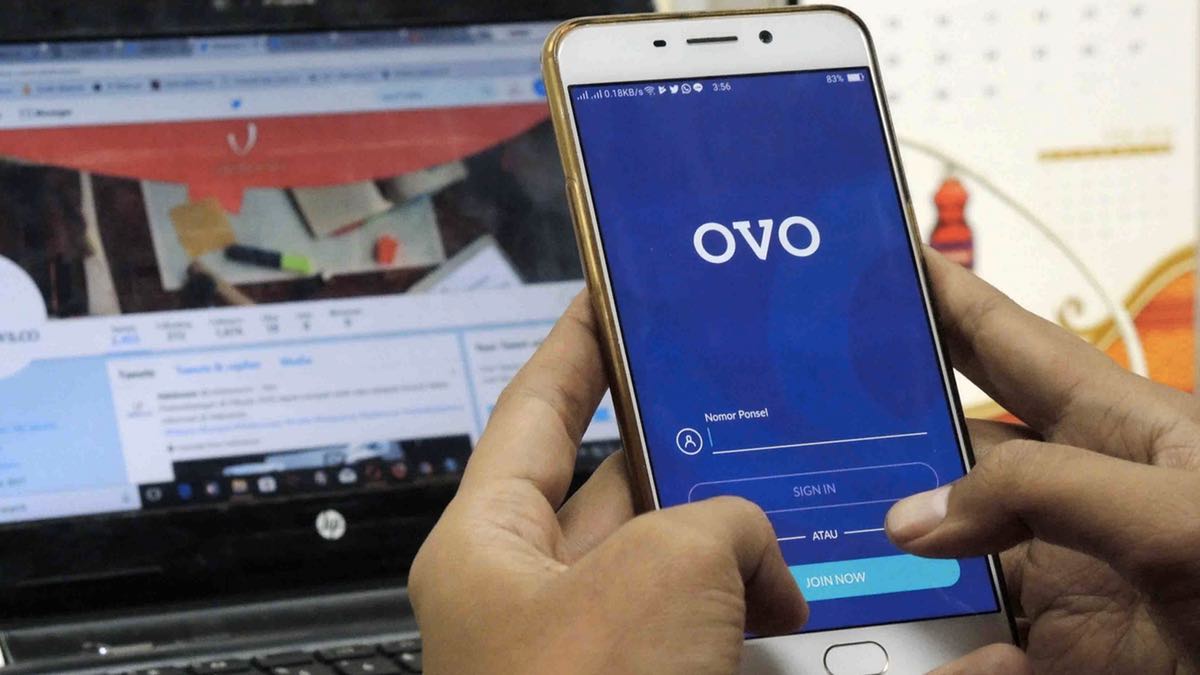
OVO is one of Indonesia’s four dominant e-wallets — alongside GoPay, Dana, and ShopeePay — serving over 110 million registered users across 300 cities. It’s also, since October 2021, a 90%-owned subsidiary of Grab Holdings, which makes it the payments layer inside Southeast Asia’s largest super app. In a digital wallet market worth $7.32 billion in 2025 and projected to reach $10.23 billion by 2030 (GlobeNewsWire, March 2026), OVO holds roughly 31% market share according to recent industry estimates. That puts it in a tight race with GoPay, which leads on monthly active usage at 58% regular usage versus OVO’s 53% (Insight Asia, 2023 survey). What makes OVO’s position interesting isn’t the size of its user base — it’s how the company got here, what it lost along the way, and where it’s trying to go next.
The story involves a conglomerate, a super app, a forced divestment, and a pivot into financial services that’s still playing out. It’s worth understanding in full.
How does OVO fit into the Grab ecosystem?
OVO didn’t start inside Grab. It was founded in 2017 by PT Visionet International, a subsidiary of the Lippo Group — one of Indonesia’s largest conglomerates with deep interests in retail, healthcare, and real estate. The original concept was straightforward: build a cashless payments layer across Lippo’s malls, cinemas, and hospitals in the Karawaci area of Tangerang. Think loyalty programme with a payments licence.
That changed quickly. In 2018, Grab and Tokopedia both invested in OVO, recognising that Indonesia’s e-money licence holders were scarce and that building payments infrastructure from scratch would take years. OVO became Grab’s default wallet in Indonesia — the market where Grab generates $715 million in annual revenue (Grab FY 2025) — and simultaneously served as the embedded payment method inside Tokopedia’s marketplace. Grab Business Model Explained: How Southeast Asia’s Super App Makes $3.2 Billion
By 2021, the corporate structure had become untenable. When Gojek and Tokopedia merged to form GoTo, Tokopedia found itself owning a stake in OVO while its parent company operated GoPay — a direct competitor. Bank Indonesia’s regulations cap ownership at 25% across multiple payment service providers, so Tokopedia had to sell. Grab seized the moment, buying out both Tokopedia’s and Lippo Group’s remaining stakes to reach 90% ownership (Bloomberg, October 2021). The remaining 10% is held by minority shareholders.
The result is that OVO now functions as Grab’s financial services arm in Indonesia. Every GrabCar ride, GrabFood order, and GrabMart purchase in the country flows through OVO’s rails. That’s a structural advantage — but it’s also a dependency.
How does OVO make money?
OVO’s revenue model sits across three layers, though the company doesn’t publish standalone financials (it reports through Grab’s consolidated results).
Transaction fees are the foundation. OVO charges merchants 0.7–1.5% per transaction for QR code payments, and earns interchange on peer-to-peer transfers and bill payments. With over 110 million users and integration across Grab’s ride-hailing, delivery, and grocery services, transaction volume is substantial — though exact GMV figures aren’t disclosed separately from Grab.
Financial services represent the growth bet. OVO offers mutual fund investments through its partnership with Bareksa, the first online mutual fund marketplace in Indonesia. The OVO Invest product, launched in 2019, was modelled on Alipay’s integration with Yu’e Bao in China — converting idle wallet balances into money market funds. OVO also provides peer-to-peer lending through Taralite and insurance products through a partnership with Prudential under the OVO Proteksi brand. In 2025, OVO launched OVO Nabung, a digital savings product built in partnership with Superbank — the Grab-backed digital bank that posted its first full-year profit of 143.3 billion rupiah ($8.45 million) in FY2025 (DealStreet Asia).
Float income is the third, quieter revenue stream. Like all e-wallets, OVO earns interest on customer balances held in trust accounts. In a market where top-up behaviour is frequent and balances turn over slowly among less active users, this income is meaningful — though rarely discussed publicly.
What happened when Tokopedia left?
This is the question that defines OVO’s current trajectory. Between 2018 and 2021, OVO had the best distribution deal in Indonesian fintech: it was the default wallet inside both Grab (rides and delivery) and Tokopedia (e-commerce). That combination gave OVO presence across the two highest-frequency digital transaction categories in the country. Tokopedia Explained: How ByteDance’s $1.5 Billion Bet Reshaped Indonesian E-Commerce
When Grab bought out Tokopedia’s stake in October 2021, OVO didn’t immediately lose access to Tokopedia’s platform — payment integrations don’t switch off overnight. But the strategic alignment vanished. Tokopedia, now part of GoTo, had every incentive to push GoPay instead. Over the following two years, OVO’s prominence within Tokopedia’s checkout flow diminished. By 2024, Tokopedia had developed its own TokoPoints loyalty system and was routing users toward GoPay as the preferred payment method.
The loss was significant. E-commerce checkout is where wallet habits form — users who pay with OVO on Tokopedia would carry that wallet preference to offline merchants, bill payments, and peer-to-peer transfers. Losing that acquisition channel meant OVO had to find volume elsewhere.
The response has been twofold. First, OVO has deepened its Grab integration, ensuring it captures every transaction within the Grab ecosystem. Second, it’s expanded its offline merchant network — particularly targeting warungs, street food vendors, and small retailers that QRIS (Indonesia’s national QR standard) has made accessible. The push into financial services through Superbank and Bareksa is partly about replacing lost e-commerce transaction revenue with higher-margin financial product revenue.
How does OVO compete with GoPay and Dana?
Indonesia’s e-wallet market is a four-way race, and each player has a distinct structural advantage. GoPay rides on GoTo’s combined Gojek-Tokopedia ecosystem. Dana, backed by Ant Group’s technology, has built strong positioning in bill payments and government disbursements. ShopeePay benefits from Shopee‘s dominant e-commerce traffic. OVO’s edge is Grab.
The numbers tell a story of convergence rather than dominance. A 2025 Bisnis Indonesia analysis described GoPay, OVO, ShopeePay, and Dana as collectively controlling roughly 70% of the market, with no single wallet exceeding 25% share. Usage surveys consistently show GoPay and OVO neck-and-neck on awareness (71% and 70% respectively having used each wallet) but GoPay pulling ahead on regular usage (58% versus 53%).
OVO’s competitive response has been to lean into financial services as a differentiator. GoPay has GoTo’s lending and GoPayLater products; Dana has Ant Group’s technology stack. But OVO’s combination of Bareksa (investments), Taralite (lending), Prudential (insurance), and now Superbank (savings) gives it the broadest financial product suite of any Indonesian e-wallet. Whether breadth translates to depth of usage is the open question.
The QRIS interoperability standard, mandated by Bank Indonesia, has also levelled the playing field at the point of sale. Any merchant that accepts one QR wallet now accepts all of them. That’s good for financial inclusion but bad for wallet differentiation — it means OVO can’t win on merchant acceptance alone.
What are the risks?
Three stand out. First, ecosystem dependency. OVO’s fortunes are tied to Grab’s performance in Indonesia. If Grab loses ride-hailing or delivery share to Gojek, OVO’s transaction volume declines with it. Grab generated $715 million from Indonesia in 2025, making it the company’s third-largest market — but it trails GoTo on local market share in several categories.
Second, regulatory pressure. Bank Indonesia continues to tighten e-money regulations, including capital requirements and transaction limits. The introduction of QRIS has already commoditised the merchant payment experience. Further regulatory moves — particularly around interoperability of wallet-to-wallet transfers — could erode OVO’s ability to lock users into its ecosystem.
Third, financial services execution risk. Offering investments, lending, savings, and insurance through partnerships rather than owned licences means OVO depends on Bareksa, Superbank, Taralite, and Prudential to deliver the actual products. If any partner underperforms or exits, the product disappears from OVO’s shelf. The mutual fund business has already seen turbulence — both OVO and Tokopedia closed their in-app mutual fund units in 2024, transferring users to Bareksa’s standalone platform.
What’s the outlook?
OVO’s strategic direction is clear: evolve from a payments wallet into a financial services platform embedded within Grab’s super app. The Superbank integration is the most telling move — converting idle OVO balances into interest-bearing savings accounts through OVO Nabung creates a stickiness mechanism that pure payments can’t match. Superbank’s rapid growth to over 6 million customers since its June 2024 launch, with daily transactions averaging over 1 million (Fintech Singapore), suggests demand for these products is real.
Indonesia’s mobile payments market is projected to grow from $40.97 billion in 2025 to $98.87 billion by 2031 (Mordor Intelligence), and OVO is well-positioned to capture a share of that growth through its Grab integration and expanding financial product suite. The question is whether being Grab’s wallet is enough, or whether OVO needs independent distribution channels to sustain its position in a market that’s structurally moving toward interoperability.
The Tokopedia loss was a genuine inflection point. OVO went from a wallet with two of Indonesia’s strongest distribution channels to a wallet with one. Everything since — the Superbank partnership, the financial services expansion, the offline merchant push — has been about compensating for that lost channel. It’s working, but the margin for error is thinner than it was. In a market where GoPay has GoTo, Dana has Ant Group, and ShopeePay has Shopee, OVO’s future depends entirely on whether Grab can keep winning in Indonesia. That’s a bet on one company in a market where no one stays dominant for long.
Discover more from Digital in Asia
Subscribe to get the latest posts sent to your email.
