
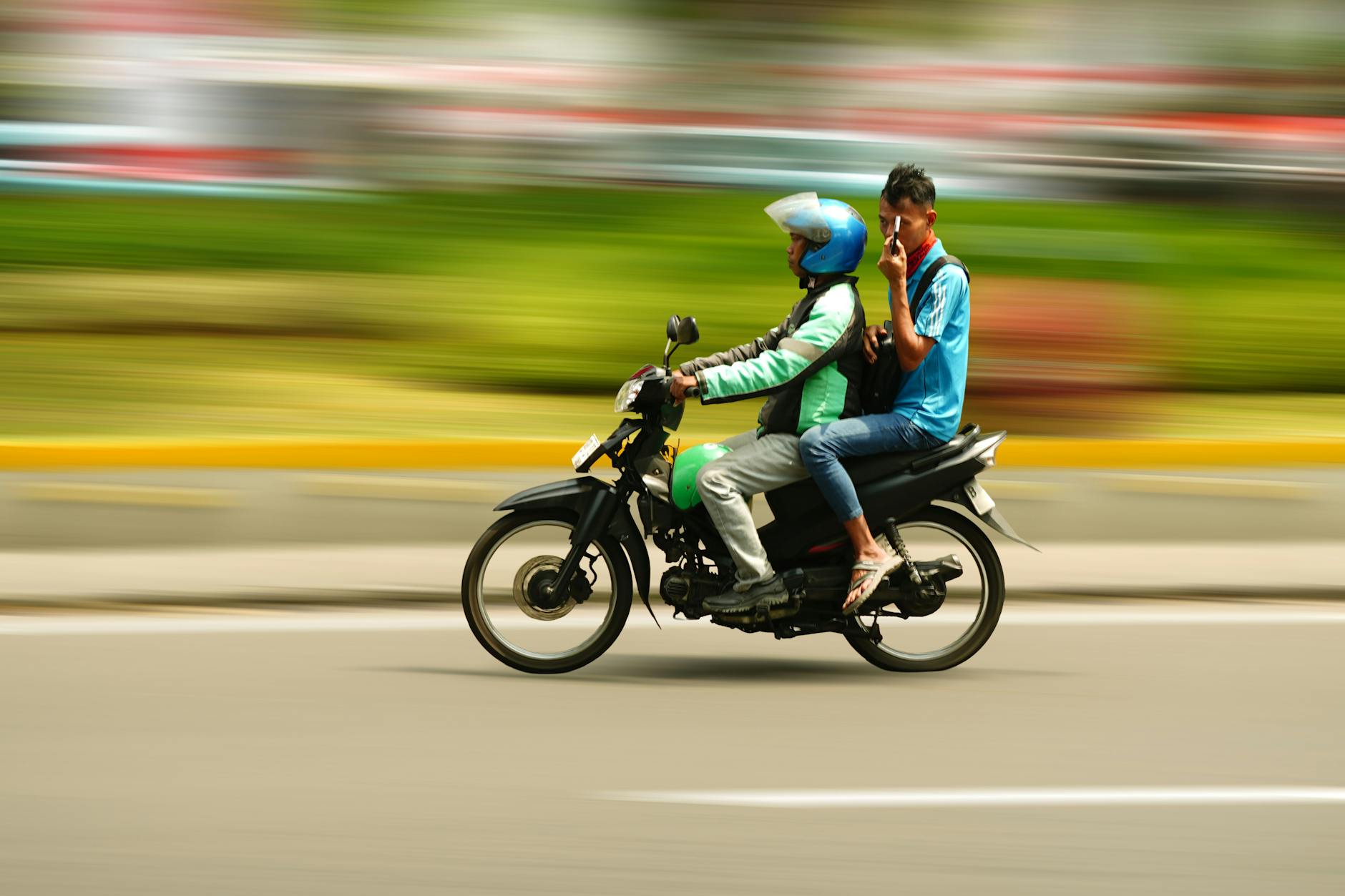
GoTo Group — the parent company behind Gojek, GoPay, and a minority stake in Tokopedia — posted full-year net revenue of Rp 18.3 trillion (~$1.1 billion) in 2025, up 24% year-on-year (GoTo FY 2025 Results). That makes it Indonesia’s largest homegrown tech platform by revenue and one of only two super apps (alongside Grab) that genuinely matter in Southeast Asian on-demand services. The group’s fintech arm, GoPay, hit 24.2 million monthly transacting users in Q3 2025, processing over 500 million transactions in a single month for the first time. On-demand services — ride-hailing, food delivery, logistics — still form the backbone, with roughly 2 million driver-partners across Indonesian cities. But the real story of 2025 wasn’t growth. It was profitability. GoTo delivered adjusted EBITDA of Rp 2 trillion for the full year, a 544% surge year-on-year (GoTo FY 2025 Results), and posted its first-ever adjusted pre-tax profit of Rp 62 billion in Q3. After years of burning cash, the unit economics finally work.
How does GoTo actually make money?
GoTo’s revenue splits across two reporting segments — on-demand services (ODS) and financial technology (fintech) — plus a service fee from the Tokopedia e-commerce partnership with TikTok.
On-demand services is the legacy business and still the largest segment. It covers GoCar and GoBike (ride-hailing), GoFood (food delivery), GoSend (logistics), and a growing slate of adjacent services. ODS generated full-year adjusted EBITDA of Rp 1.4 trillion in 2025, more than doubling from the prior year (GoTo FY 2025 Results). Revenue growth here is modest — ODS GTV grew just 2.4% year-on-year in Q3 2025 — but the margin expansion is significant. GoTo has pulled back on promotional spending, tightened driver incentives, and leaned into advertising revenue within the on-demand platform. The segment isn’t chasing volume anymore. It’s harvesting margin from a mature user base.
Fintech is the faster-growing and increasingly more interesting segment. GoPay — available both inside Gojek and as a standalone app launched in mid-2023 — drives consumer payments, lending, and insurance products. Fintech net revenue grew 55% year-on-year to Rp 1.5 trillion in Q3 2025, with lending revenue alone surging 84% year-on-year to Rp 1.0 trillion (GoTo Q3 2025 Earnings). The consumer loan book reached Rp 7.6 trillion (~$457 million) by Q3, up 76% year-on-year, and management guided for it to exceed Rp 8 trillion by year-end. For the first time, fintech posted a full-year adjusted EBITDA of Rp 497 billion — proof that digital lending in Indonesia can be profitable at scale.
Tokopedia service fees contributed Rp 211 billion in Q3 2025. Following TikTok’s $1.5 billion investment in late 2023, Tokopedia now operates as a joint entity under TikTok’s controlling stake, with GoTo retaining a minority position. GoTo collects service fees rather than consolidating Tokopedia’s full revenue — a cleaner structure that reduces capital intensity but limits upside. Tokopedia Explained: How ByteDance’s $1.5 Billion Bet Reshaped Indonesian E-Commerce
Why does the super app model work in Indonesia?
Indonesia has 280 million people, the world’s fourth-largest population, spread across 17,000 islands with patchy banking infrastructure and near-universal smartphone adoption. Only around 52% of Indonesian adults have a bank account (World Bank, 2024), but mobile internet penetration exceeds 70%. That gap is exactly where super apps thrive.
Gojek understood this from the start. The ride-hailing service puts millions of drivers on the road. Food delivery uses the same driver network. GoPay processes transactions across both — and once you control the payment layer, you control the data. Once you have transaction data on millions of underbanked consumers, you can underwrite loans that traditional banks won’t touch. Roughly 60% of GoPay’s outstanding loans originate through the Gojek and GoPay apps, with in-app channels growing faster than third-party distribution (GoTo Q3 2025 Earnings).
The flywheel is real, but it’s also specific to Indonesia’s conditions. Two-wheelers captured 63% of Indonesia’s ride-hailing market in 2025 (Mordor Intelligence, 2025) — a transport mode that barely exists in Western markets. GoBike isn’t competing with Uber. It’s competing with walking, congested buses, and informal ojek drivers. That’s a different competitive dynamic, and it’s why Gojek’s on-demand business has stayed resilient even as growth has slowed. How Super Apps Work in Asia: The Business Model Behind Grab, WeChat, and GoJek
Where does GoTo operate and which segments matter most?
Unlike Grab, which operates across eight Southeast Asian countries, GoTo is overwhelmingly an Indonesia story. Gojek has a presence in Singapore and Vietnam, but Indonesia generates the vast majority of revenue and is where the full super app stack — rides, food, payments, lending — is fully deployed.
This single-market focus is both a strength and a vulnerability. On the upside, GoTo can optimise its entire product stack for one regulatory environment, one language, and one set of consumer behaviours. It doesn’t face Grab’s challenge of managing eight different markets with eight different licensing regimes. That focus shows in the numbers: Gojek holds approximately 43% of Indonesia’s ride-hailing market by order volume, compared to Grab’s 39% (Statista, 2023).
On the downside, GoTo has no geographic diversification. A regulatory shock in Jakarta, a macroeconomic slowdown in Indonesia, or a currency depreciation in the rupiah hits the entire business. There’s no Malaysian or Singaporean revenue to cushion the blow.
Within Indonesia, the segment mix is shifting. On-demand services remain the revenue anchor, but fintech is where the growth and margin expansion are concentrated. GoPay’s standalone app — separate from the Gojek super app — is GoTo’s play to reach consumers who don’t use ride-hailing or food delivery but do need a digital wallet and access to credit. That addressable market is substantially larger than the on-demand user base.
What are the risks?
Three specific risks stand out. First, the Grab-GoTo merger overhang. Discussions about combining Indonesia’s two dominant ride-hailing platforms have been ongoing for years, but accelerated in late 2025 when Indonesia’s State Secretary confirmed that Danantara, the country’s sovereign wealth fund, would be involved in merger talks (Jakarta Globe, 2025). A combined entity could control up to 91% of Indonesia’s ride-hailing market — which is precisely why regulators, consumer advocates, and driver unions are pushing back. If the merger proceeds, it would reshape GoTo’s business model. If it doesn’t, GoTo needs to demonstrate that it can sustain profitability as a standalone entity in a competitive market. Either outcome carries execution risk.
Second, fintech credit risk at scale. GoTo’s consumer loan book grew 76% year-on-year to Rp 7.6 trillion by Q3 2025, with a target of Rp 8 trillion by year-end. That growth is impressive, but it’s also happening in a market with limited credit bureau infrastructure and a borrower base that is, by definition, underbanked. A macroeconomic downturn or rupiah depreciation could pressure asset quality quickly. Management hasn’t disclosed detailed non-performing loan ratios publicly, which makes external risk assessment harder than it should be.
Third, the Tokopedia dependency. GoTo sold controlling interest in Tokopedia to TikTok, converting an owned e-commerce platform into a service-fee arrangement. That was a sensible capital allocation decision — e-commerce in Indonesia is a brutal, low-margin fight against Shopee and Lazada. But it also means GoTo’s e-commerce optionality is limited. If TikTok Shop‘s integration with Tokopedia falters (and there have been reports of workforce reductions and regulatory scrutiny from Indonesia’s antitrust agency), GoTo’s service fee stream could shrink.
What’s the outlook for 2026?
GoTo guided for adjusted EBITDA of Rp 3.2–3.4 trillion in 2026 (GoTo FY 2025 Results), which would represent roughly 65% growth over 2025’s Rp 2 trillion. The company also generated positive adjusted free cash flow of Rp 966 billion in 2025 — a milestone for a company that burned through billions of dollars in its first decade.
The strategic priorities are clear: scale the lending business toward a Rp 8 trillion loan book, grow GoPay’s standalone user base beyond the Gojek app, and extract more advertising and margin from a mature on-demand services segment. Management isn’t chasing GMV growth anymore. The emphasis is on revenue quality and profitability — a shift that investors have rewarded.
The Grab merger question will dominate headlines through 2026, with a potential close in Q2–Q3 if regulators approve. But even without a merger, GoTo’s trajectory has changed. The company held Rp 18 trillion ($1.1 billion) in cash as of September 2025, giving it runway regardless of the merger outcome. The fintech business is profitable. On-demand services margins are expanding. The cash burn era is over.
The bigger picture is this: Gojek started as a motorcycle ride-hailing app in 2010. Fifteen years later, it’s the payments and lending layer for millions of Indonesians who don’t have a bank account but do have a smartphone. That transition — from transport to financial infrastructure — is where the long-term value sits. The rides still matter, but the money is increasingly in the money.
Sources & Further Reading
- GrowthHQ — SEA Super App Market 2025-2026 — Grab vs GoTo strategies and country-level breakdown
- Finimize — Grab Super-App Ambitions — Q3 2025 revenue $873M, +22% YoY
- GrowthHQ — Grab Holdings Growth — 200M monthly active users, 1B+ rides/year
- Wikipedia — Gojek — corporate overview and product portfolio
- Brineweb — Gojek Business Model 2026 — GoTo unit economics and revenue model
- Miracuves — Grab Revenue Model 2026 — commission rates and fee structure
- Statista — Gojek MAUs by Country — Gojek user data by SEA market
Discover more from Digital in Asia
Subscribe to get the latest posts sent to your email.
