
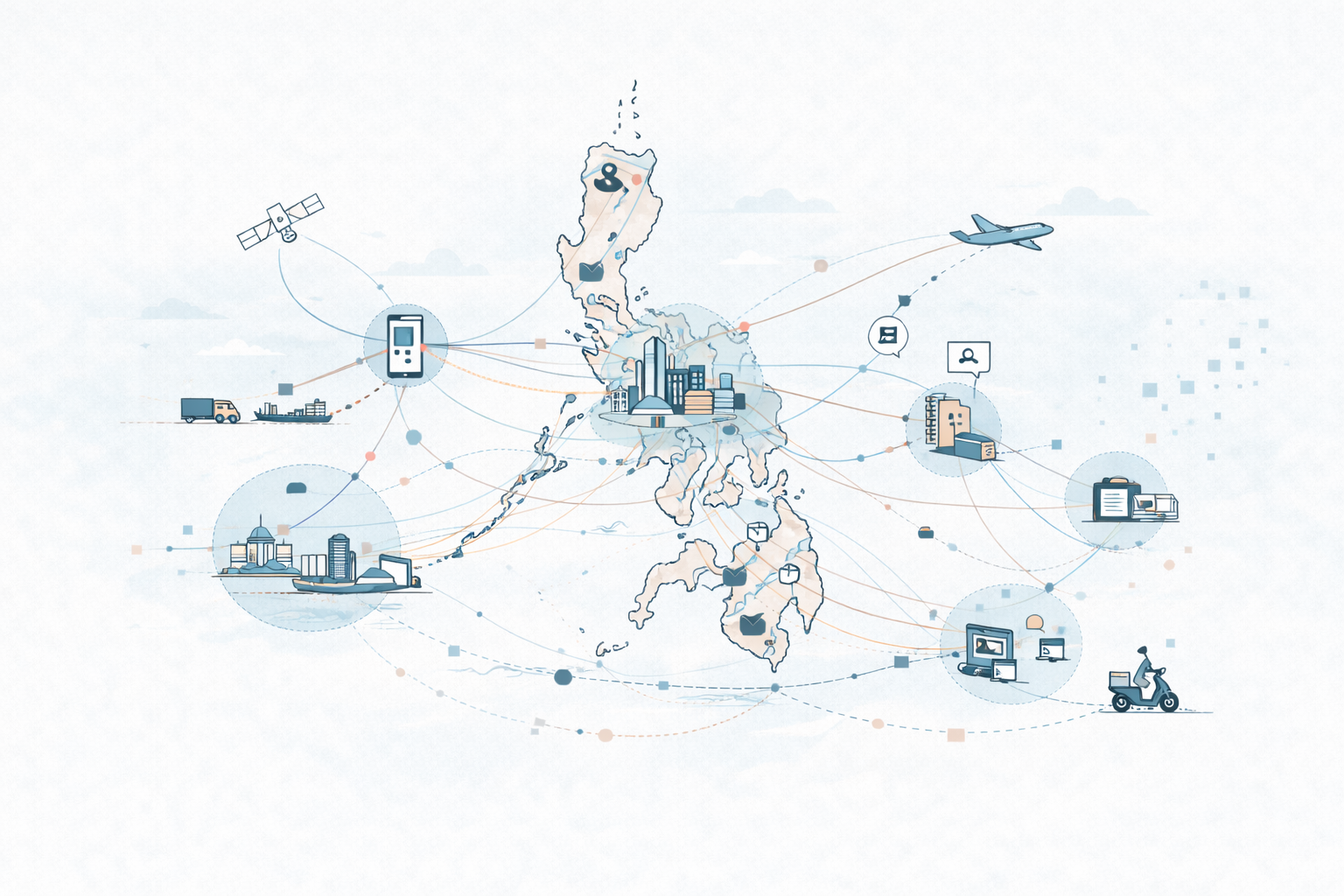
The Philippines is now a USD 40 billion digital economy. That figure—reported by the Philippine Statistics Authority—represents 8.5% of the country’s total GDP and signals something that anyone who’s spent time in Manila already knows: this nation doesn’t just use digital services, it’s shaped by them. The country employs 11.3 million people in digital roles, which is 23.1% of total employment. With 98 million internet users (83.8% penetration) and 137 million mobile connections across a population of just over 120 million, the maths are straightforward—the Philippines is mobile-first, digitally native, and growing faster than infrastructure can sometimes keep up. This overview cuts through the noise to show you where the money actually flows, what’s genuinely changing, and what still looks like hype.
Why is the Digital Economy Growing So Fast Here?
The Philippines’ digital economy grew to PHP 2.25 trillion in 2024 (USD 40 billion), representing 8.5% of GDP according to the Philippine Statistics Authority. That growth isn’t accidental. The country has structural advantages: a young population (median age 25.7 years), high internet adoption despite remaining infrastructure gaps, and a diaspora that sends remittances through digital channels. The workforce is concentrated in digital services—11.3 million workers, or 23.1% of total employment, now depend on digital-adjacent roles ranging from BPO work to freelancing to e-commerce operations.
What’s driving this isn’t just adoption of existing tools. It’s the speed of adoption. Filipinos spent 54 hours online per week in 2025, the second-highest globally after Kenya. That intensity creates demand for products and services that work at mobile speed and smartphone scale. The infrastructure still has gaps—you can’t ignore logistics costs that run at 27.5% of GDP, the highest in ASEAN—but the behavioural foundation is already solid. By mid-2025, there were 393.6 million e-wallet accounts registered, and the government is targeting 70% cashless adoption by 2026.
The labour story matters too. Unlike markets where digital growth creates displacement, the Philippines has absorbed digital growth as employment expansion. GCash and Maya didn’t replace bank workers—they created new roles in customer success, merchant support, and compliance. The BPO sector, which employs 1.9 million people and generates USD 32.5 billion in annual revenue, is currently mid-pivot from voice services to AI-augmented operations. That’s not contraction; it’s reinvention.
What’s Happening with AI Right Now?
Ask anyone in Manila’s tech community what’s changed since 2024 and they’ll point to AI implementation at scale. The numbers are striking: 92% of organisations in the Philippines have adopted some form of AI (part of a broader trillion-dollar AI wave across ASEAN), but here’s the catch—65% are still in pilot mode. That gap between adoption and operationalisation is where the real work happens now. The AI market itself is projected to reach USD 1.025 billion by 2025-2026, growing at 28% compound annually.
The BPO sector moved fastest. Sixty-seven percent of BPO companies are now running AI implementations, and the results matter. First-contact resolution rates have jumped from 65-72% (traditional voice operations) to 85-92% with AI-assisted handling. AI chatbots are now handling 60-75% of routine inquiries, which means human agents spend more time on complex problems—a shift that actually increases job quality rather than reducing headcount. GCash usage data shows 42.4% of Filipinos report using ChatGPT, the sixth-highest adoption rate globally. That’s remarkable for a country where most users access it exclusively through mobile, often on unstable connections.
The government isn’t ignoring this. The National AI Upskilling Roadmap launched in early 2026, recognising that AI operationalisation requires skills that existing education systems haven’t addressed. The real inflection point comes when those 65% still in pilot mode move to production. Companies aren’t scaling back AI investments—they’re scaling up carefully, which means the next 12-18 months will show whether AI actually delivers the productivity gains companies are banking on.
How Mobile Networks Shaped Everything
Mobile connections in the Philippines hit 137 million in late 2025, which is 117% of the population—most people have more than one SIM card, a behaviour unique to this market. Globe Telecom leads with 63.1 million subscribers, and they’ve been aggressive with infrastructure. In Q1 2025 alone, Globe added 235 new 5G sites, bringing Metro Manila coverage to 98.7%. Smart Communications reaches 97% of the population overall, which is the kind of coverage figure that doesn’t capture the quality variance between urban and rural areas, but it does show commitment.
The operating system split is decisively Android. Across the Philippines, Android accounts for 85% of smartphones versus 14% for iOS. That ratio is crucial for understanding app development priorities. Everything gets built for Android first, often iOS never. One statistic that captures the affordability challenge: it takes the average Filipino 80 days of wages to afford the latest iPhone model. That’s the lowest figure since 2018, reflecting both rising wages and falling device prices, but it still underscores why premium phones aren’t mainstream.
What matters most is speed of connection and reliability. The SIM Registration Act (RA 11934) went into full effect, requiring all active SIM cards to be registered with government identity. It was contentious—civil society groups worried about surveillance—but it’s now the baseline. The practical effect is that telecom companies have cleaner subscriber data, which helps with service quality targeting and also makes regulatory oversight more effective. By 2026, the registration requirement was largely complete, with penalties for unregistered SIMs.
E-Commerce is Building Toward USD 40 Billion
The Philippines’ e-commerce market reached USD 17.65 billion in 2025 and is projected to hit USD 40.5 billion by 2027. Those figures assume continued growth in two areas: mainline e-commerce platforms and the newer social commerce channels that are growing faster than traditional platforms.
Shopee remains the clear leader with 70 million monthly active users by mid-2025, and Lazada holds roughly 37 million, giving the two platforms combined control of approximately 70% of the traditional e-commerce market. The shopping behaviour on Shopee is distinctive—casual, exploratory, and heavily driven by live streaming and flash sales. Lazada attracts a slightly older user base and has invested in logistics infrastructure, but the growth trajectory is visibly slower. Both platforms have expanded aggressively into livestreaming commerce, recognising where engagement is actually concentrating.
What’s shifted is where growth is actually happening, and it’s almost entirely in social commerce. TikTok Shop, barely a full year old in the Philippines at the start of 2025, reached 15 million monthly active users by the end of 2026, with a 55% year-on-year increase in user-generated content product videos. More tellingly, sellers using video commerce channels increased 90% between 2024 and 2025—that’s not refinement of existing channels, that’s wholesale migration of merchant capacity toward short-form video. TikTok Shop has also introduced AI-powered co-hosts for livestreams, tools that handle on-screen presence and product commentary alongside human sellers, which reduces friction for smaller merchants who lack professional streaming capacity. That innovation matters because it lowers the barrier for casual entrepreneurs to run video commerce operations.
Social commerce as a category is projected at USD 28.4 billion in 2025, heading toward USD 96.4 billion by 2034. The distinction matters: social commerce is shopping that happens primarily through social feeds, livestreams, and creator recommendations rather than through dedicated e-commerce platforms. Fifty-six percent of Filipinos shop online at least weekly, and 85% follow social sellers on TikTok, Facebook, or Instagram. That 85% adoption rate of social sellers represents a fundamental shift in where Filipinos expect to find products. The growth is coming from smaller sellers and niche merchants, not from the established platforms. Shopee and Lazada are defending with livestreaming investments, but they’re playing catch-up to a channel that didn’t exist in their original playbooks.
What’s remarkable is how quickly this happened. Two years ago, social commerce was treated as an experimental channel. Now it’s the growth engine and the structural foundation for customer acquisition. The reason is straightforward: Filipinos spend 3 hours 50 minutes per day on social media, and shopping experiences that don’t interrupt that flow—livestreams where you can buy without leaving the app, product links in creator feeds, AI-assisted seller support—win decisively. The platforms understand this. Facebook Shop and Instagram Shop have invested in recommendation algorithms and merchant tools. TikTok’s ecosystem strategy is to make selling as frictionless as uploading a video. That’s creating a structural advantage: social platforms start with audience, then build commerce, whilst e-commerce platforms start with logistics, then try to acquire audience. (For the regional picture, see our Southeast Asia e-commerce overview.). The friction is inverted.
Digital Advertising Follows the Audience
Advertisers spent USD 1.95 billion on digital ads in the Philippines in 2025. Social media advertising accounted for USD 679 million, or about 35% of the total digital spend. The platform concentration is notable: Facebook reaches 95.8 million users, TikTok 64 million, YouTube 59.6 million, and Instagram 29.8 million. Most brands run integrated campaigns across all four, but the real targeting game happens on TikTok and Facebook, where audience segmentation is most granular.
Short-form video absolutely dominates. A thirty-second YouTube ad doesn’t perform. A TikTok creative that lives on the platform natively—that performs. Facebook’s older user base means CPM rates stay reasonably priced, so brands run brand awareness campaigns there, but conversion and engagement happen on TikTok. This has forced agency practices to change. Traditional broadcast creatives don’t work. The agencies that won in this space are the ones that treat TikTok, YouTube Shorts, and Instagram Reels as primary channels, not repurposing grounds for TV ads.
The measurement challenge is real. Most digital ad platforms optimise for completion and engagement, but Filipino brands care about conversion—sales, not just likes. That gap between what platforms optimise for and what brands need has created room for independent analytics firms and for more sophisticated audience data companies to operate. Agencies that can connect ad performance to actual sales see premium pricing.
Gaming is Bigger Than Most Markets’ Total Digital Spend
The Philippines gaming market reached USD 5,221.7 million in 2025, growing at 7.64% annually. Mobile games alone account for USD 1.49 billion. There are 43 million active gamers in the country—more than one-third of the entire population—and the demographic skews young but isn’t exclusively young. Gaming has penetrated across age groups in ways it hasn’t elsewhere, partly because the entry cost is negligible (phones are ubiquitous) and partly because gaming culture is mainstream here, not niche.
Mobile dominates because affordability matters profoundly (a pattern shared with Vietnam’s gaming market). A typical smartphone costs less than a month of wages for many Filipinos; a console costs several months. A gaming PC isn’t accessible to most households at any realistic price point. Games reflect this reality. PUBG Mobile, Mobile Legends, and Genshin Impact drive engagement and spending—particularly spending. The monetisation behaviour in the Philippines is distinctive. Players will spend on cosmetics and battle passes even when they’re not spending on console or PC games in other markets. That behaviour has made the Philippines one of the highest-spending mobile game markets per active player globally. It’s not because Filipinos have more money; it’s because they’ve accepted mobile as the platform of choice and they’re willing to invest in experiences and status within those games.
Esports sits at USD 28.6 million in 2025, projected to grow to USD 54.2 million by 2034. The infrastructure supporting it is material. The player base includes 313 professional esports athletes, meaning esports generates enough revenue to support professional careers. That’s significant—it’s not hobbyist money, it’s actual salaries funded by sponsorships, tournament prizes, and streaming revenue. Mobile esports, particularly Mobile Legends competitions, draws massive viewership. A national Mobile Legends tournament can attract viewership in the millions across streaming platforms and gaming cafes. Sponsors are willing to pay for that eyeball-time, which creates the revenue pool that supports player salaries. The esports scene is concentrated in Metro Manila and Cebu, where infrastructure and sponsorship density are highest, but competitions have regional qualifiers that extend the talent pipeline to provinces. That regional structure matters—it creates a path for young gamers in less developed areas to compete professionally without relocating first.
What distinguishes the Philippines is that gaming isn’t separate from social life. Gaming cafes remain social hubs, particularly outside Metro Manila. These spaces are where young people (and increasingly older people) gather, compete, and build community. That’s fundamentally different from markets where gaming is primarily a solo home activity. The cafe culture is changing the dynamics of how games get marketed and how communities form around them. It’s not just Twitch streamers; it’s also face-to-face tournaments in gaming cafes, watch parties during esports championships, and peer-to-peer recommendation networks that exist offline. That social infrastructure creates loyalty that algorithmic platforms alone can’t replicate. For game publishers, it means that market penetration requires presence in physical gaming spaces, not just digital channels.
Fintech Built an 89% Market Share
GCash is the story. The platform reached 89% wallet market share by mid-2025, with 86 million registered users. That’s not a feature of a bank—it’s a standalone financial platform that became how most Filipinos interact with money digitally. You can pay bills, buy load, send money domestically and internationally, buy insurance, invest in mutual funds, and borrow money through GCash. It’s not just a payment app; it’s a financial operating system that operates at a scale most banks can’t match. That 89% figure isn’t a market leader position; it’s near-monopoly control of digital payments in the consumer segment.
The dominance reflects strategic decisions that worked. GCash focused relentlessly on use cases that mattered to users—paying for electricity, buying mobile load for family members, sending money to relatives in provinces. The company didn’t try to be a bank first; it solved problems that banks ignored because the transaction sizes and customer profiles were unprofitable. By the time Maya and traditional banks woke up to mobile payments, GCash had locked in user behaviour that’s difficult to displace.
Maya evolved differently. After operating as Paymaya for years, it rebranded to Maya in 2023 and shifted toward full digital banking capabilities. By 2025, Maya held about 5% of the digital wallet market, but it attracted a different user base—slightly older, higher income—and positioned itself as a full digital bank rather than just a payments network. When the Bangko Sentral ng Pilipinas (the central bank) lifted its moratorium on digital banks in January 2025, the regulatory picture clarified. The cap is set at 10 digital banks, with 6 already licensed. That regulatory ceiling matters—it forces consolidation rather than fragmentation, which means the market will likely be dominated by 4-6 players rather than dozens of niche competitors.
The broader payment infrastructure shows the depth of fintech adoption. As of late 2023, there were 393.6 million e-wallet accounts registered. InstaPay and PESONet standardised the rails for instant domestic transfers, part of a broader digital payments transformation across Southeast Asia, which means payment transfers between banks and e-wallets now settle in real-time rather than taking days. That was infrastructure change that most users never noticed, but it made the entire ecosystem faster. The government is targeting 70% cashless adoption by 2026—up from roughly 35% in early 2024. That’s ambitious, and meeting it requires both supply (payment infrastructure, which exists) and demand (consumer habit, which is still building). The trajectory suggests it’s achievable in urban areas and likely in about 50% of provincial areas.
BIS Project Nexus, launching in July 2026, will fundamentally reshape remittance flows. The initiative will enable cross-border payments across participating countries—Thailand, Singapore, Malaysia initially, with other ASEAN members expected to join—with settlement in minutes rather than days. That’s transformative for remittances, the Philippines’ largest source of foreign currency at USD 40+ billion annually. Currently, remittances move through correspondent banking networks that take 2-4 days and charge fees of 1-3%. Project Nexus will compress that to minutes with fees closer to 0.5%. For a recipient receiving a PHP 5,000 remittance, that’s a difference of PHP 75-150 per transfer. At scale across millions of transactions, it’s a structural shift in how Filipino families move money across borders. The implementation in July 2026 won’t be immediate adoption—banking infrastructure takes time to integrate—but the incentive structure will drive rapid uptake.
This is the Social Media Capital
The statistics get quoted frequently and they bear repeating: the Philippines has 90.8 million social media accounts, representing 78% of the population. Facebook reaches 95.8% of internet users aged 16 and older (95.8 million people). YouTube reaches 59.6 million. TikTok 64 million. Instagram 29.8 million. The platform overlap is massive—most users maintain accounts across multiple platforms—which means understanding social media behaviour requires thinking about how they blend together.
The engagement is intense. Filipinos spend 54 hours per week online, second globally only to Kenya. Of that, 3 hours 50 minutes daily goes to social media (roughly 33 hours 50 minutes weekly). TikTok specifically captures an average of 40 hours 39 minutes per month from active users. That’s consumption at a scale that fundamentally shapes how Filipinos receive news, discover products, build community, and spend attention.
Content creation is mainstream, not niche. The percentage of social media users who’ve created content or published something is significantly higher in the Philippines than global averages. That’s because the platforms are social-first—it’s not primarily about broadcasting to an audience, it’s about participating in an ongoing conversation. YouTube Shorts, TikTok, Instagram Reels—all of these formats suit the Philippine context where creating and sharing is normal behaviour. The creator economy is substantial but not yet professionally structured for most creators. Most earn through brand partnerships, live-streaming gifts, or affiliate links rather than platform payouts. The move toward more formalised creator revenue (as platforms have done in Indonesia and Thailand) will likely accelerate in 2027.
Infrastructure is Becoming the Bottleneck
Data centres are where capacity constraints will show up first. The Philippines’ data centre market reached USD 690 million in 2025 and is projected to grow to USD 1.9 billion by 2030 (23.35% compound annual growth). That’s growth driven by AI workloads, video streaming, and enterprise cloud migration. By 2026, there are 11 submarine cable projects expected to come online, which will massively increase international bandwidth capacity. PLDT’s Apricot cable alone will provide 190+ terabits per second of capacity.
The challenge is domestic distribution and local infrastructure. The Philippines has 7,641 islands, and only a handful have major population centres. Logistics cost 27.5% of GDP—the highest in ASEAN—because distribution is expensive at archipelago scale. Compare this with Indonesia’s similar challenges across its 17,000 islands. Last-mile delivery times reflect this: 24-48 hours in Metro Manila, 7-14 days in remote provinces. E-commerce companies and logistics providers have invested heavily in regional hubs, but the fragmentation remains. That’s why smart logistics companies have partnered with local courier services in provincial areas rather than trying to build nationwide networks.
Cloud infrastructure is concentrating. AWS, Microsoft Azure, and Google Cloud all have points of presence in the Philippines, primarily in Metro Manila. That concentration means latency for users outside the capital can be significant. Local cloud providers like Aya Data and Megaport are building alternatives, targeting enterprises that need data sovereignty compliance. The regulatory environment increasingly requires sensitive data to stay onshore—healthcare records, financial data, government systems—which creates a market for local cloud services. That fragmentation between international cloud providers and local alternatives will likely characterise the next 2-3 years.
Healthtech and Edtech Are Scaling Differently
Telemedicine reached USD 2.1 billion in 2025 and is projected to grow to USD 6.1 billion by 2032. The trend accelerated sharply during and after the pandemic, and while it’s normalised now rather than exceptional, the adoption has stuck. mWell, a major telemedicine platform, acquired KonsultaMD in February 2025, creating a combined user base of 5.8 million. That consolidation matters because it means fewer, larger platforms with better coverage and more sustainable unit economics.
What’s genuinely distinctive is first-mile delivery. In February 2025, the first medical drone delivery in Southeast Asia launched in the Philippines, enabling deliveries of urgent medicines and lab samples to remote islands. That’s infrastructure that leapfrogs what you’d see in many developed markets—not because the Philippines is more advanced, but because the archipelago geography forces innovation. If you need to deliver a test result from an island clinic to Metro Manila, a fast boat takes hours, but a drone takes minutes.
EdTech is bigger in absolute terms—USD 5,593.6 million in 2025—but it’s a messier market. The government launched Education Center for AI Research (E-CAIR) in February 2025 to formally study AI applications in education. Sixty percent of students report preferring online learning tools compared to traditional classroom-only instruction. That’s adoption from demand, not mandated use. Platforms like Deped Commons, Google Classroom, and various private online learning platforms all compete, but there’s no consolidated standard. Schools adopt based on what their teachers are comfortable with and what parents can afford to supplement. That fragmentation is becoming a barrier to scaling—the next phase requires standardisation and integration.
Regulation is Catching Up Fast
The regulatory environment shifted dramatically between 2024 and 2026. The SIM Registration Act (RA 11934) became fully effective, requiring all active SIM cards to be registered with government identification. It was contentious—privacy advocates raised concerns—but it’s now the baseline. The enforcement includes penalties for falsification, which means the registry is cleaner than it was. That affects everything from telecom service quality to law enforcement’s ability to trace communications.
The Bangko Sentral ng Pilipinas (BSP) released Circular 1213 in May 2025, establishing comprehensive IT risk management guidelines for financial institutions. That sounds procedural, but it’s material—it sets minimum standards for cybersecurity, data protection, and operational resilience that banks and digital financial companies must meet. The digital bank cap of 10 institutions, with 6 already licensed, was a surprise. Many expected open entry. Instead, the central bank chose controlled expansion, which makes digital banking a more consolidated market than it might have been.
The Internet Transactions Act became fully effective in June 2025, establishing the legal framework for online commerce, digital signatures, and electronic records. That clarity matters for companies building compliance infrastructure. A bill regulating social media use for minors passed in July 2025, imposing restrictions on advertising targeting under-13s and requiring parental consent for younger users. Content moderation for elections became a formal responsibility for platforms—COMELEC (Commission on Elections) works directly with Facebook, TikTok, and YouTube during election periods to flag and address disinformation. None of this is unique to the Philippines, but the speed at which regulation moved from absent to comprehensive was striking.
Three Trends Are Building the Future
Operationalisation of AI is moving from hype to execution. Of that 92% of organisations that have adopted AI, 65% are still in pilot mode. The next 12-18 months will determine which organisations can successfully move to production and generate measurable returns. The BPO sector is leading—67% of BPO companies have live implementations already, and first-contact resolution rates show measurable improvement (up to 85-92% from 65-72%). That’s not theoretical; it’s performance data from companies managing millions of daily interactions. When the other 33% of BPO companies move to production, and when non-BPO sectors follow, the productivity gains will compound. That’s not guaranteed—many pilots fail at scale—but the trajectory is clear. The risk isn’t technical; it’s organisational. Companies need to retrain staff for different roles, adjust performance metrics, and accept lower initial efficiency while systems learn. The ones that do will pull ahead. The ones that don’t will face margin pressure.
E-commerce is being remade by video commerce and hyper-personalisation. Shopee and Lazada are defending with massive livestreaming investments, but the growth is coming from smaller creators and niche sellers operating through TikTok Shop, Facebook Shop, and Instagram. The platforms are investing aggressively in recommendation algorithms that will personalise the shopping experience beyond what traditional e-commerce offers—individual product feeds rather than category browsing, AI-assisted discovery based on watch history and social graph, dynamic pricing based on inventory and demand. Social commerce revenue could exceed traditional e-commerce revenue by 2028, which would represent a fundamental reshuffling of which platforms control customer relationships and which companies can reach customers profitably. For legacy e-commerce platforms, that’s existential. For social platforms, that’s just the next evolution of their business model.
Infrastructure buildout is accelerating because data demand is accelerating. Eleven submarine cables expected to go live in 2026 will increase international bandwidth capacity significantly. Data centre investment growing at 23% annually will create capacity for cloud workloads and AI processing that simply doesn’t exist today. But the archipelago geography means last-mile distribution will remain a constraint. Logistics costs won’t drop below 20% of GDP in the near term because the fundamental problem—distributing goods across 7,641 islands with uneven population density—is a geography problem, not a logistics problem. That constraint is permanent, but it creates persistent opportunities for efficient logistics platforms that can operate at those cost structures and for local-first supply chain solutions that don’t assume nationwide coverage. Smart companies will build redundancy into their distribution networks, maintaining stocks in regional hubs rather than centralising everything in Metro Manila.
The Philippines isn’t becoming like other digital markets—it’s becoming itself at scale. The growth is real, the adoption is deep, and the structural advantages (labour, demographics, digital behaviour) are genuine. The infrastructure gaps are real too, which means there’s still enormous room for improvement. What makes the market distinctive is that the gains are being captured by platforms built for the specific constraints of this market—GCash for the cash-informal economy, TikTok Shop for social-first commerce, gaming cafes as esports infrastructure—rather than by global platforms adapted here. That suggests future winners will be companies that build for the Philippines as a market unto itself, not as a subset of a global platform. For companies and investors, that’s where the opportunity sits: in closing the gaps between potential and current capability, and in building infrastructure that assumes archipelago geography, mobile-first behaviour, and lower income levels as features rather than constraints.
This article is part of Digital in Asia’s market overview series. See also: Indonesia | Vietnam | Thailand | Singapore | Malaysia | China | India | Japan | South Korea
