
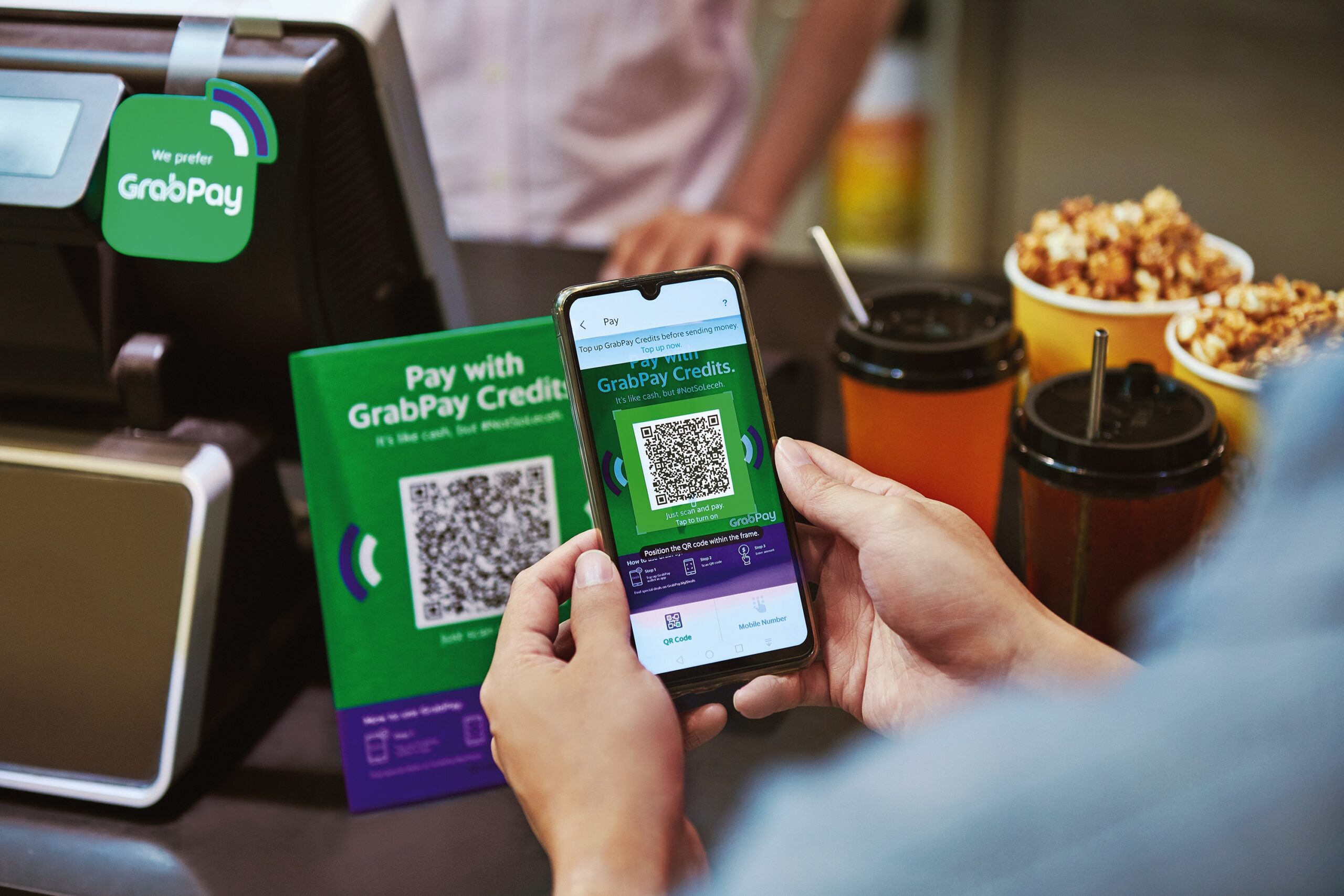
Southeast Asia’s digital payments market has crossed the $1 trillion threshold in total transaction value — and the infrastructure that makes it work looks nothing like what you’d find in Europe or North America. Instead of card networks and bank branches, the region runs on QR codes, e-wallets, and government-built real-time payment rails that process billions of transactions per year at near-zero cost. Thailand’s PromptPay handles over 74 million transactions daily. Indonesia’s QRIS connects 40 million merchants to 57 million users. In the Philippines, GCash alone serves 94 million users. Singapore’s digital wallets overtook debit cards as the leading point-of-sale payment method in 2025 — a first in the city-state’s history (Worldpay Global Payments Report, 2026). This isn’t a transitional phase. It’s a mature, fast-evolving system that’s now connecting across borders and reshaping how 700 million consumers pay for everything from street food to insurance premiums.
Understanding the mechanics matters because this infrastructure is becoming a model that other emerging markets are studying. And for any business operating in the region, it’s the plumbing that determines what you can sell, to whom, and at what margin.
What are the main payment rails in Southeast Asia?
Three layers of infrastructure carry the vast majority of digital transactions across the region, and they’ve developed in parallel rather than sequentially.
Real-time payment systems are the backbone. These are government-mandated, central-bank-operated rails designed for instant, low-cost transfers between bank accounts. Thailand’s PromptPay (launched 2017) now has over 90 million registrations and processes more than 74 million transactions daily — in a country of 72 million people (Bank of Thailand, 2025). Indonesia’s BI-FAST handles interbank transfers at scale. The Philippines has InstaPay and PESONet. Singapore has PayNow. Malaysia has DuitNow. Vietnam has Napas and VietQR. Each system was built to do one thing well: move money between accounts instantly and cheaply, often for free.
QR code payment networks sit on top of these rails. Indonesia’s QRIS is the most ambitious — a unified QR standard mandated by Bank Indonesia that works across all banks and e-wallets. By early 2025, QRIS had recorded 2.6 billion transactions in a single quarter, connecting 40 million merchants to the digital economy (Bank Indonesia). Thailand’s PromptPay QR, Malaysia’s DuitNow QR, and the Philippines’ QR Ph serve similar functions. The QR code works because it requires no hardware beyond a printed sticker and a smartphone — a crucial advantage in markets where 92% of QRIS merchants are micro and small businesses.
E-wallets are the consumer-facing layer. GrabPay, GoPay, OVO, ShopeePay, GCash, Touch ‘n Go, and TrueMoney don’t operate their own payment rails — they ride on top of the real-time systems and QR networks, adding stored-value accounts, loyalty features, and lending products. In Indonesia, 92% of consumers regularly use mobile wallets. GrabPay holds 38.3% digital wallet market share in Malaysia and 35.3% in Singapore (Worldpay, 2025). These wallets have become the primary interface through which most Southeast Asians interact with the financial system. How Super Apps Work in Asia: The Business Model Behind Grab, WeChat, and GoJek
How does QR interoperability work across borders?
This is where things get genuinely interesting — and where Southeast Asia is building something no other region has achieved at scale.
ASEAN’s Regional Payment Connectivity (RPC) initiative links the real-time payment systems of nine member economies through bilateral QR and person-to-person connections. As of December 2025, the region had 29 cross-border payment linkages, processing 36.2 million transactions worth US$716.4 million (AMRO Asia). A Thai tourist in Singapore can scan a PayNow QR code with their PromptPay-linked app. An Indonesian in Malaysia can pay with QRIS at a DuitNow merchant. The money settles in seconds, converted at competitive FX rates, with no card network in the middle.
The next evolution is Project Nexus, led by the BIS Innovation Hub. Rather than stitching together dozens of bilateral links, Nexus creates a hub-and-spoke model — each country’s payment system connects once to a central gateway and gains access to all others. India, Malaysia, the Philippines, Singapore, and Thailand are the founding participants, with a 2026 rollout on track. Indonesia is simultaneously pushing QRIS interoperability with Japan and South Korea, while China has piloted cross-border QR linkages enabling millions of Indonesian merchants to accept Alipay and UnionPay.
The ambition: a regional payment network where money moves as freely as data. The infrastructure is being laid faster than most observers expected.
Why did e-wallets beat cards in Southeast Asia?
Southeast Asia took a completely different path from Europe and North America — and it wasn’t an accident.
Credit card penetration never reached critical mass. Fewer than 10% of adults in most Southeast Asian markets hold a credit card. Roughly 290 million adults remain unbanked or underbanked (World Bank, 2022). Card networks need merchants with POS terminals and consumers with cards. Neither existed at scale across markets spread over thousands of islands.
Smartphones arrived before bank accounts. Mobile penetration across Southeast Asia exceeds 90%, and for hundreds of millions of people, a smartphone was their first — and only — computing device. E-wallets exploited this gap perfectly. GCash doesn’t need a bank account to open. GoPay doesn’t need a credit check. Touch ‘n Go doesn’t need a physical card. All you need is a phone number. The onboarding friction collapsed from weeks (for a bank account) to minutes.
Government rails eliminated the need for private networks. PromptPay, QRIS, and DuitNow gave e-wallets instant, interoperable payment infrastructure at near-zero cost — infrastructure that Visa and Mastercard charge merchants 1.5–3% to access. Why would a street vendor in Jakarta pay card interchange when QRIS costs 0.3% — or, for transactions under 500,000 rupiah ($32), nothing at all?
The result: e-wallets and real-time bank transfers now account for the majority of e-commerce payments across the region, and they’re gaining fast at point of sale. Cards aren’t disappearing, but they’ve been relegated to a secondary role — used primarily by affluent consumers and for cross-border e-commerce.
How do the economics of digital payments work?
Every payment system needs a business model, and the economics vary dramatically depending on which rail carries the transaction.
Card payments follow the interchange model. The merchant pays a merchant discount rate (MDR) of 1.5–3%, split between issuing bank, card network, and processor. In Malaysia, credit card MDR runs up to 3%. This works for high-value purchases but prices out small merchants — which is exactly why cards never penetrated markets dominated by micro-enterprises.
QR and real-time payments operate on a different model. Indonesia’s QRIS charges merchants just 0.3% for standard transactions, and Bank Indonesia waived MDR entirely for transactions under Rp 500,000 starting December 2024. Thailand’s PromptPay transfers between individuals are free. The economics work because the central bank subsidises the infrastructure as a public good — financial inclusion is the return on investment, not interchange revenue. For merchants, the savings are transformative. A warung owner in Yogyakarta paying 0.3% on QRIS versus 2.5% on a card transaction keeps an extra 2.2% of every sale.
E-wallets monetise differently again. The wallet itself often charges zero or minimal transaction fees to users and merchants — it’s a distribution channel, not a profit centre. The money comes from lending (extending credit to users and merchants using transaction data), float income (interest on stored balances), advertising, and platform commissions on embedded services. GrabPay’s total payment volume surged 38% year-on-year to approximately $5.8 billion in Q2 2025 alone — but Grab‘s financial services margin is where the economics really compound.
What’s changing in 2026?
Three shifts are reshaping the landscape right now.
Cross-border payment rails are going live. Project Nexus moves from pilot to production in 2026, connecting five countries’ instant payment systems through a single gateway. Indonesia’s QRIS expansion to Japan and South Korea creates interoperability beyond ASEAN. The practical impact: a Thai small business can receive payment from a Malaysian buyer in seconds, settled in baht, with no correspondent banking chain and no 3–5% remittance fee. If it works at scale, it undercuts SWIFT, Western Union, and card networks simultaneously for retail and SME payments.
CBDCs are moving from research to sandbox. Thailand launched a programmable payment sandbox in December 2025 — effectively a Thai baht-backed stablecoin testing environment (Baker McKenzie, 2026). Indonesia’s Project Garuda is developing a wholesale CBDC to complement BI-FAST. The Philippines is piloting wholesale CBDC for large-value domestic transactions. None will replace cash or e-wallets in 2026, but they signal that central banks are building programmable money infrastructure for conditional payments and machine-to-machine transactions within the decade.
AI is entering the payments stack. Alipay’s AI Pay surpassed 100 million users by February 2026, processing over 120 million transactions during Chinese New Year week alone — the world’s first AI-native payment product at scale (Ant Group). Fraud detection, dynamic pricing, credit scoring, and merchant onboarding are all being automated across the region’s payment platforms. Grab dispatches over 90% of rides using AI, and that same infrastructure increasingly powers payment routing and risk decisions.
What does this mean for businesses?
If you’re operating in Southeast Asia — or selling into it — the payment infrastructure dictates your go-to-market in ways that aren’t obvious from the outside.
You can’t rely on cards alone. In most ASEAN markets, supporting only Visa and Mastercard means you’re accessible to fewer than 15% of potential customers. Any serious e-commerce or O2O strategy needs e-wallet integration (GrabPay, GoPay, ShopeePay at minimum) and real-time bank transfer options (QRIS, PromptPay, DuitNow).
Payment costs are structurally lower than Western markets. MDR of 0–0.3% on real-time rails versus 1.5–3% on cards means your unit economics look different. Micro-transactions that wouldn’t be viable on card rails become profitable on QR.
Cross-border is about to get dramatically cheaper. Project Nexus and QRIS expansion mean that intra-ASEAN B2C and B2B payments are moving toward near-instant settlement at a fraction of traditional correspondent banking costs. For businesses with regional supply chains or customer bases, this changes treasury management fundamentally.
The infrastructure Southeast Asia has built isn’t catching up with Western payment systems. In real-time settlement, QR interoperability, and cross-border connectivity, it’s moved ahead. The region skipped the card era and built something faster, cheaper, and more inclusive. The rest of the world is starting to notice.
Sources & Further Reading
- Fintech Singapore — SEA Payment Methods 2026 — Worldpay Global Payments Report figures for SEA
- Lowy Institute — QR Payments the ASEAN Way — cross-border QR corridor build-out
- Fintech News — APAC Digital Payments 2026 — regional adoption and growth trends
- Primer — SEA Payment Trends — wallet penetration and method mix by country
- IMF — ASEAN's Digital Payment Revolution — cross-border QRIS and regional integration
- Payment Expert — Asia QR Lessons for Europe — how Asia mastered QR adoption
- Payment Asia — Rise of Digital Wallets in SEA E-Commerce — wallet share in checkout flow
Discover more from Digital in Asia
Subscribe to get the latest posts sent to your email.
