
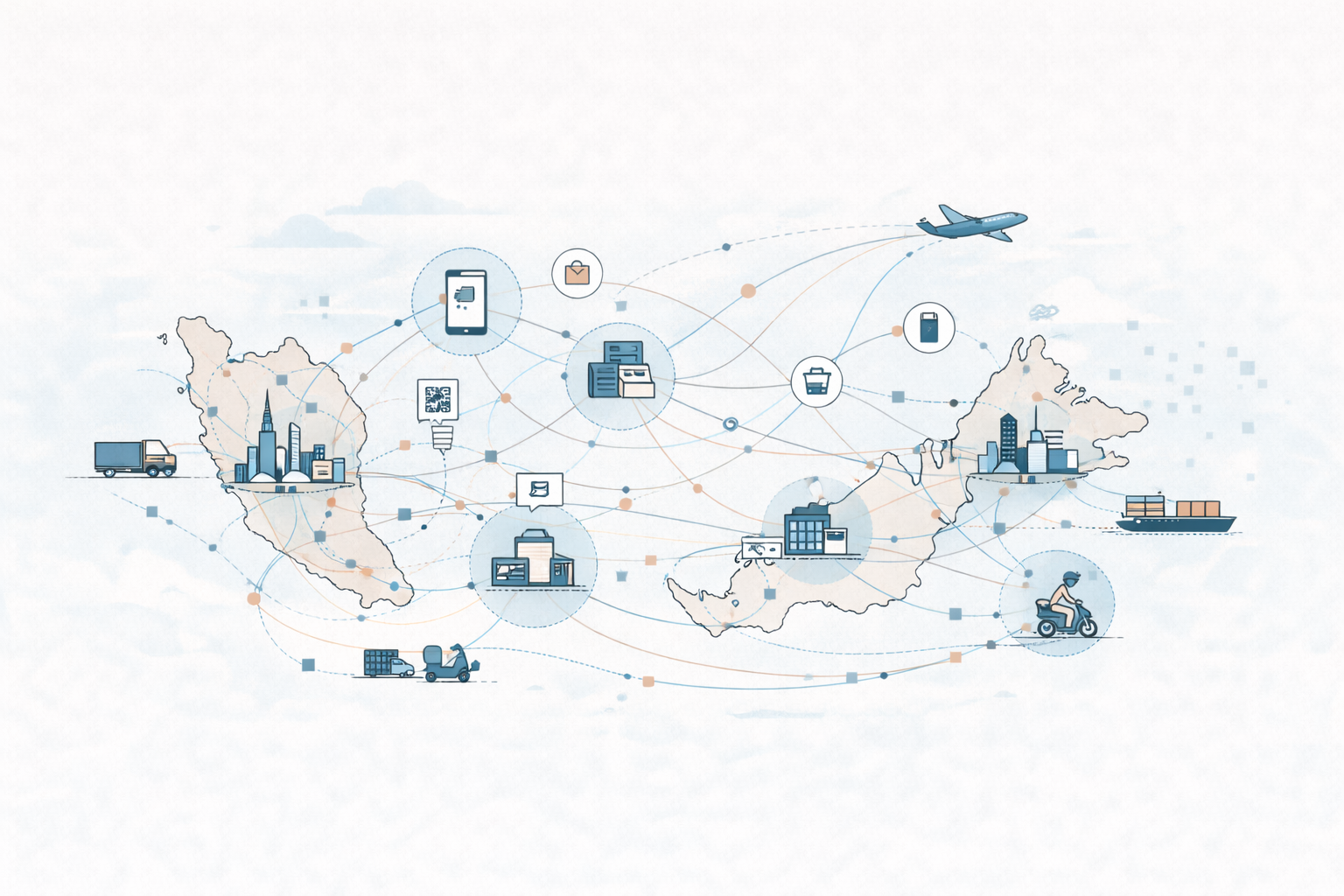
Malaysia’s digital economy hit USD 31 billion in gross merchandise value during 2024, a 16% jump from the previous year, with the sector now expected to represent 25.5% of GDP by the end of 2025. That’s not just a recovery—it’s momentum. The digital transformation market alone is growing from USD 10.68 billion in 2025 to a projected USD 29.74 billion by 2031, expanding at 18.62% annually. With 98% internet penetration, 35.4 million online users, and 44 million mobile connections (that’s a 122% penetration rate), Malaysia isn’t quietly adopting digital services anymore. It’s building infrastructure to lead Southeast Asia in the process. Here’s what’s actually happening beneath those headline figures.
What Does a USD 31B Digital Economy Actually Mean?
The digital economy isn’t abstract. Those USD 31 billion in transactions represent real shifts: RM 163.6 billion in digital investment approvals came through in 2024 alone—a staggering 250% increase from the previous year. You’re looking at government backing, private capital, and multinational commitments all arriving at the same moment.
The MyDIGITAL initiative, launched years earlier, finally matured into measurable outcomes. By 2025, 725,285 micro, small, and medium enterprises had embraced e-commerce through the programme. These aren’t startups with ambition. These are shopkeepers, manufacturers, and service providers who’ve been reluctant to move online, now realising the necessity. When a hardware supplier in Johor Bahru or a textile manufacturer in Penang uploads their catalogue, that’s the USD 31 billion figure taking shape.
The digital transformation market tells a parallel story. Growing at 18.62% annually, it’s driven by cloud adoption, automation tools, and software-as-a-service implementations across sectors. Manufacturing, logistics, finance, and retail are all racing to modernise operations. Digital transformation spending for Malaysian enterprises isn’t a “nice to have” anymore—it’s how you stay competitive against regional players and international entrants.
What complicates the picture: growth is unevenly distributed. Urban centres like Kuala Lumpur, Petaling Jaya, and George Town see saturation in digital payments and e-commerce. Rural adoption, though rising, still lags significantly. The 98% internet penetration figure masks connectivity quality issues in some states. And whilst 35.4 million internet users sounds comprehensive, active digital consumers in specific verticals—particularly high-margin sectors like fintech or SaaS—remain far smaller.
Government policy accelerated this expansion. The RM 163.6 billion in approved digital investments suggests deliberate targeting: data centre development, semiconductor manufacturing, AI infrastructure. Malaysia’s positioning itself not as a digital consumer but as a digital hub—a subtle but critical distinction that shapes investment and talent flows for the next five years.
Why Malaysia Captured a Third of Southeast Asia’s AI Funding
Here’s the number that caught everyone’s attention: Malaysia captured 32% of Southeast Asia’s AI funding between H2 2024 and H1 2025, pulling in USD 759 million. In a region where Singapore historically commanded the lion’s share and Vietnam was surging, Malaysia suddenly looked like the place to build AI infrastructure.
The scale of capital commitments explains why. Microsoft pledged USD 2.2 billion. Google committed USD 2 billion. NVIDIA and YTL announced a USD 2.36 billion partnership focused on data centres and AI computing. Oracle added USD 6.5 billion. That’s USD 15 billion in commitments from four tech giants alone, spread across cloud infrastructure, AI research labs, and training initiatives. No other Southeast Asian country absorbed that concentration of high-level investment in a single cycle.
The backend problem was real, and Malaysia had an answer. Data centre capacity exploded from 120 megawatts in 2023 to 690 megawatts by mid-2025. That’s not marginal growth—it’s near-doubling infrastructure in roughly 18 months. GPU imports tell the story even more vividly: April 2025 saw USD 2.74 billion in GPU imports, a staggering 3,400% increase from 2023 levels. These aren’t commodities. They’re the literal hardware required to train and run large language models.
But—and this matters—the investment didn’t translate uniformly into local AI capability. About 73% of Malaysian businesses using AI remain at basic automation levels. Adoption among the 2.4 million AI-using businesses sits at a concerning depth gap: chatbots and simple predictive tools dominate over more sophisticated applications. Three in four digital consumers reported using generative AI, but that usage is mostly ChatGPT, Claude, or similar offshore models. Malaysia’s becoming an AI infrastructure supplier, not yet an AI centre of gravity.
The data centre race is creating its own tensions. Johor, positioning itself as the nation’s primary hub, is locked in discussions about power supply and water consumption. Data centres consume enormous amounts of both. Government approval processes for new facilities slowed in 2025, partly reflecting concerns about resource sustainability. That’s healthy friction, actually—but it’s also a reminder that infrastructure growth outpaces real-world constraints.
How 5G Went from Scarcity to Standard in 18 Months
Mobile penetration in Malaysia has long exceeded 100%, but 5G adoption tells a different story—one of rapid scaling followed by infrastructure strain. By 2025, 5G coverage reached 82.4% of populated areas, with 28.7 million subscriptions. Rewind to November 2023: there were just 4.6 million 5G subscribers. That’s a six-fold surge in roughly 18 months.
The structural challenge is interesting. Malaysia’s 5G network exists under a unique model: DNB (Digital Nasional Berhad) operates a single wholesale infrastructure that service providers rent capacity from rather than build competing networks. CelcomDigi holds 30.1% market share, Maxis ranks second, and U Mobile is now building Malaysia’s second 5G network outside the DNB framework. The wholesale model was meant to reduce duplication and accelerate coverage. It partially succeeded—coverage grew fast. But it also created a bottleneck: when millions of users suddenly shifted to 5G, the shared wholesale pipe couldn’t deliver expected speeds.
5G speeds actually fell 46% as user numbers scaled during 2024–2025. Marketing promised gigabit speeds. Real-world performance was half that in many locations. The lesson isn’t that 5G failed—it’s that infrastructure buildout was outpaced by adoption. DNB is expanding capacity, but adding backbone infrastructure takes time. Users, meanwhile, experienced marketing hype colliding with technical reality.
The implications ripple outward. Gaming, streaming, and industrial IoT applications that depend on consistent ultra-low latency still face frustration. Enterprise IoT deployments—sensors, autonomous vehicles, remote machinery—hit ceiling effects faster than anticipated. This actually creates opportunity for focused infrastructure investment, but it also explains why rural 5G coverage, whilst broad, often disappoints.
What E-Commerce Growth Actually Looks Like at USD 10.62B
E-commerce in Malaysia hit USD 10.62 billion in 2025, growing at 13.67% annually towards a projected USD 23.11 billion by 2031 (for context, see the regional e-commerce landscape). Those are solid, steady numbers—but they flatten an interesting reality. The market has three tiers of competition, and they operate almost as separate ecosystems.
Shopee dominates with approximately 60% market share. Lazada holds roughly 30%. TikTok Shop re-entered the Malaysian market in December 2024 after a prior exit, arriving with the advantage of 19.3 million TikTok users and a growing social commerce playbook. That’s the headline competition, but the real story is how different these platforms are operationally.
Shopee’s penetration is deepest among millennial and Gen Z urban users, particularly those buying fashion, electronics, and household goods. Lazada captured significant share in first-time digital buyers and older demographics, particularly through partnership with government programmes and subsidised access in less-developed regions. TikTok Shop’s reentry is specifically targeting the impulse-purchase, entertainment-first buyers who’d rather browse livestreams than search product catalogues.
Live-stream commerce is generating up to 22% of some platform GMV—that’s the percentage of total sales value driven by real-time broadcast selling sessions. This isn’t a small feature. Entire vendor strategies centre around livestream timing, personality, and audience engagement. A vendor in Kuala Lumpur selling kitchenware might depend on 2–3 livestreams per week for half their revenue. Scale that across millions of vendors, and you’re looking at a completely different commerce infrastructure than traditional e-commerce.
What’s crucial: the growth is happening at the margins, not at scale. Urban, wealthy consumers are fully saturated. Growth comes from tier-2 cities, semi-rural areas, and price-conscious buyers. Those buyers didn’t abandon physical shopping reluctantly. They came online because a livestream made a product feel safer to buy, or because Shopee’s logistics network finally reached their neighbourhood reliably. That’s not just market expansion—it’s a shift in how commerce functions across Malaysian society.
Why Digital Advertising Hit RM 9.54B Expected Revenue in 2025
Digital advertising in Malaysia reached USD 2,967.1 million in 2025, part of a broader expected RM 9.54 billion in total ad revenue for the year. Social media advertising grew 11% year-on-year and now represents 41% of all digital adex (advertising expenditure). Zoom out to total Malaysian advertising: digital now accounts for 77% of all spend, up from a smaller percentage just years earlier.
The composition is shifting beneath these totals. Programmatic advertising—the automated, algorithm-driven purchasing of ad inventory—is accelerating. Current forecasts suggest programmatic reaches 73% of all digital ad spending by 2028. That means the majority of ads you see are bought and placed by machines, not humans negotiating contracts. For advertisers, that’s efficiency and scale. For platforms, it’s revenue predictability. For smaller publishers outside the programmatic giants, it’s existential pressure.
Social media’s dominant position in the advertising mix makes sense given Malaysia’s social media adoption. Facebook reaches 22.35 million users, TikTok 19.3 million (and growing fastest, particularly among under-25s), and LinkedIn 9.10 million. Brands allocate budgets where audiences are, and audiences are on social platforms spending, on average, substantial daily hours. A fashion brand targeting millennials doesn’t debate whether to be on TikTok or Instagram anymore—they debate which creative approach works better on each platform.
Video advertising is the growth vector. Short-form video, particularly through TikTok and YouTube shorts, captures premium rates because engagement metrics justify the spending. An eight-second TikTok ad might have lower absolute reach than a banner ad, but the completion rate and subsequent conversions often justify higher cost-per-thousand-impressions pricing.
The challenge for small and medium advertisers: programmatic requires sophisticated audience data, creative testing, and attribution capability. Those are expensive to build in-house. Reliance on platforms and agencies concentrates power and margin, which is why Malaysia’s seeing healthy growth in boutique digital agencies that help SMEs navigate the programmatic landscape without betting their entire budget on algorithmic guesses.
Gaming Revenue at USD 1.016B (2024): A Market Becoming Serious
Malaysia’s gaming market generated USD 1,016.33 million in 2024, with forecasts pushing it to USD 2,083.01 million by 2033—an 8.30% compound annual growth rate. More significantly: 14 million Malaysians game regularly, representing over 50% of the population. That’s not niche. That’s mainstream.
Mobile gaming dominates, representing over 50% of the USD 1,016.33 million market—roughly USD 284 million and growing. Mobile Legends Bang Bang and PUBG Mobile are the defining titles, mirroring gaming patterns across Southeast Asia, each with millions of monthly active players. These aren’t casual games. Competitive matches involve teams, rankings, prize pools, and esports career pathways for the most skilled players. Tournament prize pools have grown visibly, with franchise-based leagues attracting sponsorship from telcos and financial services companies.
Console and PC gaming exists but remains a smaller segment—largely concentrated in urban areas with disposable income and reliable broadband. The barrier to entry is cost: a decent gaming PC runs RM 3,000–5,000, a PlayStation 5 around RM 2,500. For players in tier-2 cities or rural areas, mobile is the only viable entry point, which is why mobile gaming’s market share is so substantial and growing.
Esports specifically generated USD 6.86 million in 2024 revenue, which sounds modest until you realise that the government allocated RM 30 million specifically for esports development and athlete support. That’s policy validation. The Sports Commission formally recognises esports competitors. Universities offer esports scholarships. This isn’t underground anymore.
What complicates the narrative: Malaysian gaming growth is driven by imported IP, not local game development. The ecosystem isn’t yet producing breakout hit games that compete regionally or globally. Game development studios exist—Monolith Soft, Mezzo, a handful of others—but they’re focused on contract work or mobile titles rather than franchise creation. The opportunity is real, but the gap between consumption and production remains.
DuitNow QR Hitting 3B Transactions: Digital Payments Reached Inflection
DuitNow QR—Malaysia’s instant payment system using QR codes—hit 3 billion transactions in 2025, doubling from 1.5 billion the previous year. That doubling matters because it signals that digital payments crossed from “convenient option” to “default behaviour” within a two-year window. E-payment transactions broadly reached 18.4 billion, a 25% increase, translating to 538 digital payment transactions per person annually.
Digital wallets now represent 35.10% of the digital payment market share. GrabPay, Boost, Touch ’n Go e-Wallet, and MAE (the government-backed app) form the primary competitive set. Each targets slightly different user behaviour: GrabPay captures ride-hailing and merchant payments, Boost pushes offline retail, Touch ’n Go dominates toll and parking, MAE positions itself as a government-backed inclusive platform. That fragmentation is healthy—it means users choose based on specific use cases rather than surrendering to monopoly pricing.
The fintech infrastructure is maturing rapidly. Five digital bank licenses were awarded by BNM (Bank Negara Malaysia), with three now operational. GXBank launched first in September 2023, followed by others. Digital banks don’t yet threaten traditional banks in terms of deposit volume, but they’re capturing the fastest-growing segment: younger, urban, digitally native customers who prefer app-first banking. These aren’t toys—they’re regulatory-approved institutions offering savings accounts, loans, and investment products.
Buy-now-pay-later (BNPL) deserves specific attention. The category reached 6.5 million active accounts by 2025, a 40% growth rate that outpaces credit card growth. SPayLater controls roughly 56.5% of the BNPL market. These services appeal to younger consumers and first-time credit users because they offer smaller transaction amounts, instant approval, and transparent fee structures compared to credit cards. For merchants, BNPL reduces friction in the checkout process. For lenders, it’s a high-margin, rapidly growing product category.
The psychological shift is worth noting: consumers who grew up using cash or physical cards are now digitally transacting by default. That behavioural change has permanent implications for retail, logistics, and financial services. Digital payment adoption trends across Southeast Asia
Social Media at 25.1M Users: Where Conversations (and Spending) Happen
Malaysia’s social media user base reached 25.1 million by 2025, representing 70.2% of the population. That penetration suggests near-saturation in certain demographics and geographic areas, yet still significant room to grow in older age groups and less-developed regions.
Facebook remains the largest platform with 22.35 million users, a reflection of years of network effects and older user migration. But TikTok is the growth story. At 19.3 million users and the fastest-growing platform, particularly among users under 25, TikTok isn’t just a social network in Malaysia—it’s becoming a primary content consumption and commerce channel. That shift happened in roughly three years, which is remarkable.
LinkedIn’s 9.10 million users reflect growing professional consciousness, particularly among younger workers and those in knowledge-intensive sectors. LinkedIn is where career building, corporate announcements, and industry thought leadership live. It’s not where Malaysian social conversation happens, but it’s where professional identity and opportunity intersect.
WhatsApp deserves mention because it’s dominant as a messaging platform but often invisible in social media statistics. Malaysian businesses use WhatsApp as their primary customer service channel. Families organise through WhatsApp group chats. Small vendors push product updates via WhatsApp broadcast lists. It’s not a social network by platform categorisation, but it functions as one in terms of daily communication and influence.
The competitive threat to Facebook is real but overstated. Facebook isn’t declining in Malaysia; it’s just growing slower than TikTok. Users don’t abandon Facebook. They add TikTok to their daily rotation, spending the incremental time there. That’s a meaningful shift in where attention and advertising budgets flow, but not yet a displacement.
Content creators have noticed. The most successful Malaysian creators build presence across multiple platforms—YouTube, TikTok, Instagram simultaneously. They don’t depend on one platform’s algorithm or monetisation rules. That diversification is a learned lesson from platform unpredictability. Creator economy growth in Southeast Asia
Why Johor Is Malaysia’s Data Centre Battleground
Data centre infrastructure in Malaysia grew from niche to strategic. The market itself is worth USD 5.48 billion in 2025, projected to reach USD 16.02 billion by 2031—a 19.55% annual growth rate. But the real story isn’t the market size. It’s the geographic concentration and sustainability tensions.
Johor is positioned to capture approximately 60% of Malaysia’s total data centre capacity by 2030. That’s not accidental. Johor offers land, proximity to Singapore, existing power infrastructure, and government incentives. The state approved 143 projects worth RM 144.4 billion in digital infrastructure investment. The pipeline includes 4.0 gigawatts of power capacity dedicated to data centres. That’s enormous—a single gigawatt powers roughly 750,000 homes.
Cyberjaya, Malaysia’s purpose-built tech city, hosts over 22 existing data centre facilities. StepEast contributes 30+ projects from 11 operators. But even within this growth, friction is visible. Power tariffs increased 10–14% in July 2025. Water consumption for cooling vast data centre facilities is raising sustainability questions, particularly as Malaysia enters drier monsoon seasons. The government briefly paused non-AI data centre approvals in 2024–2025 due to resource concerns. That pause is lifting, but only for projects meeting specific sustainability criteria.
The implication is straightforward: Malaysia can’t become a global data centre hub without solving the energy and water puzzle. Renewable energy integration is accelerating—solar installations, hybrid power systems—but the pace of data centre construction is outstripping renewable capacity additions. That’s a multiparty problem involving government policy, utility companies, and data centre operators. It’s also an opportunity for companies focused on data centre efficiency, renewable energy, and resource management.
What this means for the broader digital economy: data centre availability is no longer a constraint on growth. Infrastructure is scaling. What matters now is how sustainably it scales. Data centre expansion and sustainability in Southeast Asia
Healthtech and Edtech: Where Digital Solves Real Problems
Malaysia’s digital health sector includes 39 active digital health ventures, many addressing chronic disease management, mental health, and access barriers for underserved populations. Naluri, one of the most successful, combines AI coaching with human counselling for behaviour change—weight loss, fitness, mental resilience. The company raised USD 7.8 million, signalling investor confidence in the model.
Edtech is more mature. Pandai, which went through Y Combinator, reached 700,000+ students across Malaysia and Southeast Asia. The platform focuses on accessible, interactive learning for younger students, particularly in areas with limited educational infrastructure. That’s not a niche product. That’s addressing a real gap in how Malaysia’s education system scales to underserved communities.
The broader startup ecosystem is worth context. Malaysia has 21,400+ digital startups, with cumulative fundraising reaching USD 18.9 billion across all cohorts. Two unicorns exist—Grab and Instacart’s investor Khatabook (though Khatabook’s primary market is India, it has Malaysian operations). The startup density is real, capital is accessible, but the gap between early success and unicorn status remains wide.
What’s interesting in healthtech and edtech specifically: both address sectors where Malaysia has systemic needs. Healthcare costs, educational equity, access for rural populations—these aren’t imaginary problems. Digital solutions that reduce cost, improve outcomes, or expand access have clear value propositions. That’s why these verticals attract capital and why they’re growing even as other startup categories face funding pressure.
PDPA Phase 3, Online Safety Act, and AI Governance: Regulation Arriving Fast
Malaysia’s digital regulations accelerated remarkably in 2024–2025. The Personal Data Protection Act (PDPA) Phase 3 came into effect in June 2025, introducing mandatory data protection officers, mandatory breach notification requirements, and data portability rights. For many companies, compliance required legal restructuring, security investments, and process overhauls. Phase 3 isn’t theoretical—it’s enforcement-active, with BNM and other regulators actively investigating breaches and non-compliance.
The Online Safety Act signed into law in May 2025 mandates labelling of AI-generated content. That means deepfakes, synthetic media, ChatGPT-generated text, and AI images must carry disclosure labels. The intent is consumer transparency and protection against manipulation. The implementation is still being refined—labelling standards, enforcement mechanisms, and appeals processes are evolving.
The AI Governance Bill is in final drafting stages, with Cabinet submission expected by June 2026. The National AI Guidelines published in September 2024 provide non-binding direction, but the Bill will carry regulatory weight. Expect requirements around AI transparency, bias testing, and human oversight in high-stakes applications (lending, employment, criminal justice). Malaysia is positioning itself as thoughtful on AI regulation—not banning it, but setting guardrails before problems scale.
These regulations aren’t obstacles—they’re infrastructure for trust. Companies operating in Malaysia need to design with compliance in mind from inception. That adds cost and complexity, particularly for smaller organisations. But it also means Malaysia is building a digital economy on foundations of data protection and consumer safety rather than waiting for scandals to force retroactive regulation.
Three Structural Trends Shaping 2026–2030
Malaysia’s digital transformation is concentrating around three vectors that will dominate the next five years, each with clear winners and losers.
First: data centre expansion and infrastructure sustainability. Johor’s ambitious capacity buildout—60% of national capacity by 2030—is real and funded. But it’s hitting constraints around power, water, and environmental impact. Companies and investors in data centre efficiency, renewable energy integration, and resource optimisation will capture significant value. The government’s selective pausing of non-AI facilities suggests policy will favour infrastructure that supports high-impact applications. That’s a narrowing of opportunity, but it’s also a clarification. Johor becomes the hub. Other states become secondary. Efficiency becomes non-negotiable.
Second: digital banking’s structural effects. Three digital banks are operational, with more coming. These aren’t toys—they’re disrupting deposit flows, lending patterns, and payment infrastructure. Traditional banks are responding with digital-first initiatives, but the playing field is shifting. Digital wallets, BNPL products, and instant payment systems are making credit and payment frictionless for consumers who adopt them. That’s hollowing out traditional banking’s retail margins. Expect consolidation, technology partnerships, and creative product positioning from incumbent banks. Fintech companies that own specific customer segments—young professionals, gig workers, rural unbanked populations—will outcompete generalists.
Third: AI-driven transformation at infrastructure and application layers. Malaysia captured 32% of SEA AI funding because tech giants see it as a infrastructure hub. But local businesses are still mostly at basic automation. The gap between infrastructure readiness and application sophistication is widening, creating opportunity for companies that can translate foundation models into vertical-specific solutions. An AI platform trained on Malaysian retail data, payment patterns, and consumer behaviour could outcompete global tools. That capability doesn’t exist yet at scale. Building it, over the next three years, is where value concentrates.
These trends aren’t speculative. They’re baked into current investment, policy, and user behaviour. The Malaysia digital economy isn’t reaching an inflection point in 2026. It’s already inflected. What’s happening now is consolidation around the trends that will matter most.
This article is part of Digital in Asia’s market overview series. See also: Indonesia | Vietnam | Thailand | Singapore | Malaysia | Philippines | China | India | Japan | South Korea
