
No country has lived the extremes of modern gaming quite like the Philippines. Around 67.7 million Filipinos play games — close to 60% of the population — making it the second-largest gaming nation in Southeast Asia after Indonesia (Antom). It is the world’s strongest Mobile Legends esports nation, having won four straight world championships. And it was the global epicentre of the play-to-earn boom, where at its 2021 peak over 40% of Axie Infinity’s 2.5 million daily players were Filipino — before the whole thing collapsed. The Philippines is where gaming stops being entertainment and becomes income, identity and, briefly, an economy. In a region that exports more than half the world’s mobile games, the Philippines exports something different — not finished titles, but players, talent and labour. Its great gaming export was the play-to-earn workforce itself.
How big is the Philippines gaming market?
On the industry-standard measure of consumer spending on games, Niko Partners has the Philippines passing $500 million in 2025 — a mass-scale market, growing, but lighter on per-player revenue than Thailand or the mature markets to the north. Broader baskets run far higher: Ant International’s Antom report projects $3.52 billion by 2025, a figure that folds in a much wider digital-media and payments definition. Treat the ~$500 million as the defensible “games market” number and the billions as a different, broader count.
The shape matters more than the headline. The Philippines is a classic mass-scale market: enormous engaged audience, low average spend, growth driven by adding and deepening players rather than premium pricing. Niko groups it with India and Indonesia as the region’s high-volume, lower-ARPU markets — the places where reach comes cheap and revenue comes slowly.
Who plays games in the Philippines?
Almost everyone, and not who you’d guess. Players aged 18 to 34 make up 69% of the market, but the most striking number is generational: the 35-to-44 age group logs the highest daily-gaming rate at 46%, beating teenagers and twenty-somethings (Antom). Gaming in the Philippines isn’t a youth subculture. It’s a mainstream adult habit, played daily, mostly on phones.
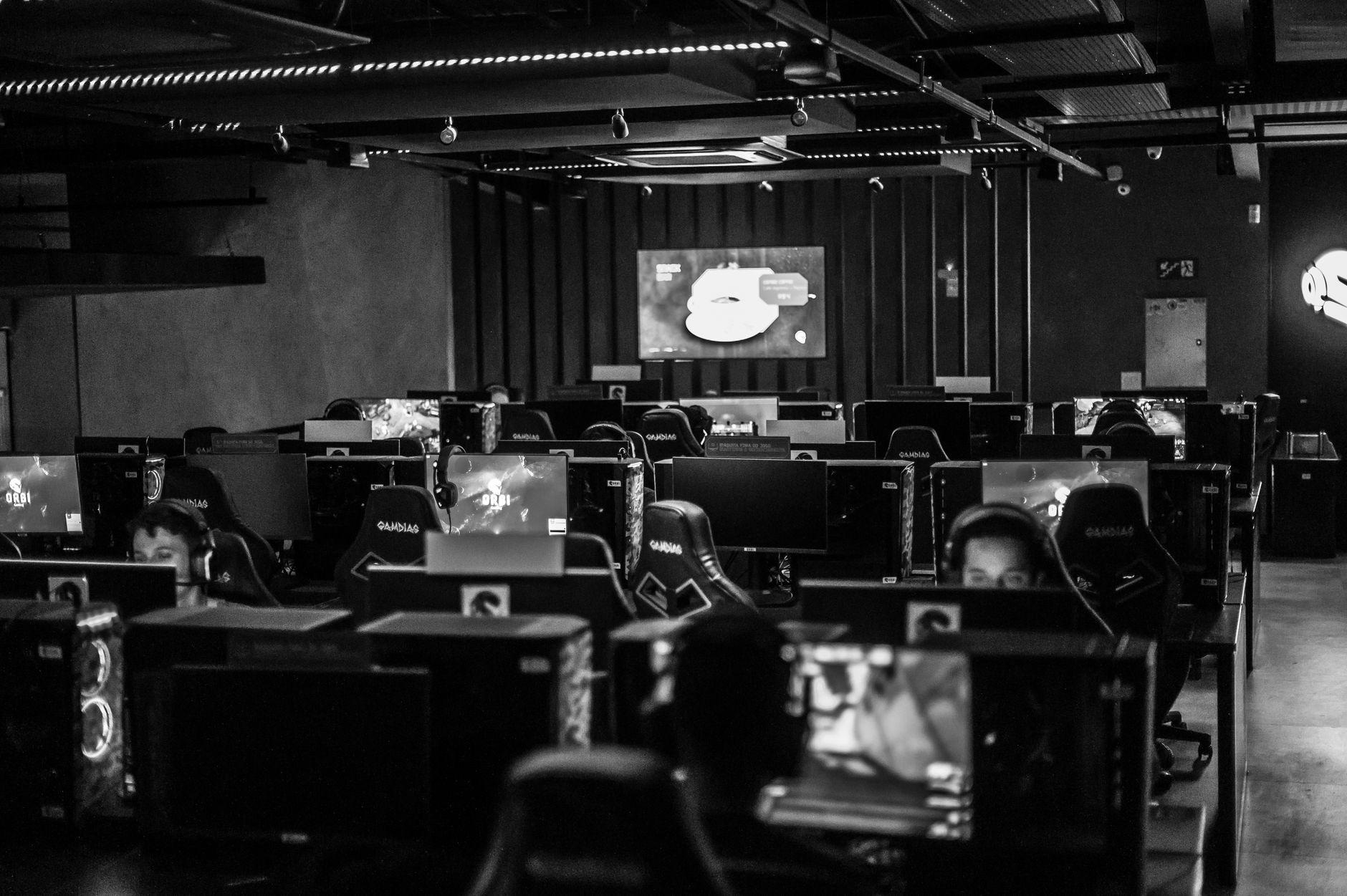
Two structural factors amplify it. English proficiency above 90% means Filipinos adopt international titles with almost no localisation lag, and the market runs on word of mouth — nearly 90% get their gaming information online, heavily through Facebook, influencers and KOLs. Add the country’s deep internet-café culture — the coin-operated pisonet terminals that put PC gaming within reach of low-income households — and you get one of the most engaged gaming populations on earth.
The Philippines is the world’s Mobile Legends superpower
Nowhere takes Mobile Legends: Bang Bang as seriously as the Philippines, and the trophy cabinet proves it. Filipino teams won four consecutive MLBB World Championships — Bren Esports (M2), Blacklist International (M3), ECHO (M4) and AP.Bren (M5) — with AP.Bren the only org ever to win twice (Rappler). No other country comes close.
The scale of the audience is what turns sporting dominance into something bigger. The M5 World Championship final, held in Manila in December 2023, peaked at 5.07 million concurrent viewers — at the time the fourth-highest peak in esports history, for a mobile game, with a Filipino team lifting the trophy on home soil (ONE Esports). Domestically, the MPL Philippines league regularly draws past 1.8 million concurrent viewers. Mobile Legends here isn’t a game people play. It’s a sport people belong to.
How the Philippines became the centre of play-to-earn
The most important gaming story the Philippines has produced isn’t an esports title. It’s Axie Infinity. During the COVID lockdowns of 2021, the NFT game’s daily active users exploded from around 38,000 in April to roughly 2.5 million by year-end — and over 40% of those players were Filipino (TIME, CoinPro). For a stretch, a blockchain game was a meaningful income source in a country under one of the world’s longest lockdowns. This was the Philippines’ real gaming export: not a game it built, but a global workforce it supplied — Filipino scholars grinding NFT economies for players and guilds worldwide.
The mechanism was the “scholarship” model, pioneered by Filipino-co-founded Yield Guild Games — lending the expensive in-game NFTs to players who couldn’t afford the entry cost, in exchange for a share of earnings. Scholars from households earning under $400 a month could pull in around $200 a month playing Axie; one survey found 23% spent their first earnings on food (France24). At its height, YGG had thousands of scholars and a waiting list reported near 60,000.
Then it broke. The in-game SLP token collapsed more than 95% from its 2021 high, and in March 2022 the Ronin bridge hack drained around $620 million — later attributed to North Korea’s Lazarus Group, one of the largest crypto thefts ever (CoinDesk). Filipino scholars who’d treated Axie as a wage saw that income evaporate within months, some left in debt (TIME). The play-to-earn dream didn’t fade. It crashed. And the Philippines felt the crash harder than anywhere because it had believed in the dream most.
How does the Philippines regulate gaming?
Consumer gaming is lightly regulated, but two government moves stand out. On crypto gaming, the Philippines was ahead of almost everyone: the Department of Finance ruled Axie earnings taxable as income in August 2021, at the very height of the craze — a government taxing Web3 gaming before most of the world had heard of it.
The bigger 2024 headline is about gambling, not games, and the distinction matters. President Marcos Jr. signed an executive order banning all Philippine Offshore Gaming Operators (POGOs) — the offshore online-gambling industry, later made permanent by law — citing links to scams, money laundering and trafficking. At its 2019 peak the POGO sector employed well over 100,000 people, mostly foreign nationals, yet contributed only around 0.2% of GDP. It’s worth keeping clear: when “Philippine gaming” hits global headlines, it often means offshore gambling, not the consumer games above.
How do Filipinos pay for games?
Digital wallets lead, used by around 39% of players, ahead of cash and bank transfer (Antom). GCash and Maya dominate the wallet layer, with carrier billing, over-the-counter top-ups and prepaid “gaming data” promos — bundles starting from a few pesos for MLBB, Free Fire and PUBG Mobile — reaching players without bank accounts. It’s a payment stack built for small, frequent spends in a price-sensitive market.
That’s the Philippines in one line: a country that doesn’t lead Southeast Asia on revenue, but leads the world on what gaming can mean. The most decorated mobile-esports nation on the planet, the place play-to-earn went furthest and fell hardest, and an audience that treats games as belonging rather than pastime. The spending will deepen as the market matures, and the talent is already exporting — Filipino studios increasingly co-develop and service games for the world, even if the finished titles still carry foreign names. The passion is already total. For the regional picture this sits inside, see the Asia gaming market pillar, and the genre view in our Asia gaming tracker.
Frequently asked questions
How many gamers are in the Philippines?
About 67.7 million Filipinos play games — close to 60% of the population — making the Philippines the second-largest gaming nation in Southeast Asia after Indonesia (Antom, 2024 figure).
How big is the Philippines gaming market?
On consumer game spending, Niko Partners has the Philippines passing $500 million in 2025 — a mass-scale, lower-ARPU market. Broader digital-media baskets put it as high as $3.52 billion, but that uses a much wider definition.
Why is the Philippines so good at Mobile Legends?
Filipino teams have won four straight Mobile Legends World Championships (M2 through M5), the strongest record of any nation. The M5 final in Manila peaked at 5.07 million concurrent viewers — at the time the fourth-highest esports peak ever.
Was the Philippines the centre of Axie Infinity?
Yes. At Axie Infinity’s end-2021 peak of around 2.5 million daily active users, over 40% were Filipino. The “scholarship” model let low-income players earn around $200 a month — until the SLP token collapsed and a $620 million Ronin hack ended the boom in 2022.
What is the POGO ban?
In 2024 President Marcos Jr. banned all Philippine Offshore Gaming Operators — the offshore online-gambling industry — citing links to scams and trafficking. This is gambling regulation, distinct from the consumer video-game market.
Discover more from Digital in Asia
Subscribe to get the latest posts sent to your email.
