
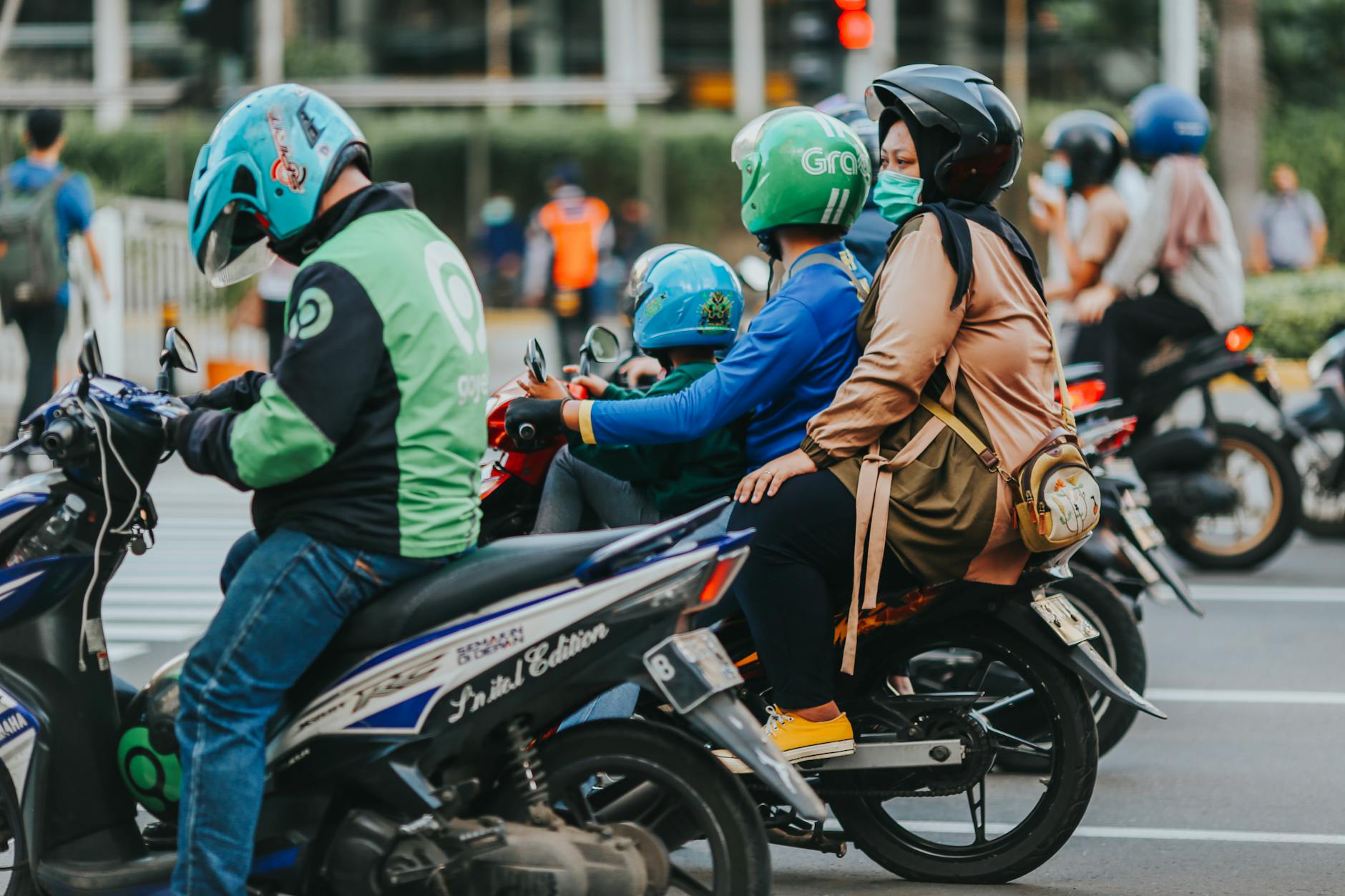
Southeast Asia’s super app market surpassed $58 billion in 2025 and is growing at over 30% CAGR (Grand View Research). Three companies sit at the centre of that expansion: Grab Holdings, which posted $3.37 billion in revenue and its first full-year net profit of $200 million in 2025; GoTo Group (Gojek‘s parent), which grew net revenue 24% to Rp18.3 trillion and reached 66 million annual transacting users; and Be Group, Vietnam’s homegrown challenger, which hit company-wide profitability and leads the country’s two-wheeler ride-hailing segment. All three turned profitable in the same twelve-month window — a first for the sector.
That shared milestone masks three very different businesses operating at three very different scales, with a potential $7 billion merger looming over everything. Understanding who does what, where, and how profitably matters whether you’re building in the region, investing in it, or simply trying to use it.
How big is each platform?
Grab is the regional heavyweight. Full-year 2025 revenue hit a record $3.37 billion, up 20% year-on-year, with deliveries contributing $1.8 billion, mobility $1.22 billion, and financial services $347 million (Grab Q4/FY2025 Earnings Release). Monthly transacting users grew from 41 million to 47 million over the year, and the platform ended 2025 with 129 million annual transacting users across eight countries. Grab’s 2026 guidance points to $4.04–4.10 billion in revenue, implying 20–22% growth. The company announced a $500 million share buyback alongside its first profitable year — a signal that the cash-burn era is definitively over.
GoTo Group is Indonesia’s champion. Net revenue rose 24% to Rp18.3 trillion (~$1.1 billion) in 2025, with adjusted EBITDA reaching Rp1.88 trillion ($118 million), beating its own guidance (TechNode Global). Annual transacting users grew 24% to 66 million. Gojek’s on-demand services improved adjusted EBITDA margin to 2.1%, nearly doubling from 2024, while GoPay turned a full-year profit for the first time. GoTo’s 2026 adjusted EBITDA guidance of Rp3.2–3.4 trillion ($190 million) signals accelerating profitability. The weakness is geographic scope: GoTo operates primarily in Indonesia, with smaller footholds in Vietnam and Singapore.
Be Group is the smallest of the three but punches above its weight in Vietnam. The company achieved positive EBITDA and reported three consecutive profitable quarters through September 2025 (Vietnam Investment Review). Be raised $30 million from VPBank Securities in 2024 and is targeting 20 million users, one billion rides, and $200 million in annual gross revenue by 2026. Bloomberg reported in December 2025 that Be is eyeing an IPO as early as 2028. It doesn’t compete on Grab’s regional breadth or GoTo’s ecosystem depth — it competes on knowing one market extremely well.
What’s the fundamental difference in their models?
All three call themselves super apps. The similarities end there.
Grab is a regional platform play. It operates across Malaysia, Singapore, Indonesia, the Philippines, Thailand, Vietnam, Cambodia, and Myanmar. Its strategy is geographic diversification with a unified tech stack — one app, eight countries, three core verticals (mobility, deliveries, financial services). Malaysia is its biggest market at $1.04 billion in 2025 revenue, making it the only country in Grab’s network to cross the billion-dollar mark. Singapore follows at $727 million, narrowly ahead of Indonesia at $715 million (Grab FY2025 Results). Grab’s edge is breadth and operational consistency across borders.
GoTo is a domestic ecosystem play. Gojek, Tokopedia, and GoPay form an interconnected loop: ride somewhere on Gojek, order food through GoFood, pay with GoPay, shop on Tokopedia. That ecosystem stickiness is GoTo’s moat — and it only really works in Indonesia, where the company has deep cultural embeddedness and regulatory relationships. GoTo’s delivery services generated Rp4.25 trillion in the first nine months of 2025, followed by service fees at Rp4.15 trillion and lending income at Rp2.67 trillion.
Be is a single-market specialist. Founded in 2018 in Ho Chi Minh City, Be has built its competitive position around Vietnam’s two-wheeler economy and a pricing strategy that resonates with local consumers. According to Cimigo’s May 2025 super-app usage report, 24% of Be users chose the app for competitive pricing and 23% for promotional offers. It’s not trying to be everything everywhere — it’s trying to be the default ride-hailing choice in a country of 100 million people.
Which platform wins in which market?
Indonesia is GoTo’s fortress. Gojek and GoPay are woven into daily life in ways that are difficult for outsiders to replicate. Grab is the main challenger, generating $715 million in revenue from the market in 2025, but GoTo’s home-court advantage is structural. A merged Grab-GoTo entity would control an estimated 80–90% of Indonesia’s ride-hailing and food delivery market (KPPU analysis) — which is precisely why regulators are scrutinising the deal so carefully.
Malaysia and Singapore belong to Grab. Malaysia alone delivered $1.04 billion in revenue in 2025, and Singapore contributed $727 million. GoTo has minimal presence in either market. Be doesn’t operate there at all.
Vietnam is the three-way contest. Grab operates a mature business there, but Be leads the domestic two-wheeler segment — the category that accounts for 61% of Vietnam’s ride-hailing market (Mordor Intelligence). Xanh SM, the electric-vehicle ride-hailing service backed by VinGroup, has emerged as a fourth competitor, creating one of the most dynamic mobility markets in the region. GoTo maintains a smaller presence through Gojek Vietnam but hasn’t invested at the same intensity.
Thailand and the Philippines are Grab-dominated markets where neither GoTo nor Be has meaningful scale.
What about the Grab-GoTo merger?
This is the story that could redraw the entire competitive map. Grab and GoTo have held on-and-off merger discussions for years, but talks accelerated sharply in late 2025. Grab’s reported offer valued the deal at approximately $7 billion (Yahoo Finance). Indonesia’s government signalled support, with the Danantara sovereign wealth fund set to facilitate the transaction. GoTo appointed a new CEO, Hans Patuwo, in November 2025 — replacing Patrick Walujo, who had opposed the deal — in what Fortune described as a step toward a “pivotal Grab takeover.“
Then it hit complications. In January 2026, Bloomberg reported that the deal had snagged on issues involving a state-backed shareholder’s stake. Indonesia’s antitrust regulator KPPU flagged risks to competition, pricing, and driver incentives. Singapore’s CCCS has yet to receive a formal merger notification but is expected to conduct a rigorous review.
The merger’s logic is straightforward: a combined entity would slash duplicate spending on driver incentives, marketing, and engineering while commanding a user base spanning the entire region. The risk is equally clear — a near-monopoly in Indonesian ride-hailing would face political backlash, regulatory conditions, and the practical challenge of integrating two complex organisations with very different corporate cultures. As of April 2026, the deal remains in limbo. Market consensus expects a resolution — approval with conditions, or abandonment — by late 2026.
Where does Be Group fit in?
Be occupies a fascinating niche. In a sector defined by mega-mergers and multi-billion-dollar burn rates, Be has built a profitable business in a single market without raising venture capital at Silicon Valley scale. Its $30 million Series B from VPBank Securities is modest by super app standards — Grab has raised over $14 billion in total funding, GoTo over $12 billion.
That constraint has forced discipline. Be reached positive gross profit in August 2022 and company-wide EBITDA positivity by 2025. The IPO target of 2028 suggests management believes it can scale further within Vietnam before seeking public capital. Vietnam’s ride-hailing market alone was valued at $1.06 billion in 2025, projected to reach $3.05 billion by 2031 at a 19.5% CAGR (IMARC Group) — enough runway for a focused local player to build a substantial business.
The Grab-GoTo merger would be good news for Be. If Grab’s attention and capital shift toward integrating GoTo’s Indonesian operations, Be gets breathing room in Vietnam to consolidate its position. If the merger fails, the status quo continues — which Be is already navigating profitably.
What’s the outlook?
The super app war in Southeast Asia has entered a new phase. The question is no longer “who can spend the most?“ — it’s “who can earn the most from the users they’ve already acquired?“ All three companies have answered that question by turning profitable in 2025, but the paths forward are starkly different.
Grab is betting on regional scale and diversification. If the GoTo merger closes, it becomes an unchallenged colossus in mobility and delivery across eight-plus markets. If it doesn’t, Grab’s existing trajectory — 20% revenue growth, $200 million in net profit, expanding financial services — is strong enough to stand alone.
GoTo is betting that Indonesia’s 280-million-person domestic market is big enough to build a world-class technology company without needing regional expansion. The ecosystem play is working, but GoTo’s long-term ceiling depends on whether Indonesia’s digital economy grows fast enough to sustain investor expectations.
Be is betting that knowing one market deeply beats knowing eight markets broadly. Vietnam’s demographics, urbanisation rate, and two-wheeler culture give Be a structural tailwind that neither Grab nor GoTo can fully replicate from the outside.
Three companies, three strategies, one region. The $58 billion super app market is big enough for all of them — for now. The merger will determine whether it stays that way.
Sources & Further Reading
- GrowthHQ — SEA Super App Market 2025-2026 — Grab vs GoTo strategies and country-level breakdown
- Finimize — Grab Super-App Ambitions — Q3 2025 revenue $873M, +22% YoY
- GrowthHQ — Grab Holdings Growth — 200M monthly active users, 1B+ rides/year
- Wikipedia — Gojek — corporate overview and product portfolio
- Brineweb — Gojek Business Model 2026 — GoTo unit economics and revenue model
- Miracuves — Grab Revenue Model 2026 — commission rates and fee structure
- Statista — Gojek MAUs by Country — Gojek user data by SEA market
Discover more from Digital in Asia
Subscribe to get the latest posts sent to your email.
