
India’s digital economy reached an estimated $402 billion in 2025, accounting for 11.74% of GDP and growing faster than virtually any comparable market on earth (MEITY, 2025). With 1.03 billion internet users, 660 million smartphones, and a payments infrastructure (UPI) that processes 640 million transactions daily, India isn’t emerging as a digital economy. It already is one — at a scale that only China rivals. The difference is that India’s digital infrastructure is open, interoperable, and largely built on public rails. That makes the opportunity structurally different from any other market in Asia.
How big is India’s digital economy?
Internet penetration in India stands at approximately 70%, with 1.03 billion users online. Smartphone penetration has crossed 660 million devices. The gap between these numbers and India’s 1.44 billion population represents both the remaining headroom and the challenge: roughly 400 million Indians aren’t yet online, concentrated in rural areas and lower-income demographics.
The digital economy’s $402 billion represents one of the fastest growth rates among major economies. The government’s target is 20% of GDP by 2030. India Stack — the open digital infrastructure layer comprising Aadhaar (biometric ID for 1.4 billion people), UPI (payments), DigiLocker (document verification), and ONDC (open commerce) — is the backbone. No other country has built public digital infrastructure at this scale and made it interoperable by design.
What makes India’s numbers significant isn’t just size — it’s trajectory. The Jio effect (the 2016 launch of Reliance Jio which collapsed mobile data prices from ~$3/GB to under $0.10/GB) created a structural break. India went from 200 million smartphone users to 660 million in under a decade. The current wave — AI services, quick commerce, digital lending — is built on that foundation.
What role does AI play in India’s digital economy?
India occupies a unique position in the global AI landscape: it’s simultaneously one of the world’s largest AI services exporters and one of the fastest-growing AI adoption markets. The domestic AI market reached $5.1 billion in 2025, projected to hit $17 billion by 2027. TCS, Infosys, and Wipro have deployed over 200,000 Copilot and enterprise AI licences across their global client bases. An estimated 380,000 AI-related jobs are projected for 2026.
The IndiaAI Mission, launched with a $1.25 billion budget, is the government’s anchor programme. It includes plans for 10,000 GPU compute capacity, AI innovation centres across major cities, and datasets for Indian-language AI model training. India’s particular advantage is multilingual AI — with 22 official languages and hundreds of dialects, the demand for regional-language AI models is massive and largely unmet by Western providers.
Enterprise adoption is accelerating from a base that was primarily IT services outsourcing. Indian startups like Krutrim (valued at $1 billion, building India-first large language models), Sarvam AI (focused on Indic-language models), and Ola’s Krutrim are building sovereign AI capacity. But the more immediate commercial story is AI embedded in existing platforms: Flipkart’s AI-powered product discovery, Zomato’s delivery route optimisation, and PhonePe’s fraud detection processing hundreds of millions of daily transactions.
How advanced is India’s mobile and connectivity infrastructure?
India’s mobile story is defined by two numbers: 72.5% mobile penetration and the world’s cheapest data at roughly Rs 50 ($0.60) per GB. The Jio-Airtel duopoly (together controlling over 70% of subscribers) has driven prices down while simultaneously rolling out what is now the world’s second-largest 5G network.
5G coverage reached 42–47% of the population by end of 2025, with over 400 million 5G users. Jio achieved 99.9% district-level 5G coverage. Airtel focused on urban and semi-urban deployment. Vodafone Idea remains a distant third, struggling with debt and delayed 5G rollout.
The platform split is extreme: Android commands over 95% of the smartphone market. India is the most Android-dominant major market in the world, driven by the price sensitivity of the mass market where most handsets cost under $150. This has profound implications for app distribution, payment flows, and advertising — the entire ecosystem is built for Android.
Mobile data consumption is enormous. India consumed more mobile data than any country except China in 2025. Average usage exceeds 20 GB per user per month, driven by video streaming (JioCinema, YouTube, Disney+ Hotstar) and social media. The infrastructure supports it: median mobile download speeds have improved significantly since 5G rollout, though they remain below the global average due to the sheer load on networks.
Who is winning India’s e-commerce war?
India’s e-commerce market is estimated at $147–185 billion in 2025, depending on the measure used (GMV versus transaction value). Flipkart leads with 48–50% market share, followed by Amazon India at 30–35%. Meesho — the social commerce platform serving Tier 2 and 3 cities — has emerged as the most interesting structural player, enabling millions of resellers to operate micro-businesses through WhatsApp and social platforms.
Quick commerce is the breakout story. The segment doubled to Rs 64,000 crore (~$7.7 billion) in FY25. Blinkit (owned by Zomato), Zepto, and Swiggy Instamart are delivering groceries and essentials in 10–20 minutes across major cities. Zepto hit $1 billion in annualised revenue. The model is expanding beyond groceries into electronics, beauty, and even fashion — categories that seemed implausible for 15-minute delivery two years ago.
Social commerce reached $29.27 billion in 2025, growing at 37.5% CAGR to a projected $144 billion by 2030. Live commerce is at $4–5 billion with 75% adoption among active e-commerce users. The India-specific dynamic is the role of WhatsApp: with 500 million users, WhatsApp functions as informal commerce infrastructure across small towns, where local sellers share catalogues, take orders, and arrange delivery through the messaging platform.
JioMart, Reliance’s commerce play, is expanding but hasn’t yet disrupted the Flipkart-Amazon duopoly in the way many predicted. ONDC (Open Network for Digital Commerce) — the government’s attempt to create an open, interoperable commerce protocol — remains early-stage but structurally fascinating. If it scales, it could fundamentally reshape how e-commerce works in India by separating the buyer app from the seller app.
How big is India’s digital advertising market?
India’s advertising market is projected at Rs 2 lakh crore (~$24 billion) in 2026, with digital now commanding the largest share of spend. The shift from traditional to digital has been faster than in any other major market — driven by cheap mobile data, massive social media usage, and the rise of connected TV.
CTV is the high-growth segment, doubling to Rs 8,000 crore (~$960 million) as JioCinema (which acquired IPL cricket streaming rights), Disney+ Hotstar, and YouTube on smart TVs reshape how Indians consume video. India is simultaneously a mobile-first and CTV-growth market — an unusual combination that creates opportunities for advertisers who understand both screens.
Google and Meta dominate digital ad spend, but the platform mix is shifting. YouTube is the single largest digital ad platform in India by reach. Instagram and WhatsApp Business are growing fast for SME advertising. Amazon’s ad business in India is scaling rapidly as more commerce searches start on Amazon rather than Google. The influencer marketing segment is projected at over $500 million, with a massive tail of regional-language creators driving reach in non-English markets.
What does India’s gaming market look like?
India’s gaming market reached $5.91 billion in 2025, driven by the world’s largest mobile gaming population: 568 million mobile gamers. Revenue per user is low by global standards, but the sheer volume creates a market that global publishers can’t ignore.
BGMI (Battlegrounds Mobile India, the localised PUBG Mobile) dominates competitive gaming and esports, with tournament prize pools exceeding $450,000. Free Fire, Call of Duty Mobile, and Garena titles fill out the competitive scene. The esports ecosystem is professionalising rapidly, with dedicated streaming platforms, team franchises, and brand sponsorships growing year on year.
Real-money gaming was a massive segment — fantasy sports (Dream11), online poker, and rummy platforms generated billions in revenue. But the regulatory environment shifted dramatically in August 2025, when the government imposed restrictions that effectively banned several categories of real-money gaming. This forced the industry toward a pivot to skill-based gaming and international markets. Dream11 remains the largest platform, but the sector’s domestic growth trajectory has been fundamentally altered.
The casual and hyper-casual gaming segment is where India’s scale matters most. With 568 million mobile gamers, India is the world’s largest market by download volume. Monetisation is primarily ad-supported rather than IAP (in-app purchase) driven, which makes the Indian gaming market structurally different from Japan or South Korea.
How does fintech work in India?
India’s fintech story is UPI. The Unified Payments Interface processed 640 million transactions daily in 2025 — a number that makes it the world’s most widely used real-time payments system by transaction volume. PhonePe leads at 48.3% market share, followed by Google Pay at 37%. Paytm, once the dominant player, has been restructuring after RBI enforcement actions in 2024.
The scale is extraordinary. UPI processed over 16 billion transactions in a single month in late 2025. The system is free for consumers, interoperable across all banks, and works on basic smartphones. It has effectively made India a near-cashless economy for urban transactions — though cash remains dominant in rural and semi-urban areas.
Digital lending is the next frontier. RBI issued comprehensive digital lending guidelines in May 2025, formalising an industry that had grown rapidly and sometimes recklessly. The regulated market includes platforms like KreditBee, MoneyTap, and bank-led digital lending products. The unregulated market — which drove much of the growth — is being brought within compliance frameworks.
Neobanking is scaling. Jupiter, Fi, and Niyo have built significant user bases, though true full-stack digital banking remains constrained by India’s licensing framework. Insurance tech (PolicyBazaar, Digit Insurance) and wealthtech (Zerodha, Groww) represent adjacent fintech segments that have reached substantial scale.
Cross-border payments are expanding: UPI linkages with Singapore’s PayNow are operational, with connections to other ASEAN payment systems under development. India’s ambition is to make UPI the default real-time payments rail for South and Southeast Asia.
Which social media and content platforms dominate in India?
WhatsApp is India’s most-used platform at 500 million users, functioning as messaging, commerce, payments (WhatsApp Pay), and customer service infrastructure all in one. YouTube reaches 450 million+ users — India is YouTube’s largest market globally. Instagram has 350 million users, making India its largest market outside the US.
The regional-language story is critical: 95% of Indian internet users consume content in regional languages. Hindi dominates, but Tamil, Telugu, Bengali, Marathi, and Kannada-language content are all large, distinct markets. This fragmentation creates opportunities for platforms that serve vernacular audiences — and challenges for global platforms that default to English.
Short-form video is massive. YouTube Shorts is the leader by reach, followed by Instagram Reels. India’s homegrown short-video apps — Josh and Moj (both owned by Dailyhunt/VerSe Innovation) — filled the gap left by TikTok’s 2020 ban and maintain significant user bases, though they haven’t matched TikTok’s cultural dominance.
India’s creator economy includes 3.5–4.5 million active creators, spanning YouTube, Instagram, and regional platforms. The monetisation infrastructure is improving: YouTube ad revenue sharing, Instagram’s creator marketplace, and brand-direct deals are creating a professional class of creators. But for the long tail, commerce (affiliate links, social selling, live shopping) is becoming more lucrative than ad-supported content.
What digital infrastructure supports India’s growth?
India’s data centre market is in the middle of a massive buildout, valued at $10.8 billion for e-commerce logistics alone and growing rapidly across cloud and colocation. AWS committed $15.2 billion in investment in India. Google, Microsoft Azure, and Oracle are all expanding Indian data centre capacity. Reliance Jio is building its own hyperscale infrastructure.
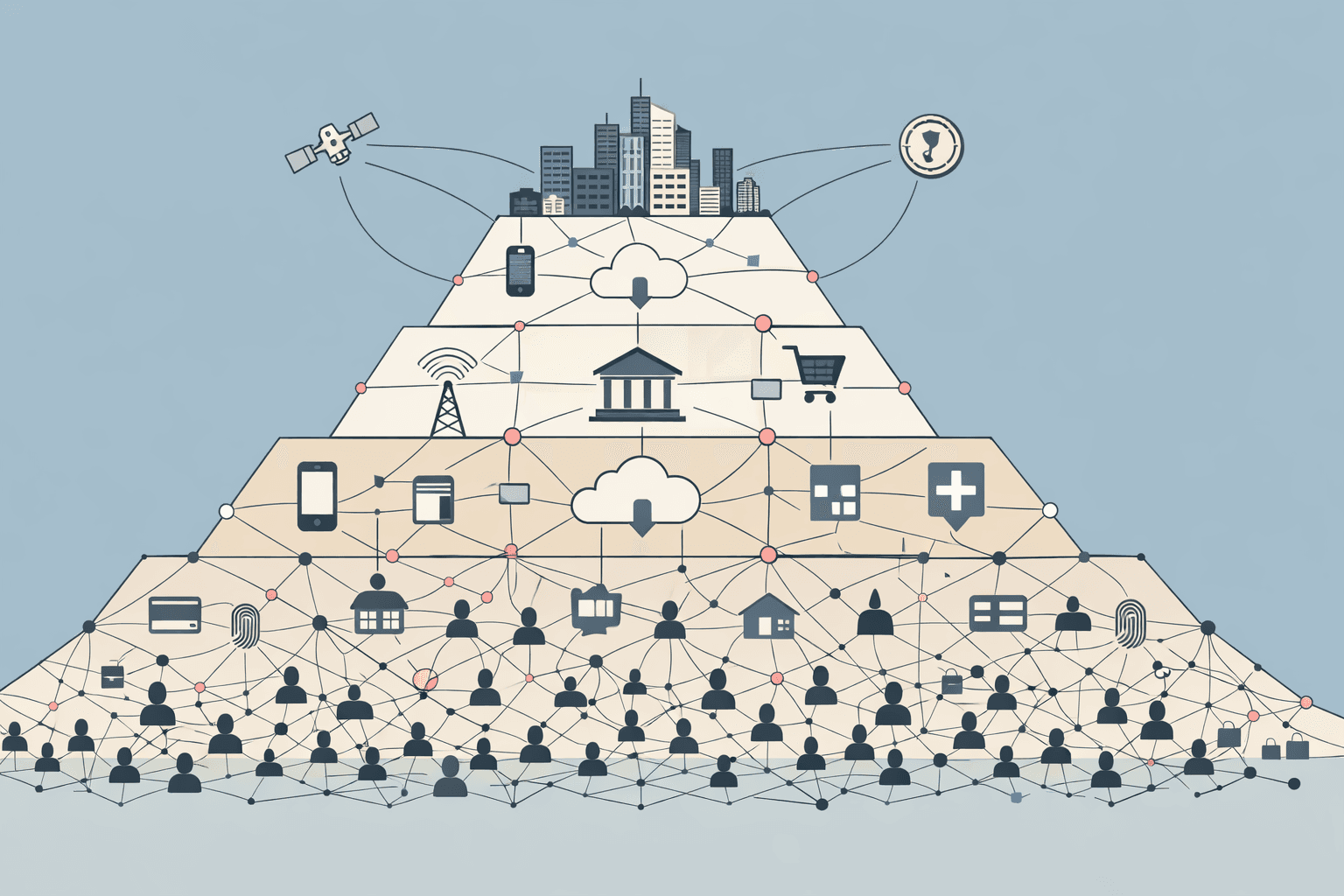
India Stack — the open digital infrastructure layer — is the country’s defining structural advantage. Aadhaar provides universal biometric ID. UPI provides universal payments. DigiLocker provides verified document storage. ONDC provides open commerce protocols. Account Aggregator provides consent-based financial data sharing. No other country has this combination of open, interoperable digital public goods at population scale.
E-commerce logistics is a competitive market led by Delhivery (India’s largest third-party logistics provider by volume), BlueDart (premium), and Ecom Express. Delhivery is testing autonomous delivery drones. The logistics challenge in India is last-mile delivery to addresses that don’t follow standard formats — AI-powered address resolution is one of the most commercially valuable applications of machine learning in the country.
Submarine cable connectivity is extensive, with India serving as a hub for cables connecting Europe, the Middle East, and Southeast Asia. The 2India-Europe Express and other new builds are adding capacity. Cloud adoption among enterprises is accelerating, driven by government mandates for digital-first services and the cost advantages of cloud over on-premise infrastructure.
What’s happening in healthtech and edtech?
India’s telemedicine market reached $4.48 billion in 2025, with Practo achieving profitability in FY25 — a milestone for the sector. Ayushman Bharat Digital Mission (ABDM) created 84.79 crore (847.9 million) ABHA health IDs, building the foundation for universal digital health records. 1mg (owned by Tata) and PharmEasy are the leading digital pharmacy platforms, growing rapidly in Tier 2 and 3 cities.
The government’s push is substantial: ABDM aims to create interoperable health records across all of India’s public and private healthcare facilities. AI diagnostics are being deployed at district hospitals for conditions including tuberculosis screening and diabetic retinopathy detection.
Edtech is in a post-correction phase. Byju’s spectacular collapse — from $22 billion valuation to insolvency proceedings — reshaped the entire sector. What’s emerged is more sustainable: Physics Wallah (profitable, serving Tier 2 and 3 students at affordable prices), Unacademy (restructured and focused), and a range of vocational and professional training platforms. The market is shifting from VC-subsidised student acquisition to unit-economics-driven models. Corporate upskilling (Simplilearn, UpGrad) is the highest-margin segment.
How is India’s regulatory environment shaping the digital market?
The Digital Personal Data Protection Act (DPDP Act) 2023 had its implementing rules finalised in November 2025, creating India’s first comprehensive data privacy framework. The rules cover consent mechanisms, data localisation requirements, and the establishment of a Data Protection Board. Enforcement is ramping up.
RBI’s digital lending guidelines (May 2025) brought the wild west of fintech lending under formal supervision, requiring all digital lenders to partner with regulated entities and disclose all fees upfront. The real-money gaming ban (August 2025) demonstrated the government’s willingness to regulate fast-growing digital sectors aggressively.
India’s IT Rules govern platform liability and content moderation, with requirements for grievance officers, compliance reports, and content removal within 36 hours of government order. The rules have been controversial — critics argue they give the government excessive power over platform speech.
FDI in e-commerce remains restricted: marketplace models (Flipkart, Amazon) are permitted, but inventory-based models face 100% FDI restrictions. This structural constraint shapes how e-commerce platforms operate in India — they must function as marketplaces connecting buyers and sellers, not as direct retailers.
The telecom bill, passed in 2023, gives the government expanded powers over telecommunications and messaging platforms. OTT communication services (WhatsApp, Signal) are now classified under the telecom framework, though enforcement of specific obligations remains unclear.
What should you watch over the next 12 to 18 months?
Three forces are converging.
First, quick commerce redefining retail. Blinkit, Zepto, and Instamart have proven that 10–20 minute delivery works in Indian cities. The model is expanding into categories — electronics, beauty, fashion — that previously seemed impossible for instant delivery. If quick commerce captures 10–15% of urban grocery and FMCG retail by 2027, it fundamentally restructures India’s $900 billion retail market. The infrastructure investment (dark stores, rider networks, route optimisation AI) is the moat.
Second, India as the world’s AI services factory. India’s IT services industry ($250 billion in exports) is pivoting from traditional outsourcing to AI-powered service delivery. TCS, Infosys, and Wipro are retraining hundreds of thousands of engineers for AI. The 380,000 projected AI jobs in 2026 represent both domestic opportunity and global competitive positioning. India won’t build the frontier models — but it may well deploy them at scale for the rest of the world.
Third, ONDC and the open commerce experiment. If ONDC succeeds in creating a truly open, interoperable commerce protocol — where any buyer app can connect to any seller app — it’s the most significant structural innovation in global e-commerce since the marketplace model. The implications extend beyond India: countries across the Global South are watching ONDC as a potential template. It’s early, adoption is modest, and success is far from guaranteed. But the ambition is to make commerce infrastructure a public good, and that’s worth paying attention to.
India’s digital economy is compounding at a rate that will make it the world’s third-largest by the end of the decade. With 1.03 billion internet users, a payments system that processes 640 million transactions daily, and a government building open digital infrastructure at population scale, the structural foundations are in place. The execution challenges — rural connectivity, regulatory unpredictability, and the sheer complexity of serving a country with 22 languages — are real. But so is the momentum.
