
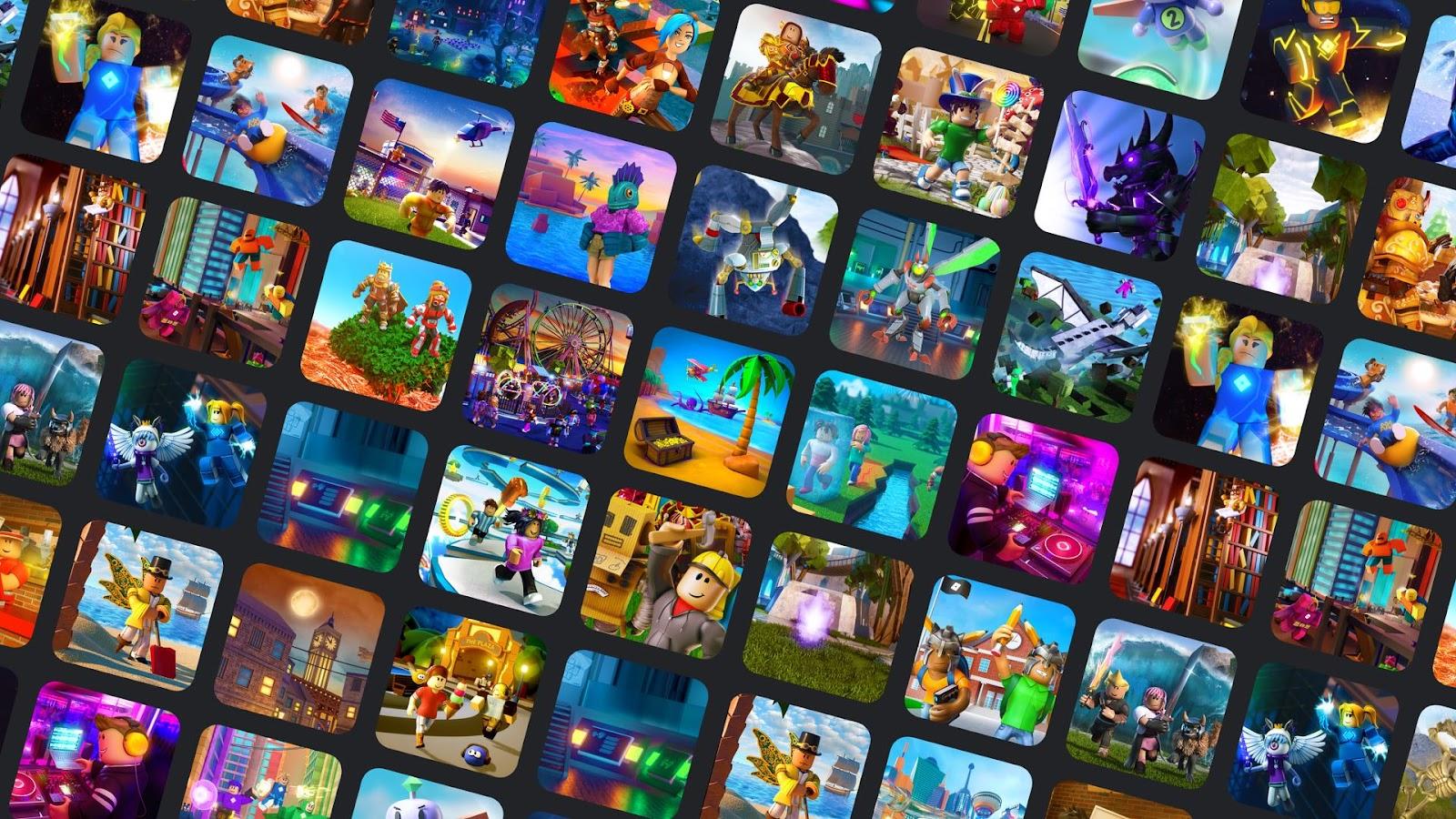
Gaming in Asia ia massive, both players and builders. But there’s a third way Asia dominates the games the world plays, and it isn’t exports or ownership — it’s building inside other people’s platforms. UGC gaming in Asia is finally taking off.
Roblox paid creators more than $1 billion in 2025, and UGC gaming growth is now overwhelmingly Asian: the platform’s daily users hit a record 144 million in the fourth quarter of 2025, up 69%, with Asia-Pacific leading the regional charge — India up 110% and Indonesia bookings up over 700% (Roblox Q4 2025 results). Alongside the players, a cottage industry of Asian build studios has emerged to make the experiences. Asia isn’t only exporting its own games anymore. It’s increasingly constructing the worlds that live inside Roblox and Fortnite.
How big is the UGC creator economy?
Large, and growing fast. Roblox paid out over $1 billion to creators in 2025 through its Developer Exchange programme, up from $923 million in 2024, with more than 35,000 creators cashing out (Roblox). On the Epic side, Fortnite paid creators $352 million in 2024, up 11%, as its creator base tripled from 24,000 to 70,000 and 58 creators each earned over a million dollars (Epic Games). From late 2025, Epic lets island creators keep around 74% of direct retail sales — a deliberate push to make building inside Fortnite a real business.
This is a genuine economy, not a hobby. And its centre of gravity is shifting east, because that’s where the players increasingly are.
Why Asia is the new centre of gravity
The demand side is unambiguous. Roblox’s record 144 million daily users in late 2025 were led by Asia-Pacific, which grew around 95% year on year. India alone grew 110%, and Indonesia’s bookings rose more than 700% (Roblox Q4 2025). For a platform long associated with American and European teenagers, the next hundred million users are overwhelmingly Asian.
Where the players go, the builders follow — and increasingly, the builders were already there. A platform that runs on user-generated content rewards whoever can make that content well and cheaply, and that’s a game Asian studios know how to play. It’s the same logic that made the region the world’s mobile-game factory, pointed at a new target: not its own app, but someone else’s platform.
Korea built its own UGC platform: Zepeto
The biggest hole in the “Asia builds inside Western platforms” story is that Asia also built its own — and the leading example is Korean. Zepeto, launched by Naver’s Naver Z in 2018, is the most popular user-generated-content platform in Asia, with over 400 million registered users and around 20 million monthly actives, skewing heavily toward Gen-Z women who build 3D avatars, design virtual fashion and socialise in user-made worlds. Roughly two-thirds of its users are in Asia, with a large share in China — a homegrown Asian platform that out-reaches Roblox in parts of the region.
Crucially, Zepeto runs its own creator economy. Users design and sell virtual clothing and items, Naver Z launched a $100 million fund to back its creators, and the platform has piloted ad-revenue sharing inside user-built worlds. Where India supplies labour to Western platforms, Korea built the platform itself and the creator economy on top of it — the fuller, more valuable version of the same idea. It fits Korea’s wider pattern of building sovereign digital platforms rather than renting someone else’s, the same instinct we describe in our South Korea gaming market deep-dive.
What about Fortnite and the creator-island economy?
Roblox isn’t the only Western platform Asia builds inside — and Fortnite’s creator economy is now enormous in its own right. Since Epic opened its Unreal Editor for Fortnite (UEFN) toolset to outside creators in 2023, it has paid them over $1 billion, and creator-made islands now account for 47% of all Fortnite playtime, up from 38% a year earlier — players have logged 11.2 billion hours across roughly 260,000 creator-built islands (Epic Games). Creators earn from a monthly pool of 40% of Item Shop revenue split by engagement, and from December 2025 Epic let them sell items directly from their islands and keep 100% of those V-Bucks sales through 2026.
For Asian studios this matters because the skill transfers directly: a team that can build a Roblox world can build a Fortnite island, and the larger build shops increasingly do both. The deeper advantage is the engine — Epic’s Unreal Engine, the technology under Fortnite, is one of the most widely used tools in Asian game development, which gives the region’s developers a running start on UEFN that they don’t have on Roblox’s proprietary Lua-based system. Where Roblox rewards cheap, high-volume build-for-hire, UEFN rewards the higher-end studio craft Asian developers have spent two decades accumulating.
India’s Roblox build industry
The most visible version of this is in India, where a cluster of studios now sells Roblox and Fortnite Creative development as a service. Juego Studios, ChicMic in Mohali, StudioKrew and Logic Simplified all market full-cycle Roblox builds — Lua scripting, UGC item creation, branded worlds — at rates well below Western equivalents. It’s the IT-services model, the one that built India’s software-outsourcing empire, pointed at user-generated game worlds: build-for-hire inside the platforms the world’s teenagers actually inhabit. The same build-for-hire model is spreading across Southeast Asia, where Indonesia, the Philippines and Vietnam all have fast-growing Roblox creator and player bases, and studios in the region increasingly take on UGC contract work alongside their Indian peers.
A necessary note of honesty here: this layer is real but not yet measured. Roblox doesn’t publish creator earnings by country, so there is no hard figure for India’s share of Roblox development. The studios are visible and selling the service; their scale is not something any credible source has quantified. The right way to read it is as an emerging cottage industry with obvious momentum, not a sized market — the early shape of something, caught before the data exists to measure it.
Why is China the walled garden?
China is the walled garden, and its story shows how high the stakes are. Roblox launched a mainland version — LuoBu — through a joint venture with Tencent in July 2021 (Roblox holds 51%, a Tencent affiliate 49%), but it failed to gain traction and was suspended within months, in December 2021. A relaunch with Tencent is planned for 2026. The episode is instructive: even Roblox, to enter China, had to partner with Tencent, accept local content rules, and ultimately failed first time round. China’s enormous creator base sits behind that wall — building instead inside domestic platforms and the Chinese versions of these worlds — until re-entry succeeds. It’s a reminder that the platform layer, like everything else in Chinese gaming, runs through Beijing’s rules and Tencent’s gatekeeping.
Why this layer matters
Count Asia’s hand in global gaming three ways and the picture changes. There’s export — Vietnam shipping 6.7 billion mobile downloads, China sending $20 billion of games overseas. There’s ownership — Tencent holding Riot, Epic and Supercell. And now there’s construction — Asian studios and creators building the experiences inside Western platforms, from India’s Roblox shops to Southeast Asia’s surging creator base. Each is a different way of making the games the world plays, and the third is the newest and least understood.
It fits the spine that runs through all of Asian gaming: the region is most interesting not as a place where games are bought, but as the place where they’re made — increasingly, even when the platform’s logo is American. For the full picture, see the Asia gaming market pillar, and for the country where this build layer is loudest, our India gaming market deep-dive.
Frequently asked questions
How much does Roblox pay creators?
Roblox paid creators over $1 billion in 2025 through its Developer Exchange programme, up from $923 million in 2024, across more than 35,000 creators.
Is India a Roblox development hub?
An emerging one. Studios including Juego, ChicMic, StudioKrew and Logic Simplified sell full-cycle Roblox and Fortnite Creative development as a service, and India’s Roblox user base grew 110% in 2025. But Roblox doesn’t publish earnings by country, so India’s share is not formally quantified.
Why is Asia important to Roblox and Fortnite?
Asia-Pacific now leads Roblox’s regional growth — the platform hit a record 144 million daily users in Q4 2025, up 69%, with India up 110% and Indonesia bookings up over 700%. The players, and increasingly the builders, are concentrated there.
Is Roblox available in China?
Not currently. Roblox has been paused in China since December 2021, with a relaunch planned for 2026 in partnership with Tencent.
—
Discover more from Digital in Asia
Subscribe to get the latest posts sent to your email.
