
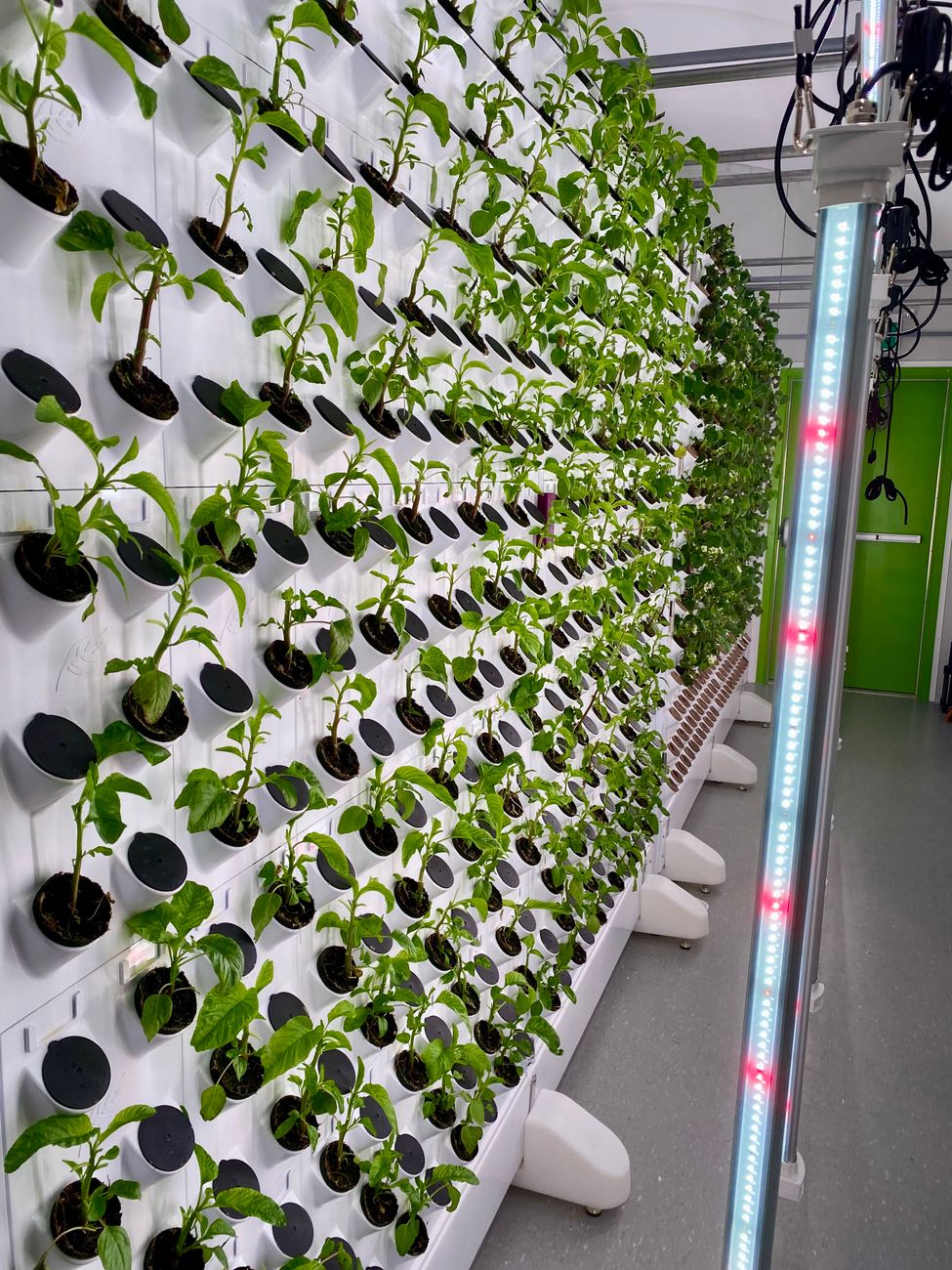
Agritech set out to digitise the hardest industry in Asia, and 2026 is the year of reckoning with how hard that actually is. Agriculture employs hundreds of millions of smallholder farmers across the region, runs on razor-thin commodity margins, and resisted technology longer than almost any other sector — and the startups that promised to fix it are now living with the consequences. Pure-play Indian agritech funding has fallen to just $202 million in 2025, about 76% below its 2022 peak, even as the market itself is forecast to triple by 2030 (Inc42). The survivors are the ones that stopped chasing growth and found unit economics; the casualties range from quiet shutdowns to one of the largest startup frauds in Southeast Asian history. This is agritech after the hype: a real and necessary industry, learning the difference between digitising farming and actually making money from it.
How big is the Asian agritech market?
Genuinely hard to pin down, and worth being honest about. Research firms slice agritech into non-additive segments and disagree by roughly 30% for the same year, so any single dollar figure is indicative at best. The well-sourced proxy is India, the region’s most active scene: Inc42 sizes Indian agritech at $9 billion in 2025, projected to reach $28 billion by 2030 at a 25% compound growth rate, with supply-chain and market-linkage the largest segment.
The cautionary note is built into the history. Back in 2021, Bain forecast India’s agritech market would hit $30–35 billion by 2025; the actual figure came in around $9 billion. Agritech forecasts ran hot, the capital chased them, and the correction has been severe. APAC remains the fastest-growing agritech region globally — but “fastest-growing” and “easy to make money in” are very different things.
What happened with eFishery?
It became one of the largest startup frauds in Southeast Asian history. Founded in 2013 in Bandung, eFishery built IoT fish-and-shrimp feeders plus financing and a marketplace, and rode the ESG-friendly mission of helping smallholder aquaculture farmers to a $200 million Series D in 2023 led by Abu Dhabi’s 42XFund, alongside SoftBank’s Vision Fund 2 and Temasek. That made it Indonesia’s first aquaculture-tech unicorn at roughly $1.4 billion.
Then it unravelled. In December 2024 a whistleblower triggered a board investigation; a forensic review by FTI Consulting found that for the first nine months of 2024, eFishery had reported $752 million in revenue and ~$16 million in profit when the real figures were about $157 million in revenue and a $35 million loss. More than 75% of reported revenue was fabricated, the company had kept dual books since 2018, and only around 6,300 of a claimed 400,000 IoT feeders had actually been deployed — it was really a low-margin feed-trading business dressed as a tech company. Of the roughly $315 million raised, only about $8.5 million ever went into technology. In April 2026, founder Gibran Huzaifah was sentenced to nine years in prison.
The deeper lesson is about diligence. The fraud survived checks reportedly involving multiple Big Four firms and Kroll background screening — what failed was physical verification. Nobody counted the feeders. The poverty-alleviation mission created a halo that disarmed scrutiny, and the pressure to hit Series A targets in 2018 started a habit of inflation that compounded for six years.
Which agritech companies actually work in India?
The ones that found discipline. DeHaat, a full-stack farmer platform, reaches 1.8 million-plus farmers across 12 states and turned EBITDA-positive in early FY26 — though its headline profit was flattered by a one-time accounting gain, and underlying operations still ran a loss. Ninjacart, the Walmart-and-Flipkart-backed B2B agri supply-chain player, deliberately shrank its revenue to chase margin, exiting low-margin trading and targeting company-wide profitability by FY27. Samunnati, an agri-fintech lender, is profitable and growing; Stellapps in dairy tech raised a Gates Foundation-backed round.
The pattern is clear. Agri-fintech, asset-light SaaS and advisory, and branded dairy are working; capital-heavy farm-to-fork logistics is struggling. WayCool, once a poster child, saw its workforce collapse from 2,300 to around 500 and is the prime cautionary tale of the burn-for-GMV era. The survivors are the ones who stopped chasing growth and started chasing unit economics.
What is happening in Southeast Asia and China?
Beyond eFishery, Southeast Asia’s record is mixed. TaniHub in Indonesia collapsed and is now a criminal probe; its lending arm lost its licence. The clean survivor is JALA, a shrimp-aquaculture-tech firm that raised a $13 million Series A and serves a genuine need in a top-five global shrimp producer. The brightest current story is Vietnam’s Techcoop, which closed a $70 million Series A in February 2025 — likely the largest agritech Series A in Southeast Asian history — even as regional agritech funding fell about 70% from its 2022 peak.
China runs at a different scale. Pinduoduo, now a ~$54 billion-revenue platform, began in 2015 as an agricultural startup selling fruit direct from farms, and pledged a roughly $1.5 billion agriculture initiative in 2021. And China dominates agricultural drones outright: a national fleet of around 251,000 crop-protection drones treated more than 173 million hectares in 2024, with DJI alone accounting for some 400,000 ag-spray drones worldwide. China’s agritech edge is hardware and scale; Southeast Asia’s is aquaculture; India’s is the supply chain — when it can be made to pay.
How do Japan and Korea approach agritech?
The North Asian markets attack agritech from the opposite direction to India and Southeast Asia — not digitising fragmented smallholders, but automating away a vanishing farm workforce. Japan has one of the oldest farming populations on earth, with the average farmer now in their late 60s, which makes robotics and automation an existential need rather than an efficiency play. Japanese agritech leans into precision machinery, autonomous tractors (Kubota and Yanmar are global leaders), robotic harvesting and high-tech greenhouses — capital-intensive, hardware-first solutions for a wealthy country running out of farmers.
South Korea has pushed hardest on “smart farms” — climate-controlled, sensor-driven vertical and greenhouse farming — backed by government programmes designed to draw younger people back into agriculture and cut reliance on imports. The contrast across Asia is instructive: India and Southeast Asia build software to coordinate millions of poor farmers, while Japan and Korea build robots and controlled-environment systems to replace the farmers they no longer have. Same sector, opposite problems — and the wealthy North Asian model, while less venture-hyped, has been markedly less prone to the funding busts and frauds that hit the smallholder markets.
Why is agritech so hard?
Because the economics are unforgiving. Feed and produce trading is a low-margin commodity business that looks like tech but rarely earns like it. Smallholder farmers are fragmented, expensive to acquire and hard to retain. And the funding winter exposed every capital-heavy model with weak unit economics — the pattern across WayCool, TaniHub and China’s Meituan-backed Meicai was the same: cash burned chasing GMV that never turned profitable. eFishery showed the dark version of that pressure, where a team that couldn’t hit its numbers honestly simply fabricated them. Asian agritech isn’t short of need or ambition. It’s short of business models that close. For the consumer end of the food chain, see our Asia food tech explainer.
Frequently asked questions
How big is the agritech market in Asia?
Hard to size precisely — research firms disagree by ~30%. The best-sourced proxy is India, valued at $9 billion in 2025 and projected to reach $28 billion by 2030 at a 25% CAGR (Inc42). APAC is the fastest-growing agritech region, but funding has fallen sharply from its peak.
What was the eFishery fraud?
eFishery, an Indonesian aquaculture-tech unicorn valued near $1.4 billion and backed by SoftBank and Temasek, was found in early 2025 to have inflated its revenue by nearly $600 million — over 75% of reported revenue was fabricated, with only ~6,300 of a claimed 400,000 IoT feeders actually deployed. Founder Gibran Huzaifah was sentenced to nine years in prison in April 2026.
Is agritech funding recovering in Asia?
Not really. Pure-play Indian agritech funding fell to about $202 million in 2025, roughly 76% below its 2022 peak (Inc42), and global agrifoodtech funding has flatlined near $16 billion for three straight years after a $51 billion peak in 2021.
Which Indian agritech companies are succeeding?
The disciplined ones: DeHaat (1.8 million-plus farmers, recently EBITDA-positive), Ninjacart (shrinking revenue to find margin), and agri-fintech lender Samunnati (profitable). Capital-heavy logistics players like WayCool have struggled badly.
Why do so many agritech startups fail?
Thin commodity-trading margins, fragmented and expensive-to-serve smallholder farmers, and weak unit economics in capital-heavy farm-to-fork logistics. The funding winter exposed models that burned cash chasing GMV — and in eFishery’s case, a team that fabricated the numbers it couldn’t hit.
—
Discover more from Digital in Asia
Subscribe to get the latest posts sent to your email.
