
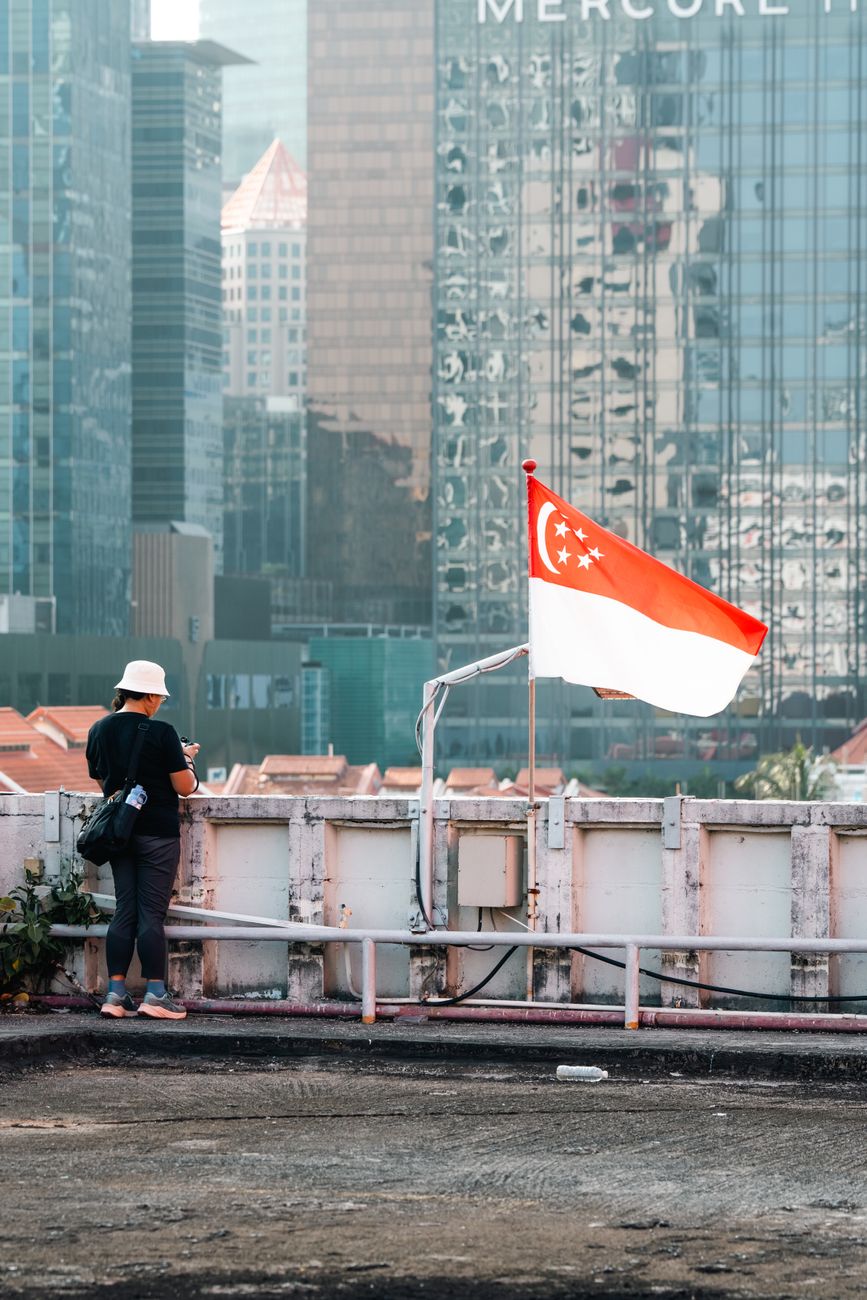
Singapore is the smallest gaming market in Southeast Asia and yet one of the most important. Fewer than 5 million Singaporeans play games, yet the company that dominates the entire region — Sea’s Garena, with around 670 million quarterly active users — is run from this city-state of six million people (Sea Q3 2025 results). Singapore isn’t where Southeast Asian gaming is played. It’s where a surprising amount of it is coordinated from. Forget market size; the interesting thing about Singapore is the layer of regional headquarters, capital and publishing that has concentrated on the island — even if the region could function without it.
How big is Singapore’s gaming market?
Small in players, large in wallet. Singapore has roughly 4.6 million gamers — the fewest of Southeast Asia’s six major markets — but each spends at a level no neighbour comes close to. Niko Partners data puts Singapore’s average revenue per gamer near $292, against a Southeast Asian average of just $18.80 — roughly fifteen times the regional norm. It is the only market in the region built on credit cards rather than e-wallets, a function of the highest GDP per capita in Southeast Asia.
But the domestic number is the least interesting thing about Singapore. The country is a rounding error in the region’s roughly $5.4 billion of player spending. Its real weight isn’t what Singaporeans buy — it’s what the country coordinates.
Why so many regional headquarters sit in Singapore
The crown jewel is Sea Group. Founded in Singapore in 2009 and headquartered there, its gaming arm Garena publishes Free Fire, the battle royale that anchors competitive mobile gaming across Southeast Asia. In the third quarter of 2025, Garena posted bookings of $840.7 million, up 51% — its best quarter since 2021 — on 670.8 million quarterly active users (Sea Q3 2025 results). Tencent owns around 23% of Sea, and Garena holds exclusive rights to distribute Tencent’s games across the region. The single most powerful force in Southeast Asian gaming is a Singapore company wired directly into China’s largest games publisher.
And it isn’t alone. Riot Games runs its Asia-Pacific headquarters and one of its largest global studios from Singapore, serving the region with games, publishing and esports. Tencent opened its Southeast Asia hub for international game publishing there in 2020. Ubisoft and Bandai Namco operate development studios on the island. The pattern is unmistakable: when a global publisher wants to set up regional operations, Singapore is the default choice for the headquarters.
It’s worth being honest about how far this goes. The region doesn’t depend on Singapore the way the phrase “control tower” implies — Vietnam’s studios export billions of downloads worldwide without routing through it, Indonesia’s market runs on its own dynamics, and most players never touch anything Singapore-based. What Singapore offers is a convenient, stable, well-governed place to locate the regional layer: the HQ, the publishing desk, the financing. It’s a coordination convenience, not a dependency. But that layer is real, and it concentrates here more than anywhere else in the region.
Singapore exports coordination, not games
Here’s where Singapore fits the regional picture. Asia exports more than half the world’s mobile games — but Singapore’s export isn’t titles. It’s capital, regional headquarters, publishing reach and event-hosting. The city-state doesn’t ship homegrown blockbusters; what it offers is a base for the capital and coordination that helps move everyone else’s games across the region. It’s a different kind of contribution — quieter than Vietnam’s downloads or Korea’s franchises, and easy to overstate, but real.
The proof that it doesn’t run on homegrown hits is its one big attempt at one. Skull & Bones, built by Ubisoft Singapore and billed as the country’s first major AAA game, took roughly a decade and a reported $200 million to make — and, by one well-reported account, couldn’t be cancelled because the Singapore government had subsidised it. It launched in 2024 to mixed reviews and modest sales. Singapore’s strength was never going to be making the hits. It’s running the business of everyone else’s.
The government built the hub on purpose
None of this happened by accident. Singapore’s Economic Development Board has handed grants to studios — including Ubisoft — to anchor AAA development locally, while the Infocomm Media Development Authority runs prototype funding and the Singapore Games Association coordinates the local industry. The state treats gaming as strategic infrastructure, using tax position, talent policy and stability to pull regional headquarters onto the island the same way it pulled finance and shipping.
It’s the Singapore playbook applied to a new sector: be the neutral, well-run node through which a fragmented region does business. For how the games being published across the region actually make money, see our breakdown of how gaming monetisation works in Asia.
Singapore hosts the region’s biggest esports moments
The hosting role extends to the arena. In October 2022, Singapore staged The International, Dota 2’s world championship and one of esports’ biggest events — the first time it came to Southeast Asia. The country had already hosted Mobile Legends World Championships in 2021. For a market this small to host events this large is the clearest signal of what Singapore actually is in regional gaming: not the audience, but the stage and the boardroom.
That’s the lens that makes Singapore make sense. Measured as a consumer market, it barely registers. Measured as the coordinating node — where the region’s dominant publisher is headquartered, where the global studios route their Southeast Asian operations, where the capital and the tournaments and the publishing muscle concentrate — it’s the most important square kilometre in Southeast Asian gaming. The most concentrated layer of regional headquarters, capital and publishing in Southeast Asian gaming sits in its smallest consumer market — not because the region needs it there, but because Singapore made itself the easiest place to put it. For the regional picture, see the Asia gaming market pillar.
For how the country accesses and uses AI — which models work and which win — see our guide to AI in Singapore.
Frequently asked questions
How big is Singapore’s gaming market?
Small by player count — around 4.6 million gamers, the fewest in Southeast Asia — but very high spend per player, near $292 per gamer versus a regional average of $18.80 (Niko Partners). Its importance lies in coordination, not consumption.
Why is Singapore important to Southeast Asian gaming?
It punches far above its size as a base for regional operations. Sea’s Garena — the dominant SEA publisher, with ~670 million quarterly active users — is headquartered there, and Riot Games, Tencent, Ubisoft and Bandai Namco all run regional operations or studios from Singapore. Global publishers route their Southeast Asian business through it.
What is Sea Group / Garena?
Sea is a Singapore-headquartered company whose gaming arm Garena publishes Free Fire, Southeast Asia’s leading mobile battle royale. Garena posted $840.7 million in bookings in Q3 2025 on 670.8 million quarterly active users. Tencent owns about 23% of Sea.
Has Singapore made any major games?
Its biggest attempt was Skull & Bones, built by Ubisoft Singapore over roughly a decade for a reported $200 million, launched in 2024 to mixed reviews. Singapore’s strength is coordinating and publishing the region’s games rather than producing homegrown hits.
Has Singapore hosted major esports events?
Yes. Singapore hosted The International — Dota 2’s world championship — in October 2022, the first time the event came to Southeast Asia, and Mobile Legends World Championships in 2021.
Discover more from Digital in Asia
Subscribe to get the latest posts sent to your email.
