
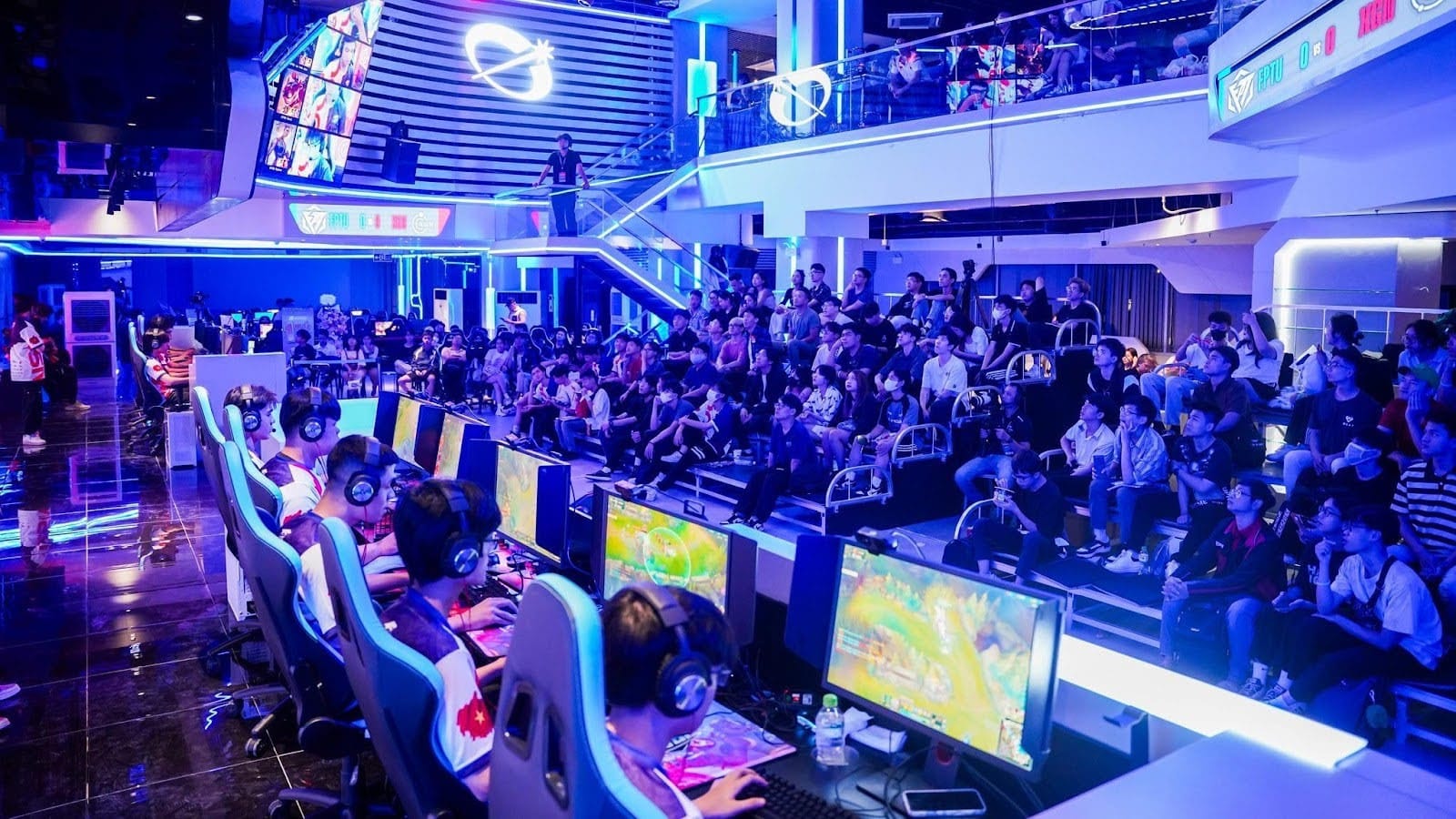
Esports in Vietnam eclipses traditional sports across every meaningful metric. According to the Deloitte SEA Esports Report 2024, 94% of Vietnamese people have heard of esports — a figure matched only by football in Brazil or cricket in India. More critically: 59% watch esports regularly, making Vietnam #1 in Southeast Asia for consistent viewership. With 10–18 million active viewers from a population of 100 million, esports rivals football as the nation’s dominant entertainment category. The scale is not close to any other Southeast Asian market.
What Makes Vietnam’s 59% Regular Esports Viewership Exceptional?
Most countries confine esports to urban, educated, affluent audiences. Vietnam is fundamentally different. According to Deloitte data (2024), 83% of esports viewers live outside major cities — in secondary cities and provinces like Da Nang, Can Tho, and Binh Duong. Only 17% are in Hanoi, Ho Chi Minh City, and other tier-1 metros. This distribution pattern is the inverse of most global esports markets, where viewership concentrates in capital cities and affluent urban centres. In Vietnam, esports reaches farming communities in the Mekong Delta, manufacturing towns in Binh Duong province, and fishing villages along the central coast — demographics that traditional sports broadcasting never penetrated.
This geographic distribution is rare globally. Traditional sports media — broadcast television, premium stadiums, print — never reached provincial Vietnam with this penetration. Esports, built on internet infrastructure and digital platforms, did. That’s a structural advantage no legacy sports broadcaster can replicate.
How Much Money Is Vietnam’s Esports Industry Actually Making?
The audience is mature; the business infrastructure is not. Vietnam’s esports generated approximately $1.7 million annually in sponsorships as of 2024 — the dominant revenue stream but tiny compared to global esports markets. Media rights are growing faster: 31% year-on-year growth (Deloitte, 2024), but from a low base. Merchandise and ticket sales remain essentially undeveloped. For context, South Korea’s esports sponsorship market exceeds $100 million annually — Vietnam’s $1.7 million represents less than 2% of that figure despite comparable per-capita engagement rates.
This mirrors Vietnam’s broader gaming market pattern exactly — exceptional engagement, underdeveloped monetisation. The structural gap exists, but the foundation is building. The trajectory is predictable: audiences first, then sponsors, then media rights, then merchandise.
Which Vietnamese Esports Teams Compete Internationally?
GAM Esports represents Vietnam at the highest international level, most notably reaching the League of Legends World Championship Swiss Stage in 2024. The VCS, Vietnam’s professional league structure since 2013, produces four seasons annually and seeds teams like Vikings, Team Flash, and Saigon Phantom, each with dedicated regional fan bases.
Vietnam Esports (VES), the government-backed national federation, manages official national teams and tournament circuits. Corporate Vietnam has begun investing: FPT Telecom launched FangTV, a dedicated esports streaming platform. VNGGames runs 35+ tournaments annually, dominating the esports organizer space. Salaries remain modest compared to Thailand or Indonesia’s top teams — typically $2,000–5,000 USD monthly for mid-tier players versus $8,000+ in regional rivals — but infrastructure is improving consistently.
Why Does Vietnam’s Esports Audience Matter to Advertisers and Publishers?
As of Q1 2026, Vietnam’s esports ecosystem offers a rare combination: verified, massive audience + underdeveloped brand partnerships + digital-native demographic with rising purchasing power. For consumer brands targeting 15–35-year-olds, esports sponsorships in Vietnam deliver reach at significantly lower cost than traditional sports. For game publishers, esports engagement directly predicts game lifespan and monetisation — titles with competitive ecosystems like League of Legends (130 million monthly active players globally) and Mobile Legends sustain player bases for years, while casual titles typically see sharp drop-offs within months of launch.
The monetisation pipeline is predictable. When you have 94% awareness and 59% regular viewership, commercial interest follows inevitably. Esports Vietnam is not a speculative market anymore. It’s a sequence unfolding on schedule: audience ✓, sponsors (emerging), media rights (accelerating), merchandise (forming).
Brands treating Vietnam’s esports as niche entertainment are missing the market’s second-largest engagement category after social media. With sponsorship revenue at just $1.7 million annually — less than 2% of South Korea’s esports sponsorship market — the commercial upside for early-moving brands is substantial. The audience is verified, the viewership is habitual, and the cost per impression remains a fraction of traditional sports advertising in the region. The combination of near-universal awareness, majority regular viewership, and deep provincial penetration creates an advertising surface that no other media category in Vietnam can match. Early movers in esports Vietnam sponsorship will capture disproportionate value as the commercial infrastructure matures. The 5G infrastructure rollout will only accelerate competitive gaming adoption by enabling low-latency mobile esports on mass-market devices.
Read the full Vietnam Gaming & Esports 2026 report — market sizing, company profiles, esports analysis, regulatory deep-dive, and 2026–2028 outlook → digitalinasia.com/reports
Sources & Further Reading
Discover more from Digital in Asia
Subscribe to get the latest posts sent to your email.
