
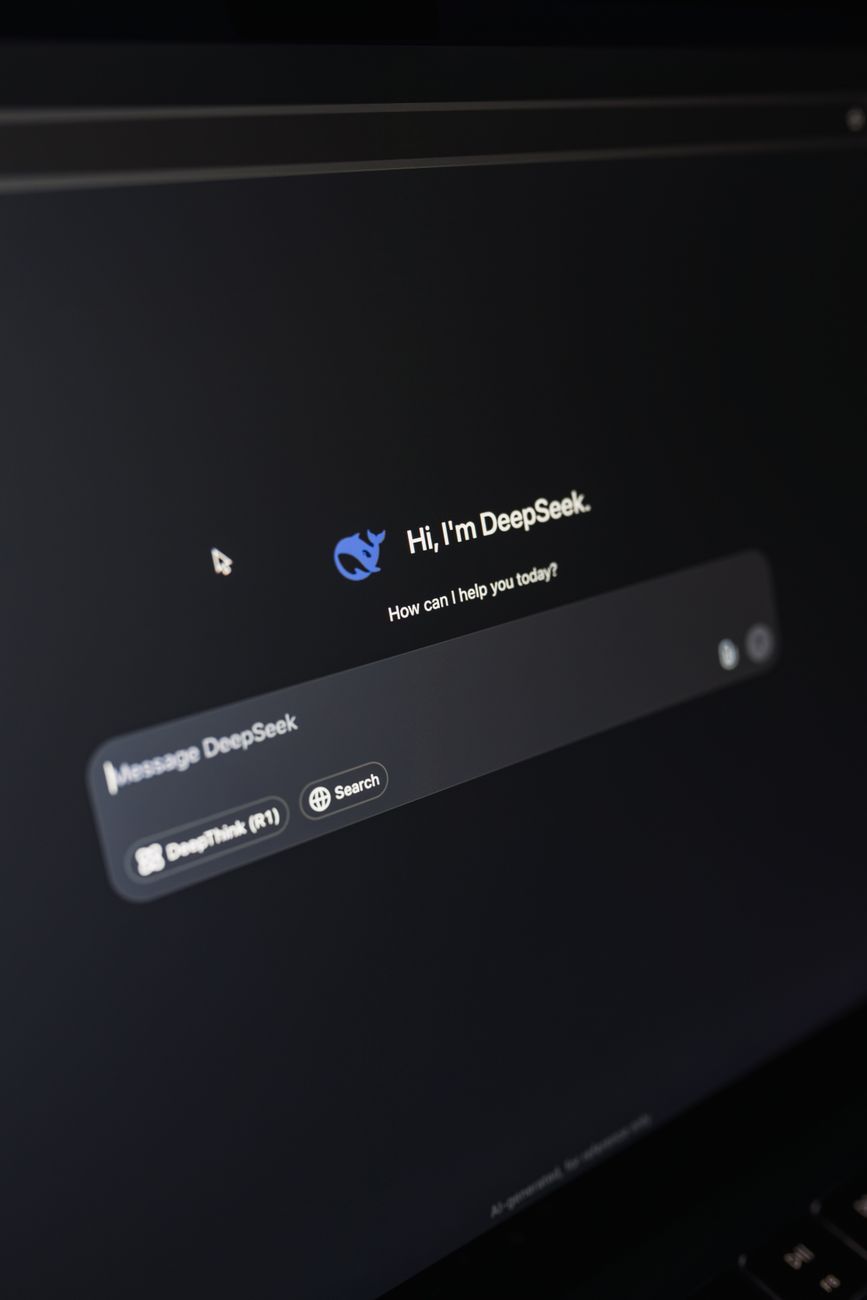
DeepSeek is a Hangzhou-based AI research lab, founded in May 2023 by hedge fund billionaire Liang Wenfeng, that has become the most-used open-weight model developer in the world. As of July 2026, DeepSeek models handle 17.6% of all tokens routed through OpenRouter — roughly 5.13 trillion tokens a week, the largest share of any single model family, ahead of Anthropic’s 14.8% (CNBC, 7 July 2026). At home, the DeepSeek app counts 130 million monthly active users, third in China behind ByteDance’s Doubao (382 million) and Alibaba’s Qwen (167 million), according to QuestMobile’s H1 2026 report published 14 July 2026.
The company spent its first three years refusing outside money. That ended in July 2026, when a Caixin-reported regulatory filing revealed DeepSeek had closed its first external round: roughly RMB 50 billion (US$7.4 billion) at a post-money valuation above RMB 350 billion (US$52 billion), backed by Tencent, CATL, NetEase and JD.com (Caixin, 17 July 2026). Its newest model, DeepSeek V4, went to general release in mid-July 2026 with a 1-million-token context window and the industry’s first peak/off-peak API pricing. This profile covers the founder, the structure, the money, the models and the roadmap.
For the story of what DeepSeek did to the economics of the AI industry — the January 2025 R1 release, the US$5.6 million training-cost claim, the trillion-dollar Nasdaq wobble and the price war that followed — see our analysis of how DeepSeek disrupted global AI economics. That piece tells the shock story; this one profiles the company behind it.
Who owns DeepSeek?
DeepSeek is controlled by Liang Wenfeng, born in 1985 in Wuchuan, Guangdong. Liang studied electronic information engineering at Zhejiang University, then co-founded quantitative hedge fund High-Flyer in February 2016 with two university classmates. High-Flyer grew past RMB 10 billion in assets under management by 2019 applying machine learning to Chinese equities — and, crucially, stockpiled around 10,000 Nvidia A100 GPUs before US export controls hit in October 2022. In May 2023, Liang spun that compute and research team out into DeepSeek, funded entirely by High-Flyer.
That structure held until 2026. The July 2026 round — DeepSeek’s first outside capital — brought in 12 institutional investors, with Tencent contributing RMB 10 billion and battery giant CATL RMB 5 billion, while Liang himself put in RMB 20 billion (Caixin, 17 July 2026). Even after dilution, the filing shows Liang retains roughly 91% control: 60.19% through the holding vehicle Ningbo Cheng’en plus 31.01% held directly. China’s National AI Industry Investment Fund holds a symbolic 0.28%. Days after the round became public, TechCrunch reported (14 July 2026) that DeepSeek was already in talks for a further ~US$1.5 billion at a valuation near US$71 billion, ahead of an IPO pencilled for 2027 — possibly as early as end-2026.
Liang’s standing in Beijing is part of the ownership story. He attended Premier Li Qiang’s economy symposium on 20 January 2025 — the day R1 launched — and Xi Jinping’s private-sector symposium at the Great Hall of the People on 17 February 2025, alongside Jack Ma and Huawei’s Ren Zhengfei. Forbes put his net worth at around US$11 billion as of November 2025.
Why DeepSeek doesn’t behave like a startup
DeepSeek is best understood as a research lab wearing a company’s clothes. It ran for three years with no external investors, no advertising, no sales team and no consumer monetisation push — the app is free, the API priced near cost. Headcount is reported at fewer than 200 people, against thousands at OpenAI or ByteDance’s AI units, and Liang recruits for “ability and passion rather than experience”, favouring young researchers from Chinese universities. Because High-Flyer’s profits paid the bills, DeepSeek never needed to chase revenue — which is precisely why it could give its models away.
The giveaway is literal: DeepSeek releases its flagship model weights under the permissive MIT licence, allowing free commercial use, modification and distillation. Even the July 2026 fundraise reads more like a lab consolidating than a startup scaling — Caixin reports the proceeds are earmarked for employee equity incentives, talent retention and technical development, not go-to-market expansion. Liang has said publicly that the goal is artificial general intelligence, not market share, and as of July 2026 DeepSeek still has no enterprise sales organisation to speak of.
The model lineage: V2 to V4
The release history is short but consequential. DeepSeek-V2 (May 2024) introduced the cheap mixture-of-experts architecture that triggered China’s first LLM price war. DeepSeek-V3 (26 December 2024) matched GPT-4-class performance at a claimed US$5.6 million training cost on 2,048 Nvidia H800s. DeepSeek-R1 (20 January 2025) was the reasoning model that shook global markets. V3.1 (21 August 2025) and V3.2-Exp (29 September 2025) followed, the latter debuting DeepSeek Sparse Attention, the efficiency technique underpinning V4. Compare pricing across the lineage in our AI model cost tracker.
DeepSeek V4 previewed on 24 April 2026 and reached official release in mid-July 2026, in two variants: V4-Pro (1.6 trillion total parameters, 49 billion active per token) and V4-Flash (284 billion total, 13 billion active), both with a 1-million-token context window and up to 384K output tokens (DeepSeek API docs; TechNode, 30 June 2026). On SWE-bench Verified, V4-Pro-Max scores 80.6% — the joint-highest result for any open-weights model, though still behind Anthropic’s closed frontier models (BenchLM/morphllm benchmark compilations, June–July 2026).
V4 also made pricing history: it is the first major LLM API with time-of-day rates. Peak hours (9:00–12:00 and 14:00–18:00 Beijing time) cost double the off-peak rate — off-peak V4-Pro runs about US$0.435 per million input tokens and US$0.87 per million output tokens, versus US$5.00 per million input for GPT-5.5 (CNBC, July 2026). Electricity-style surge pricing for intelligence is a very DeepSeek move: an efficiency lab treating compute as a utility.
Where is R2?
R2, the successor to the reasoning model that made DeepSeek famous, remains unreleased as of July 2026 — eighteen months after R1. The most credible explanation is hardware. Reporting by the Financial Times and Reuters in August 2025 (via The Register and Tom’s Hardware) said Chinese authorities had encouraged DeepSeek to train R2 on Huawei’s Ascend chips after R1’s release; months of failed training runs followed — instability, slow inter-chip connectivity, immature software — and DeepSeek reportedly reverted to Nvidia hardware for training while keeping Ascend for inference. The episode has become the canonical case study in the gap between Chinese training silicon and Nvidia, a theme we track in our China AI models and chips strategy pillar.
DeepSeek’s answer appears to be absorption rather than release: V3.1 was explicitly tuned for “next-generation domestic chips”, V4 ships with reasoning integrated into the main model line, and Reuters has reported DeepSeek is developing its own inference-focused AI chip. Whether a standalone R2 ever ships — or whether the R-series is quietly folded into V4/V5 — is the biggest open question on the roadmap. DeepSeek, characteristically, has said nothing official.
How the world actually uses DeepSeek
DeepSeek’s consumer footprint is largely Chinese: 130 million MAU as of May 2026, within a domestic AI-native app market of 499 million MAU that grew 85.4% year on year (QuestMobile, July 2026). It has ceded the consumer race to Doubao and Qwen — a ranking covered in our China AI market overview — without apparent concern, because its real distribution is developers.
On OpenRouter, DeepSeek’s 17.6% token share leads all providers, and Chinese-origin models collectively hit 46.4% of routed tokens in mid-2026, up from 4.5% in the first half of 2025 (CNBC, 7 July 2026). On Vercel’s AI Gateway, DeepSeek processed nearly 23% of enterprise tokens in June 2026, behind only Anthropic’s 32% (TechCrunch, 14 July 2026). DeepSeek also became the number one trending software vendor on Ramp’s US corporate-spend index in mid-2026, with Ramp’s chief economist attributing the surge primarily to cost: Chinese models run 4x to 100x cheaper than US equivalents on like-for-like tasks (CNBC, July 2026).
That US adoption coexists with US bans — because the bans target the app, not the weights. Federal agencies and more than a dozen states, starting with Texas, Virginia and New York (statewide ban, February 2025), prohibit the DeepSeek app on government devices because the hosted service stores data in China. The MIT-licensed open weights, though, are hosted domestically by Microsoft Azure, AWS and Perplexity, keeping data on US soil. We unpack that enforcement gap in can the US actually ban Chinese AI models?
What comes next for DeepSeek?
Three things to watch through late 2026. First, capital: the reported US$1.5 billion follow-on at ~US$71 billion and an IPO as early as end-2026 (TechCrunch, 14 July 2026) would turn the anti-startup into a listed company. Second, silicon: DeepSeek’s cloud service already runs inference on Huawei chips, and a rumoured in-house inference chip would deepen the decoupling from Nvidia. Third, models: V4’s million-token agentic positioning targets the agent workload boom, and any R2 or V5 announcement would land on a market that now treats DeepSeek releases as macro events. For a company of fewer than 200 people, that is a remarkable amount of gravity.
Frequently asked questions
Who owns DeepSeek?
Founder Liang Wenfeng controls roughly 91% — 60.19% via the vehicle Ningbo Cheng’en plus 31.01% directly — after the first external round in July 2026 valued DeepSeek at US$52 billion, with investors including Tencent, CATL, NetEase and JD.com (Caixin, 17 July 2026). Before that, it was wholly funded by Liang’s hedge fund High-Flyer.
Is DeepSeek free to use?
The app and web chat are free, and flagship weights are MIT-licensed for free commercial use. The API is paid but cheap: V4-Pro costs about US$0.87 per million output tokens off-peak, with peak hours charged at double that rate since the mid-July 2026 V4 release.
Is DeepSeek banned in the United States?
Partially. The app is banned on government devices federally and in more than a dozen states as of 2026, because the hosted service sends data to China. The open-weight models are not banned: US firms including Microsoft, AWS and Perplexity host them on domestic infrastructure, and DeepSeek was the top trending vendor on Ramp’s US corporate-spend index in mid-2026.
When will DeepSeek R2 be released?
There is no official date; R2 remains unreleased as of July 2026. Reporting in 2025 attributed the delay to failed training runs on Huawei Ascend chips, and reasoning capability has instead been folded into the V3.x and V4 line.
How big is DeepSeek compared with OpenAI?
Far smaller by headcount and valuation — reportedly under 200 employees, valued at US$52 billion versus OpenAI’s US$500 billion-plus. But by open-market usage it leads: DeepSeek’s 17.6% of OpenRouter routed tokens in July 2026 was the highest of any single model family (CNBC, 7 July 2026).
Discover more from Digital in Asia
Subscribe to get the latest posts sent to your email.
