
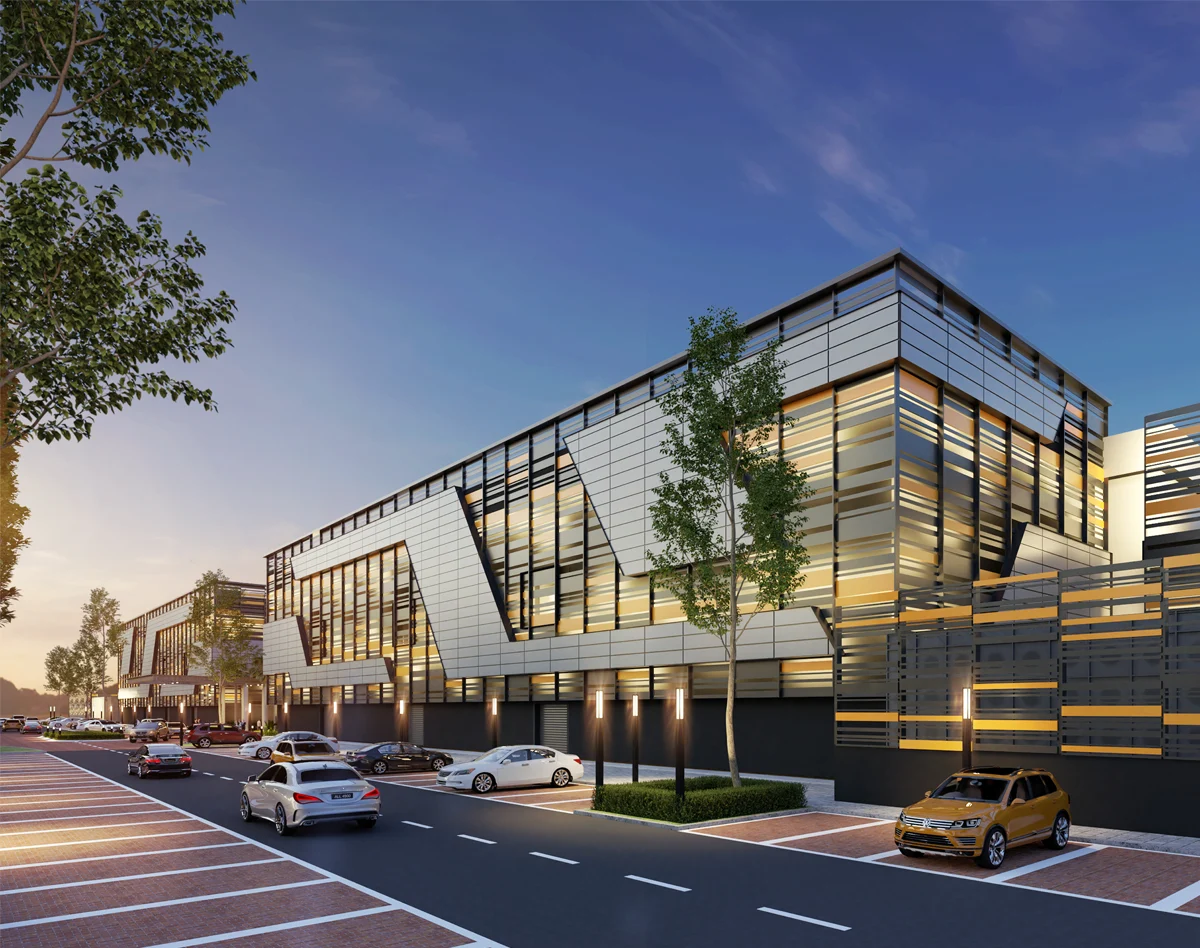
Malaysia has more than 500 operational data centres. Roughly 300 are under construction. And approximately 1,140 are planned (Ember, 2026). In February 2026, Prime Minister Anwar Ibrahim confirmed that all new data centre applications unrelated to artificial intelligence have been stopped. Only projects demonstrating high-technology AI benefits receive approval. No other country in Southeast Asia — or arguably anywhere — has taken a more explicit policy position on linking data centre development to AI.
The country’s 2026 budget allocated approximately $490 million for a sovereign AI cloud. Malaysia revived its dormant nuclear energy programme with a 2031 target, driven substantially by the electricity demands of AI infrastructure. Google invested $2 billion in its first Malaysian data centre. Microsoft has acquired land in Johor for cloud infrastructure. NVIDIA-backed facilities are under development. And one of the largest concentrations of Chinese-owned data centre investments outside mainland China sits in Malaysian territory.
This is the story of how a country better known for palm oil and electronics manufacturing became the focal point for Southeast Asia’s AI infrastructure buildout — and what could go wrong.
What makes Johor the centre of gravity?
Geography. Johor sits directly across the Causeway from Singapore, which operates roughly 1GW of data centre capacity at a vacancy rate of 1.4%. Singapore’s land constraints, strict environmental controls, and limited power generation make it expensive and slow to build new capacity. Johor offers what Singapore can’t: space, cheaper power, and proximity to the region’s most mature connectivity hub.
YTL Power’s NVIDIA-backed AI campus in Johor represents the new model. AirTrunk — one of Asia-Pacific’s largest hyperscale data centre operators — has invested in Johor facilities. Microsoft’s land acquisitions signal forthcoming cloud region deployment. The pattern is clear: hyperscalers want Singapore’s connectivity without Singapore’s constraints, and Johor is the answer.
The infrastructure isn’t confined to Johor. Google’s $2 billion data centre investment and the Dagang NeXchange sovereign cloud and AI services partnership are building capability across the country. But Johor’s concentration of investment and proximity to Singapore make it the primary node.
What’s the AI-only data centre policy?
Malaysia’s most significant policy intervention is the restriction of new data centre approvals to AI-related projects. This isn’t subtle. Non-AI cloud and hosting projects — the bread-and-butter workloads that traditionally fill data centres — are being turned away.
In Johor specifically, state authorities have imposed additional requirements around water and power consumption for new data centres. The intent is to prevent resource strain, but the practical effect is a gating mechanism that favours well-capitalised projects with clear AI narratives.
The policy creates both opportunity and risk. The opportunity: Malaysia becomes synonymous with AI compute in the region, attracting the highest-value workloads and the most sophisticated operators. The risk: every cloud provider in the region now needs to frame their Malaysian projects as “AI-related,” regardless of actual workload composition. Whether the policy creates a genuine AI industrial cluster or merely changes the language on planning applications will depend on enforcement — and enforcement criteria haven’t been fully defined.
How is energy shaping Malaysia’s AI ambitions?
The energy question is existential. Fossil fuels generate 81% of Malaysia’s electricity. Solar and wind account for just 2% (Ember, 2026). A single AI data centre consumes as much electricity as 100,000 households, according to the IEA. Malaysia’s planned build of 500+ additional data centres will require energy infrastructure that doesn’t yet exist at the needed scale.
The government’s response has two prongs. First, adding up to eight gigawatts of gas-fired power generation by 2030. This addresses the immediate capacity gap but locks in fossil fuel dependency and carbon emissions that conflict with national and international climate commitments.
Second, reviving nuclear energy. Malaysia set a 2031 target for bringing atomic power online — remarkably ambitious given that Southeast Asia has never produced a single watt of nuclear energy. The programme was mothballed years ago and is being restarted specifically because of data centre demand. The country’s oil and gas reserves are finite, and the gap between current generation capacity and projected AI infrastructure demand is too large for renewables alone to fill on the required timeline.
The tension is structural. Malaysia wants to be the region’s AI compute hub. That requires massive and reliable power generation. Massive and reliable power generation, in Malaysia’s energy mix, means gas and eventually nuclear. Neither aligns neatly with the sustainability commitments that hyperscale operators like Microsoft, Google, and Amazon have made. The resolution of this tension — or the failure to resolve it — will define whether Malaysia’s data centre boom is sustainable in both senses of the word.
What’s the Chinese investment dimension?
Malaysia hosts one of the largest concentrations of Chinese-owned data centre investments outside mainland China. This is simultaneously an economic boon and a geopolitical complexity.
Chinese technology companies — including Huawei, Alibaba Cloud, Tencent Cloud, and Baidu AI Cloud — operate data centres and cloud infrastructure in Malaysia. Malaysia’s Communications Ministry launched a sovereign, full-stack AI ecosystem powered by Huawei GPUs in 2025. This represents a direct embrace of Chinese technology at the government infrastructure level.
At the same time, tightening US export controls on advanced semiconductors and growing scrutiny around technology supply chains create questions about which AI workloads can run on which hardware in which jurisdictions. For multinational companies operating in Malaysia, the coexistence of US and Chinese technology stacks in the same market creates both flexibility and complexity.
The data governance dimension adds another layer. Sovereign cloud initiatives are partly about keeping data and model training within national borders. But “sovereign” doesn’t specify whose technology underlies the sovereignty. Malaysia’s choice to anchor parts of its sovereign AI cloud on Huawei hardware is a strategic decision that positions the country differently from, say, Singapore’s hyperscaler-agnostic approach.
What are the risks?
Beyond energy, Malaysia’s data centre expansion faces three material risks.
Water. Data centres require significant water for cooling, particularly in tropical climates. Johor’s water supply is already a recurring political issue in the Singapore-Malaysia relationship. Adding hundreds of high-density data centres to Johor’s water demand increases strain on infrastructure that is already stretched.
Grid reliability. Malaysia’s power grid was designed for manufacturing and residential loads, not for the constant, high-density demand of hyperscale data centres. Grid upgrades are planned but take years to complete. In the interim, power allocation for new data centres in Johor is tightening.
Regulatory clarity. The AI-only data centre policy is clear in intent but ambiguous in implementation. What qualifies as “AI-related”? Who audits the AI claims in planning applications? What happens to existing non-AI data centres seeking expansion? These questions don’t have public answers yet.
What does this mean for the region?
Malaysia’s bet is that being first to a massive AI infrastructure buildout — even with the energy, water, and governance challenges that come with it — creates a structural advantage that compounds over time. If the infrastructure gets built and the power problems get solved, Malaysia becomes the default location for AI compute in Southeast Asia. If the energy gap isn’t closed or the regulatory framework doesn’t mature, the buildout risks stalling — and Thailand, Indonesia, or even Vietnam could absorb the demand.
For companies evaluating AI infrastructure options in Southeast Asia, Malaysia’s combination of scale, proximity to Singapore, hyperscaler commitment, and government incentives makes it the leading option today. But the dependencies on energy infrastructure and regulatory evolution mean this isn’t a decision to make without understanding what’s still unresolved.
The country is building a future that doesn’t have enough electricity yet. That’s either visionary or reckless, and right now it’s genuinely both.
Read the full AI Ecosystem Across Asia 2026 report — market data, country analysis, company profiles, investment landscape, and 2026–2030 outlook → digitalinasia.com/reports
